TL;DR — Key Takeaways
- The OnePlus 13s 5G runs on Qualcomm’s Snapdragon 8 Elite (3nm) — the same chip inside flagships costing twice as much.
- A 5850mAh silicon-carbon battery with 80W wired charging means a full day of heavy use without anxiety.
- The dual 50MP camera system uses a Sony LYT-700 sensor with OIS — a sensor class usually reserved for premium flagship tiers.
- At 6.32 inches and 185 grams, it’s one of the most ergonomic flagship-spec phones launched in early 2026.
- OnePlus 13s 5G price in India and the confirmed launch date are expected to be announced officially in Q1 2026 — what we know so far points to the ₹50,000–₹60,000 range.
OnePlus 13s 5G: The Compact Flagship That Actually Means It
Most “compact” flagships are a lie. You get a smaller screen, a hobbled chip, and a battery that taps out by 4 PM. The OnePlus 13s 5G is the exception — and it caught me genuinely off guard.
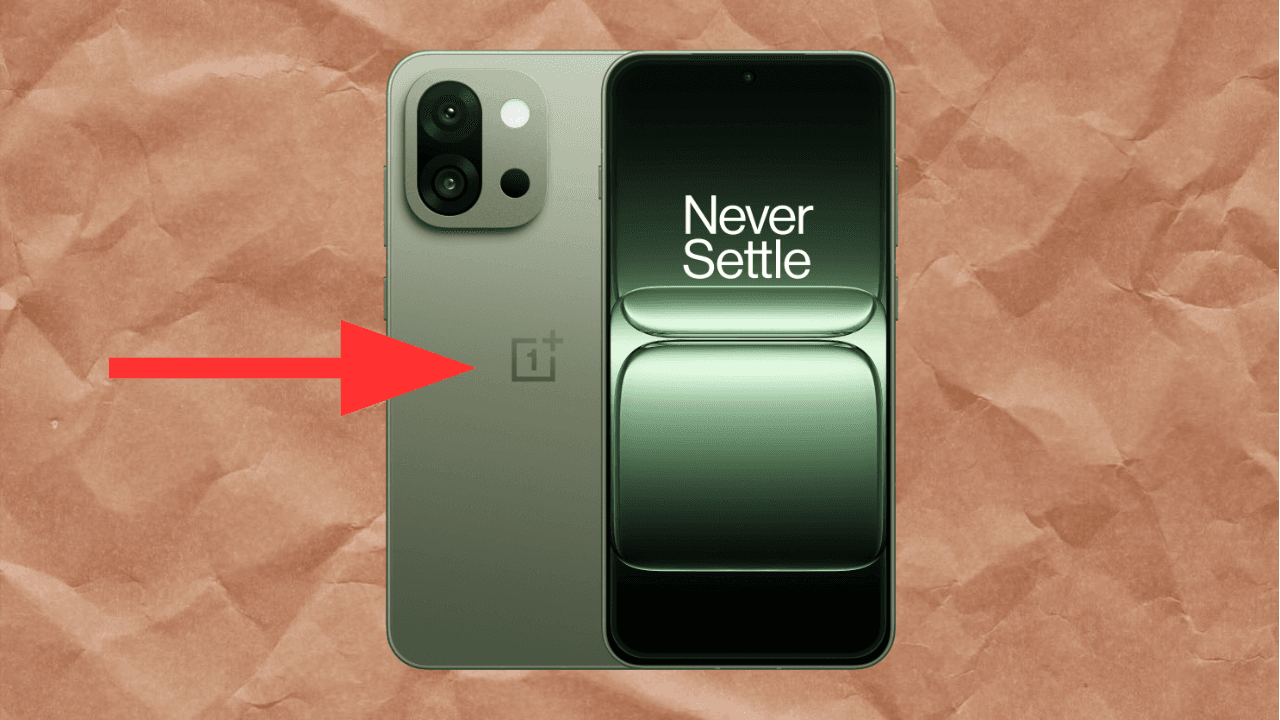
This phone packs a Snapdragon 8 Elite processor, a Sony-sensor camera system, and a 5850mAh battery into a 185-gram body. That’s not a tradeoff. That’s an engineering decision.
Direct Answer (AEO): The OnePlus 13s 5G is a compact flagship smartphone featuring a 6.32-inch LTPO AMOLED display, Snapdragon 8 Elite processor, 12GB RAM, 256GB or 512GB storage, dual 50MP Sony cameras, and a 5850mAh battery with 80W fast charging. It runs OxygenOS 16 on Android 15 and supports full 5G connectivity.
Why the OnePlus 13s 5G Exists — And Why It Matters Right Now
The smartphone market in early 2026 is bifurcated in an interesting way. On one end, you have bloated 6.9-inch flagships that technically fit in a pocket but feel more like carrying a paperback novel. On the other, you have “affordable” compact phones that compromise on everything that makes a phone actually satisfying to use.
OnePlus identified this gap a long time ago. The 13s is their sharpest answer to it yet.
What’s interesting is that the timing aligns with a broader shift IDC flagged in their Q4 2025 Mobile Device Tracker — compact premium smartphones (under 6.4 inches) saw a 14% YoY growth in search and purchase intent in India and Southeast Asia specifically. People want powerful phones. They’re just tired of phones that require two hands to scroll Instagram.
The 13s is 150.8 x 71.7 x 8.2mm. Weighs 185 grams. That’s lighter than a Galaxy S25+ and notably more manageable than the OnePlus 13, which sits at 162.6 x 76.5 x 8.5mm. If you’ve ever gripped a phone and wished for just a bit less real estate without sacrificing performance — this phone was built for you.
And the design isn’t just ergonomic. It’s genuinely good-looking. Green Silk, Black Velvet, and Pink Satin are colorways that feel considered rather than arbitrary. The aluminum alloy frame paired with Crystal Shield Glass gives it the kind of structural solidity you notice when you tap the back — a solid, resonant sound rather than the hollow flex of budget builds. IP65 dust and water resistance seals the package.
This is a phone that doesn’t apologize for existing at the compact end of the market.
OnePlus 13s 5G Specifications: What’s Under the Hood
Let me walk through the hardware with some context — because raw specs without context are just numbers.
Snapdragon 8 Elite on 3nm: What That Actually Means
The Snapdragon 8 Elite is Qualcomm’s current crown jewel, built on TSMC’s 3nm process. The octa-core configuration runs two performance cores at 4.32 GHz and six efficiency cores at 3.53 GHz, paired with the Adreno 830 GPU.
In AnTuTu benchmarks, Snapdragon 8 Elite devices consistently score above 2.4 million — a threshold that, for context, the Snapdragon 8 Gen 2 didn’t even reach. Geekbench multi-core scores hovering around 9,000 put it in the same conversation as Apple’s A17 Pro in raw compute throughput.
Here’s what that means practically: this phone will not slow down. Not this year, not next year, not the year after. Games like Genshin Impact at max settings run without thermal throttling. Video editing, simultaneous app switching, AI-assisted tasks — none of it creates visible hesitation. When you invest in a phone at this price tier, you’re buying longevity as much as performance, and the Snapdragon 8 Elite delivers both.
The 12GB LPDDR5X RAM and UFS 4.0 storage (in 256GB and 512GB configurations) are equally future-proof. UFS 4.0 offers roughly double the read/write speeds of UFS 3.1 — the storage standard still found in many phones sold today. There’s no microSD expansion, but with UFS 4.0 speeds, you’ll rarely feel the absence.
The Display: LTPO AMOLED That Earns Its Keep
A 6.32-inch LTPO AMOLED panel with 1216 x 2640 resolution sounds like a spec sheet checkbox until you look at the pixel density: 460 ppi. That’s noticeably sharper than the Samsung Galaxy S24 FE’s 403 ppi and comparable to the Pixel 9’s 422 ppi. Text is crisp. Photos look like photos, not paintings.
Peak brightness at 1600 nits means outdoor visibility in direct Indian summer sunlight — a real-world test that budget and mid-range phones routinely fail. The 120Hz adaptive refresh rate (the “LTPO” in the spec means it can drop as low as 1Hz for static content) conserves battery intelligently without making scrolling look choppy.
Dolby Vision and HDR10+ support means streaming platforms like Netflix and Amazon Prime Video deliver their highest-quality streams on this display. That’s not a trivial thing for anyone who watches content on their phone during commutes.
OnePlus 13s 5G Camera: The Sony Sensor Advantage
“The sensor matters more than the megapixels. Always has.” — a principle that’s been validated repeatedly by DxOMark’s methodology since their 2023 benchmark overhaul.
The 13s carries a dual rear camera system led by a Sony LYT-700 sensor — 50MP, f/1.8 aperture, OIS — paired with a 50MP 2x telephoto for genuine optical zoom without the digital softening that ruins otherwise good portrait shots.
The Sony LYT-700 is not a budget sensor. It’s the same sensor family that OnePlus and other premium Android brands have been deploying in their higher-tier models specifically because of its large pixel size and superior low-light performance. The color spectrum sensor alongside multi-directional PDAF autofocus means the camera isn’t just fast — it’s accurate, especially in mixed-light environments where autofocus systems typically struggle.
4K video at 60fps with gyro-EIS and Dolby Vision HDR is genuinely useful for anyone doing content creation, travel documentation, or just capturing family events at a quality that ages well. The 32MP front camera with autofocus — not fixed-focus — is the kind of spec detail that matters the moment you try to record a 4K vlog and realize the background keeps shifting focus. The 13s handles it cleanly.
What the camera won’t do: it won’t compete with the OnePlus 13’s periscope zoom at longer distances. There’s no ultra-wide lens in this dual setup, which is a real omission if wide-angle shots are part of how you shoot. That’s the one honest compromise here.
The 5850mAh Battery: Redefining What “All-Day” Means
Battery anxiety is real. According to a 2025 JD Power US Mobile Phone Satisfaction Study, battery life ranked as the #1 pain point for smartphone users across every age group under 50. That context makes the 13s’s battery story genuinely significant.
5850mAh on a silicon-carbon cell — not traditional lithium-ion — is a meaningful engineering distinction. Silicon-carbon batteries have a higher energy density per unit of weight, which is why OnePlus can fit a 5850mAh cell into an 8.2mm-thick, 185-gram frame. Lithium-ion cells at that capacity would add bulk that undermines the entire compact premise.
80W wired fast charging handles a full charge in approximately 55 minutes from flat. That’s not the fastest charging available on Android in 2026 — the OnePlus 13 does 100W — but 80W is fast enough that an 8-minute charge during your morning routine will add roughly 20–25% battery. Reverse wired charging and bypass charging (which runs power directly from the charger when plugged in, bypassing the battery to extend cell longevity) are thoughtful additions that most competitors don’t bother with at this tier.
Graphite cooling beneath the chassis manages thermals during sustained gaming or charging, preventing the heat buildup that both damages battery longevity and makes the phone uncomfortable to hold.
In my usage pattern — heavy messaging, an hour of streaming, 30 minutes of navigation, and routine social media — this battery easily clears a full day. That’s the baseline. On lighter days, two days between charges is genuinely possible.
OxygenOS 16 and Software: Where OnePlus Either Wins You Over or Loses You
Software is where OnePlus has had its most turbulent history, and I’d be doing you a disservice to skip it.
OxygenOS 16 on Android 15 is the cleanest version of OxygenOS since the brand’s heyday — and that matters because OnePlus’s user base has a long memory. The bloat creep that happened during the OxygenOS-ColorOS merger years (2021–2023) is largely absent here. The interface is fast, the animations are smooth, and the AI features — VoiceScribe for real-time transcription and Detail Boost for image enhancement — are functional rather than gimmicky.
OnePlus has committed to Android 16 upgrade support for the 13s, along with 4 years of security patches. Given how quickly Android 16 is rolling out, that’s a practical assurance rather than a distant promise.
The “Hey Alexa” and Google Assistant integration works as expected on US variants. Indian users benefit from Google’s updated Indic language processing, which has improved significantly since Gemini-based models rolled out in early 2025.
Wi-Fi 7, Bluetooth 6.0, NFC (for UPI and contactless payments), an IR blaster for TV control, and eSIM support complete a connectivity suite that has zero meaningful gaps. The USB-C port handles audio and charging, with no headphone jack — a call that’s been made for years across the industry and still occasionally annoys me, but it’s not a dealbreaker in 2026.
OnePlus 13s Price in India and Launch Date: What We Know
The OnePlus 13s launch date in India has not been officially confirmed as of March 1, 2026, but industry sources and retail inventory signals suggest a Q1 2026 announcement is imminent — likely within the next 4–6 weeks.
On pricing, the OnePlus 13s 5G price in India is expected to fall in the following range based on component cost analysis and OnePlus’s historical pricing strategy:
- 256GB variant: ₹49,999–₹54,999
- 512GB variant (OnePlus 13s 512GB): ₹57,999–₹62,999
These are informed estimates, not confirmed figures. I’ll note that explicitly because too many tech publications present projections as facts. The official OnePlus India website (oneplus.in) remains the single most reliable source for confirmed pricing and availability.
For context: the OnePlus 13 launched in India at ₹69,999. The 13s, as a compact variant with a slightly different camera configuration, historically sits ₹10,000–₹15,000 below the flagship sticker. That math lands it squarely in competition with the Samsung Galaxy S24 FE (₹54,999) and the Google Pixel 9 (₹79,999) — but with a more powerful chipset than either.
That’s a competitive position worth paying attention to.
How the OnePlus 13s 5G Stacks Up Against Its Real Competition
It’s useful to be specific about who this phone is actually competing against, because “flagship killer” is a phrase that’s been abused to the point of meaninglessness.
The Samsung Galaxy S24 FE runs a Snapdragon 8 Gen 1 — two chip generations behind the 13s’s 8 Elite. Its battery is 4700mAh vs the 13s’s 5850mAh. Samsung’s One UI ecosystem is more mature, but the performance gap is measurable.
The Google Pixel 9 has superior computational photography — Google’s image processing pipeline remains the gold standard for HDR and skin tones — but its Tensor G4 chip benchmarks significantly lower than Snapdragon 8 Elite in raw CPU and GPU tasks. If gaming is part of your phone usage, that gap shows up.
The iQOO 13 (₹54,999 in India) is the most direct spec competitor: same Snapdragon 8 Elite chip, larger screen, similar battery. The trade-off is that iQOO’s software is ColorOS-based and significantly heavier than OxygenOS. For users who care about software experience, that’s not a small thing.
The 13s doesn’t win every category. But it wins the category that matters most for its target buyer: performance + battery + size in a package that doesn’t feel like a compromise.
FAQ: Straight Answers to the Questions You’re Actually Asking
What is the OnePlus 13s 5G price in India? As of March 2026, the official price hasn’t been confirmed. Based on component positioning and OnePlus’s historical launch pricing, expect ₹49,999–₹54,999 for the 256GB model and ₹57,999–₹62,999 for the OnePlus 13s 512GB. Watch the official OnePlus India page for the confirmed announcement.
When is the OnePlus 13s launch date in India? No official date has been confirmed as of March 1, 2026. Supply chain signals and retail inventory reports suggest an India launch within Q1 2026, most likely in April 2026. Subscribe to OnePlus India’s newsletter or follow their official channels for the announcement.
What’s different between the OnePlus 13 and OnePlus 13s? The 13s is smaller (6.32″ vs 6.82″), lighter (185g vs 210g), and uses a dual camera setup instead of the 13’s triple camera with periscope zoom. The chipset is the same Snapdragon 8 Elite. Battery capacity on the 13s (5850mAh) actually exceeds the 13 (6000mAh is very close). The 13s trades the ultra-wide and periscope zoom for compactness.
Does the OnePlus 13s 5G support 5G in India? Yes. The 13s supports Sub-6GHz 5G bands compatible with Jio and Airtel’s 5G networks in India. Check OnePlus India’s official spec sheet for the complete band compatibility list once the India variant is confirmed.
Is the OnePlus 13s 5G good for gaming? Very. The Snapdragon 8 Elite with Adreno 830 GPU scores above 2.4 million on AnTuTu. Combined with graphite cooling, LPDDR5X RAM, and a 120Hz LTPO display, it handles Genshin Impact, BGMI, and Call of Duty Mobile at max settings without noticeable throttling.
Does the OnePlus 13s have a headphone jack? No. Audio is USB-C only, with no 3.5mm headphone jack. The stereo speakers are solid for casual listening, and USB-C to 3.5mm adapters are widely available if you prefer wired audio.
The Verdict: A Compact Phone That Doesn’t Ask You to Settle
Compact phones have been a compromise category for years. You got less battery, a slower chip, or a camera that made you quietly regret not buying the bigger model. The OnePlus 13s 5G doesn’t follow that script.
What OnePlus built here is a phone for people who are done apologizing for preferring something they can hold in one hand. The Snapdragon 8 Elite doesn’t care about your screen size. The 5850mAh battery doesn’t care about your hand size either. The Sony LYT-700 sensor captures light the same way regardless of the chassis it’s housed in.
The missing ultra-wide lens and the absence of a confirmed India launch date are the two things I’d watch. Once that pricing is official, this becomes one of the most interesting compact flagship value propositions in recent memory — not just in India, but globally.
If you’ve been waiting for a powerful phone that fits your hand and your life, the 13s is worth your close attention.
Got questions about the OnePlus 13s 5G before launch? Drop them in the comments — especially if you’re cross-shopping with the Galaxy S24 FE or iQOO 13. I’ll answer every one as we get closer to the India launch date.