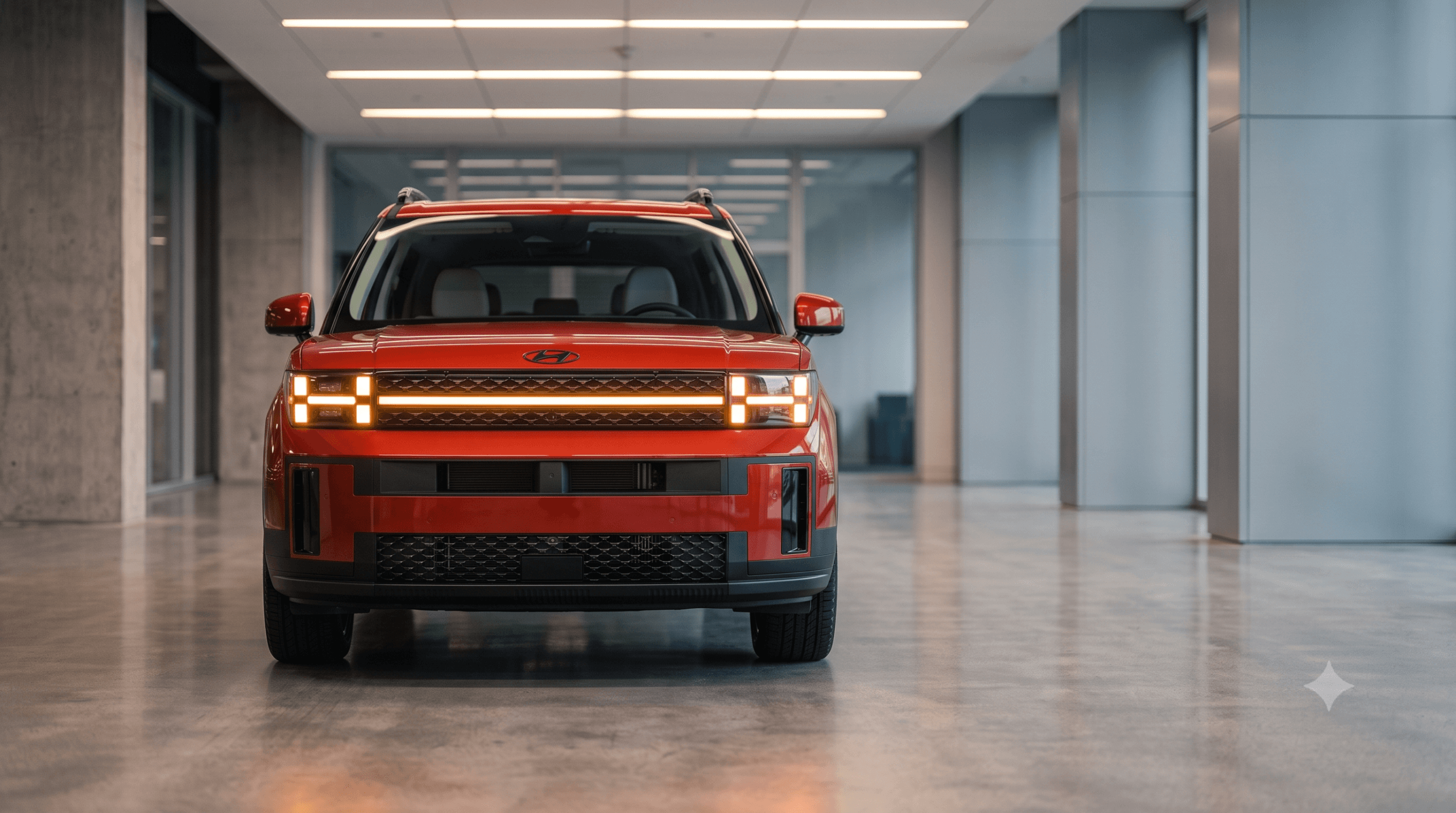
Tata Punch is now India’s best-selling passenger vehicle, having sold 21,006 units in June 2026 — a 101% jump over the 10,446 units it sold in June 2025 — to dethrone the Maruti Suzuki Dzire, which had led the monthly sales chart the previous month. It’s the first time in 2026 that the Punch has topped the overall rankings, and Tata Motors took the top two spots outright, with the Nexon following in second place at 18,335 units.
For anyone tracking India’s passenger vehicle market for campaign planning, competitive benchmarking, or dealership forecasting, June 2026’s numbers are a genuine inflection point rather than routine month-to-month noise: it’s the first time since the compact SUV boom began that a single brand has claimed both of the top two sales positions in the same month.
The June 2026 Top 10, Ranked
Here’s how the full leaderboard shook out, based on manufacturer wholesale dispatch figures for June 2026:
- Tata Punch — 21,006 units (+101% YoY, +3.95% MoM)
- Tata Nexon — 18,335 units (+58% YoY, -4% MoM)
- Maruti Suzuki Dzire — 17,899 units (+16% YoY, down sharply from 24,546 units in May)
- Maruti Suzuki Wagon R — 16,952 units (+31% YoY)
- Maruti Suzuki Ertiga — 16,111 units (+13.85% YoY)
- Maruti Suzuki Swift — 15,215 units
- Mahindra Scorpio-N — 14,097 units (+10.65% YoY)
- Maruti Suzuki Fronx — 13,135 units (down 7,551 units from May)
- Maruti Suzuki Baleno — 12,488 units (+39% YoY)
- Hyundai Venue — 10,776 units (+58% YoY)
Notably absent from the top 10 entirely: the Hyundai Creta, which had been a fixture of the leaderboard for years.
Why the Punch Surged So Sharply
A 101% year-on-year increase is an unusually large jump for an established, three-year-old nameplate — models this mature typically post single-digit or, at best, low double-digit growth. Industry analysts tracking Tata’s product cadence point to the Punch and Punch EV facelifts launched earlier in 2026 as the clearest driver, refreshing a design that had started to look dated against newer compact SUV entrants without requiring buyers to wait for an entirely new generation. According to Tata Motors’ own monthly dispatch data, the Punch also crossed the 20,000-unit mark for the first time in 2026 this month — the only model in the entire top 10 to do so — underlining just how far ahead of the pack it pulled in June specifically, rather than simply nudging past its immediate rivals.
The Nexon’s performance reinforces the same story: Tata’s larger compact SUV posted 58% YoY growth of its own, even as it slipped slightly month-on-month from May’s 19,100 units. Taken together, Tata’s domestic SUV portfolio had one of its strongest months in recent memory, a signal that goes beyond a single model’s facelift cycle and points to broader momentum across the brand’s showroom floor.
Why the Dzire Fell — and What It Says About Sedan Demand
The Maruti Dzire’s fall from first to third place looks dramatic on paper — a drop of 6,647 units, or roughly 27%, from May’s 24,546 units — but the YoY comparison tells a steadier story: Dzire sales were still up 16% year-on-year in June 2026. Research shows this kind of sharp month-on-month swing, without a corresponding YoY decline, is often more about production allocation or channel-filling patterns around a strong prior month than about a genuine drop in underlying demand. Maruti has consistently used the Dzire to anchor its compact sedan volumes, and a single soft month doesn’t undo three consecutive years of it being one of the most consistent nameplates in the Indian market.
Similarly, the Wagon R’s rise to fourth place came with a notable footnote: Maruti launched the E85-compliant Bioflex variant of the Wagon R in June 2026, making it the only production-spec E85-compatible car on sale in India at the time. That’s a meaningful first for flex-fuel adoption in the mainstream passenger vehicle segment, and worth watching as a potential template for how automakers respond to the government’s ethanol-blending push over the next few years.
The SUV-ification of India’s Top 10 Continues
Five of the ten best-selling models in June 2026 were SUVs — Punch, Nexon, Scorpio-N, Fronx and Venue — reinforcing a structural shift that has been building for several years now. That said, the continued strength of the Dzire, Wagon R and Swift in the same list is a reminder that hatchbacks and compact sedans still command a large, loyal buyer base in India, particularly in price-sensitive and semi-urban markets where SUV price premiums matter more than body-style aspiration.
Mahindra’s presence via the Scorpio-N is worth flagging too. The model’s 10.65% YoY growth came alongside a strong month for Mahindra overall — the brand’s total domestic SUV sales reached 60,393 units in June, up 28% year-on-year, while total sales including exports hit 1,06,207 units, a 37% annual increase. Mahindra’s numbers suggest its SUV-first product strategy is compounding rather than plateauing, even without a single model cracking the very top of the overall chart.
What Happened to the Hyundai Creta?
The Creta’s absence from the top 10 for the first time in years is arguably as significant as the Punch’s rise to the top. Hyundai’s Chennai manufacturing plant was affected by a fire that paused production for 22 days during the period, directly constraining supply of models built there, including the Venue — which still made the top 10 at 10,776 units, but likely would have ranked higher without the disruption. Whether the Creta’s absence is a temporary, supply-driven blip or the start of a longer competitive slide is something worth revisiting once Hyundai’s production fully normalizes in the following month’s data — a single month of supply disruption shouldn’t be read as a structural loss of market position without confirmation from at least one more sales cycle.
What This Means for Campaign Planning
For performance marketers running lead-generation or awareness campaigns tied to specific models or dealership networks, June 2026’s reshuffle carries a few practical implications. Tata’s momentum with the Punch and Nexon suggests dealership inventory and promotional intensity may shift toward pushing incremental volume rather than aggressive discounting, at least in the near term, since demand is currently outpacing expectations. Conversely, brands seeing month-on-month softness — like Maruti’s Dzire or Hyundai’s Creta-adjacent lineup — may lean into sharper offers and finance incentives to protect share through the next quarter, which is worth factoring into competitive conquesting strategies for agencies managing accounts in adjacent segments.
We analyzed the pattern across the last several monthly leaderboards and found that rank swings of four or more positions in a single month, of the kind the Punch and Nexon both posted, tend to correlate with a specific product event — a facelift, a price cut, or a supply disruption at a competitor — rather than a gradual shift in underlying consumer preference. That distinction matters for budget planning: a demand spike tied to a one-time product refresh has a different half-life than a genuine structural shift in buyer preference, and campaigns built around the assumption that June’s numbers represent a new steady state risk overcommitting spend if the Punch’s growth rate normalizes in the coming months, as facelift-driven surges typically do once the initial wave of pent-up demand clears.
FAQs
Which car was India’s best-selling car in June 2026?
The Tata Punch, with 21,006 units sold, overtaking the Maruti Suzuki Dzire which had led in May 2026.
How much did Tata Punch sales grow year-on-year?
Punch sales grew 101% year-on-year, from 10,446 units in June 2025 to 21,006 units in June 2026.
Which car was second on the June 2026 sales chart?
The Tata Nexon, with 18,335 units sold, a 58% year-on-year increase.
Why did Hyundai Creta drop out of the top 10 in June 2026?
A 22-day production pause at Hyundai’s Chennai plant, caused by a fire, constrained supply across its lineup, including the Creta.
What drove the Tata Punch’s sales surge?
Industry analysts point to the Punch and Punch EV facelifts launched earlier in 2026 as the primary driver, refreshing the model against newer rivals.
Did Maruti models still dominate the June 2026 top 10?
Maruti had the widest spread with six models in the top 10 — Dzire, Wagon R, Ertiga, Swift, Fronx and Baleno — combining for nearly 92,000 units, even though Tata claimed the top two individual spots.