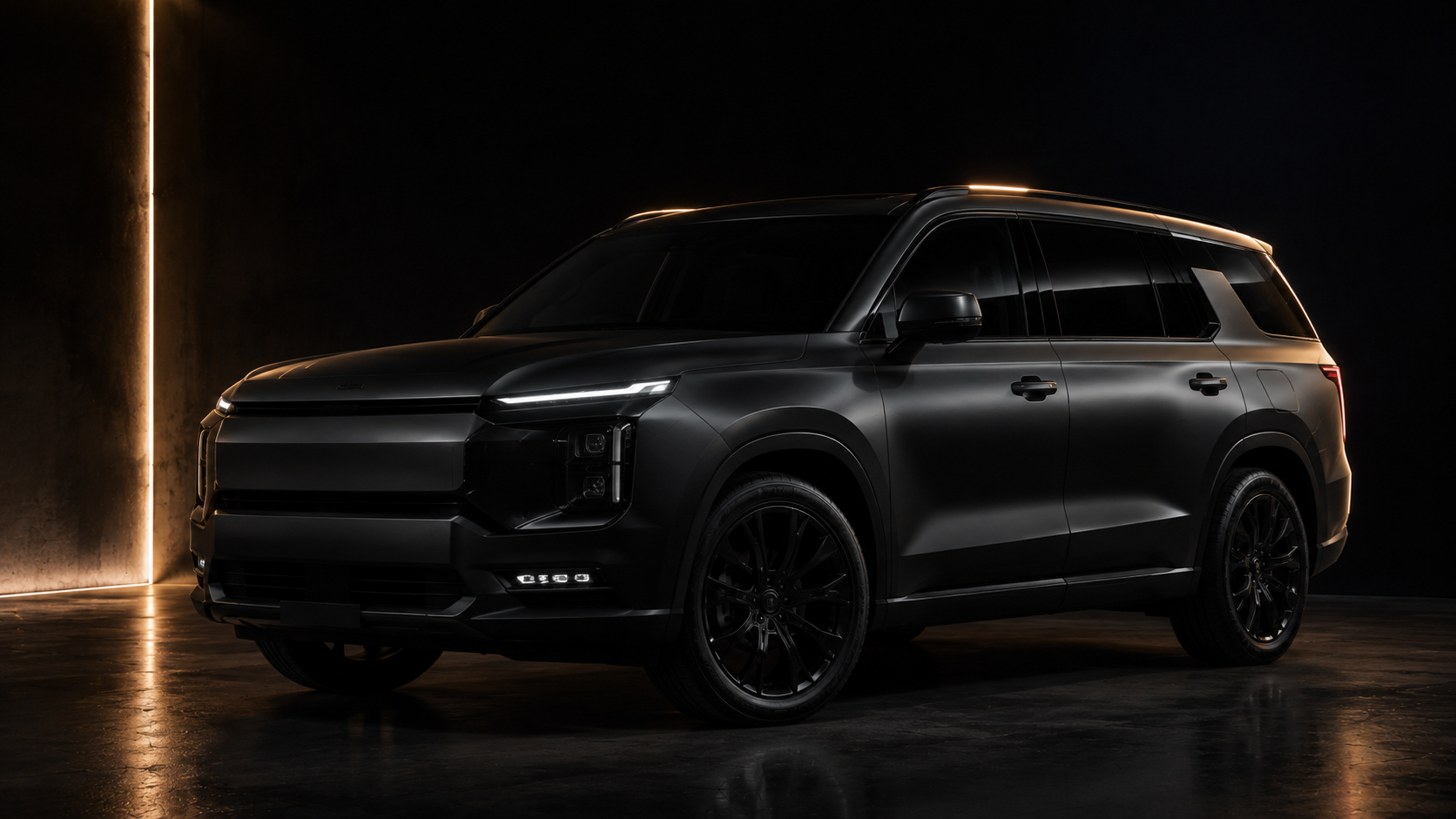
Tata Motors has added Dark Editions to the top-end Harrier Fearless Ultra and Safari Accomplished Ultra trims — roughly a week after launching Stealth Editions on those same two trims. Both sit alongside the existing Red Dark editions. That means a buyer walking into a showroom for a top-spec Harrier now faces three near-identical, black-themed, cosmetically-differentiated versions of the same car, launched within days of each other, overlapping in price, and mechanically indistinguishable. This is worth writing about not because any one of them is bad, but because the pile-up itself has become the story.
What’s Actually on Offer
The newly-added Dark Edition of the Harrier Fearless Ultra is priced from roughly ₹24.34 lakh to ₹25.85 lakh (ex-showroom), while the Safari Accomplished Ultra Dark Edition spans roughly ₹23.78 lakh to ₹26.40 lakh, with the six-seat captain-chair layout adding around ₹9,000-10,000 on the Safari. Notably, the Safari’s Accomplished Ultra trim previously offered only the Red Dark treatment, so this fills that gap.
The Stealth Editions, launched days earlier on the identical trims, are priced from about ₹23.43 lakh to ₹26.01 lakh for the Harrier and about ₹24.09 lakh to ₹26.76 lakh for the Safari. They bring a Stealth Black exterior finish, 19-inch alloys in matte Stealth Black, Stealth badging on the front fenders, an all-black cabin with Carbon Noir leatherette and a jewelled drive-mode selector. Worth noting: the 2025 Stealth run was capped at 2,700 units, whereas the 2026 version has been folded into the regular lineup rather than sold as a limited batch.
Because every one of these editions is based on the same top-end trims, the equipment is essentially identical across them — a large touchscreen, ventilated powered front seats, a premium JBL audio setup, dual-zone climate, panoramic sunroof, 360-degree camera and Tata’s Level 2 ADAS suite. The powertrains are unchanged too: a 1.5-litre turbo-petrol and a 2.0-litre Kryotec diesel, both making around 168-170hp, paired with six-speed manual or automatic gearboxes, driving the front wheels. (Specification figures vary slightly across sources — power outputs are quoted as both 168 and 170hp, and touchscreen size as both 14.5 and 14.9 inches — so confirm the exact spec of the variant you’re buying at the dealership.)
The single most important fact for a buyer: none of these editions changes anything mechanical. No extra power, no different suspension, no added capability. They are paint, trim and badges.
Why Manufacturers Do This
There’s a sound commercial logic behind edition proliferation, and it’s worth understanding rather than dismissing.
Special editions are extraordinarily cheap to create. A different paint finish, darkened alloys, badging and revised upholstery involve almost no engineering cost, no new homologation, and no change to the production line’s fundamentals. Yet they generate fresh marketing material, give dealers something new to talk about, and create showroom interest for a model that may be years into its lifecycle without a full update. For a manufacturer trying to keep a flagship SUV visible in a crowded segment between major product actions, that’s an excellent return on a very small investment.
There’s also genuine demand. Research shows blacked-out styling packages have proven popular with Indian SUV buyers, and Tata’s Dark range in particular has built real brand equity over several years — enough that “Dark” now functions almost as a sub-brand rather than a one-off trim. Offering factory-fitted, warrantied styling that buyers would otherwise chase in the aftermarket is a legitimate service.
The Problem With Three of Them at Once
Where the strategy strains is in the density. Launching Stealth and Dark editions on the same two trims within roughly a week, on top of an existing Red Dark, produces several genuine downsides.
The most immediate is buyer confusion. A prospective Harrier customer now has to distinguish between three black-themed editions whose differences are largely a matter of specific shade, alloy finish and badging — distinctions that are hard to evaluate from a brochure and easy to muddle at a dealership. According to consumer research, data shows that excessive choice within a narrow band can slow decisions rather than accelerate them, because buyers become anxious about picking wrong when the options are similar but not identical.
The second is diluted exclusivity. The appeal of a special edition rests partly on distinctiveness. When three overlapping variants of the same visual idea exist simultaneously — and when the Stealth has shifted from a capped 2,700-unit run to a permanent lineup fixture — the sense of owning something differentiated erodes. What was special becomes simply another trim.
The third is a quieter, longer-term issue: resale positioning. Used-car buyers and valuers rely on clear variant hierarchies to price a vehicle. A model line with three near-identical cosmetic editions at overlapping prices is harder to position in the used market, and edition-specific premiums are more likely to evaporate when the differences are difficult to articulate.
Two Different Special-Edition Playbooks
It’s instructive to contrast Tata’s approach here with Renault’s recent Duster Adventure Edition. Renault priced its special edition below the equivalent standard trim, using cheap cosmetic content as a value proposition and a showroom draw — the edition was a way to make the car look better value, not more premium.
Tata is running the opposite play. Its editions sit at or near the top of the range and are positioned as premium lifestyle choices, betting that buyers will pay for a distinct visual identity rather than being lured by a discount. Both are valid strategies. Renault’s works when a brand needs volume and foot traffic; Tata’s works when a nameplate already has desirability and the aim is to monetise it. But Tata’s approach depends on each edition feeling genuinely special — which is precisely what stacking three of them undermines.
How to Actually Choose
For a buyer genuinely shopping a top-spec Harrier or Safari, here’s the practical decision framework.
Start by accepting that this is purely an aesthetic decision. Since the trims underneath are the same, the equipment, powertrain options, safety kit and capability are effectively identical across Dark, Red Dark and Stealth. There is no “better” one in any functional sense.
So choose on two things only. First, which finish you actually prefer — see them in person if at all possible, because matte and gloss black photograph very differently from how they look in daylight, and the alloy finishes are a bigger visual differentiator than the brochures suggest. Second, the on-road price for the specific variant, powertrain and gearbox you want, since the ex-showroom ranges overlap substantially and the edition premium can differ by variant.
Two practical cautions. Matte and specialised black finishes generally require more careful maintenance than standard gloss paint and can be more expensive to repair or match after damage — worth asking the dealer about specifically. And if resale value matters to you, the safer choice is the edition with the longest-established equity in Tata’s lineup rather than the newest arrival, simply because it’s the one used buyers will recognise.
The Bottom Line
The new Dark Editions give top-spec Harrier and Safari buyers another well-equipped, handsome, blacked-out option, and there’s nothing wrong with the product. But arriving days after the Stealth Editions on the very same trims, alongside an existing Red Dark, the launch says more about Tata’s marketing cadence than about the cars. For buyers, the useful takeaway is liberating in its simplicity: these are cosmetic choices with identical mechanicals and equipment, so ignore the edition names, look at them in the metal, compare on-road prices, and pick the one you like the look of.
FAQs
How much do the Tata Harrier and Safari Dark Editions cost?
The Harrier Fearless Ultra Dark Edition is priced from roughly ₹24.34 lakh to ₹25.85 lakh, and the Safari Accomplished Ultra Dark Edition from roughly ₹23.78 lakh to ₹26.40 lakh (ex-showroom), with the Safari’s six-seat layout adding around ₹9,000-10,000.
What’s the difference between Tata’s Dark, Red Dark and Stealth Editions?
The differences are cosmetic only — specific black shades, alloy wheel finishes, badging and interior trim details. All are based on the same top-end trims, so equipment, powertrains and capability are effectively identical.
Do the Dark or Stealth Editions have different engines?
No. Both use the same 1.5-litre turbo-petrol and 2.0-litre Kryotec diesel engines (around 168-170hp each), with six-speed manual or automatic gearboxes and front-wheel drive. There are no mechanical changes.
Is the Stealth Edition a limited edition?
Not in 2026. The 2025 Stealth Edition run was capped at 2,700 units, but the 2026 version has been made a regular part of the Harrier and Safari lineup.
Which edition should I buy?
Since all are mechanically and functionally identical, choose on appearance and on-road price. View them in person, as matte and gloss black finishes look markedly different in daylight than in photographs.
Do black editions cost more to maintain?
Matte and specialised black finishes generally require more careful upkeep and can be costlier to repair or colour-match than standard gloss paint. Ask your dealer about specific care and repair requirements before buying.