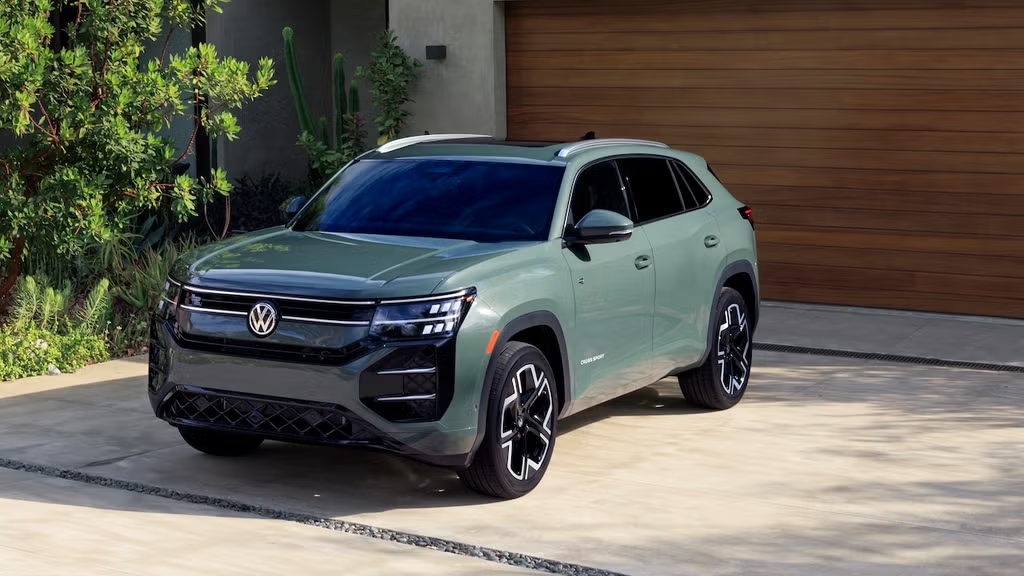
2027 Volkswagen Atlas Cross Sport Revealed: Volkswagen has revealed the redesigned 2027 Atlas Cross Sport, the two-row companion to its larger three-row Atlas, bringing a completely reworked exterior, a genuinely upscale interior, and a more powerful turbocharged four-cylinder engine to a nameplate that has quietly become one of the most important vehicles in the brand’s American lineup. Together, the Atlas and Atlas Cross Sport now account for roughly a third of Volkswagen’s total US sales — which makes this redesign considerably higher-stakes than a routine mid-cycle refresh, even though Volkswagen is treating the announcement with the same measured rollout it gives any other model year update.
Why this reveal matters more than it might first appear
Since debuting for the 2020 model year, according to sales figures reported by the company, the Atlas Cross Sport has sold more than 220,000 units in the US, carving out a genuine niche as the sportier, shorter-roofline alternative to the standard three-row Atlas for buyers who don’t need a third row but still want Atlas-level cabin space and presence. With Volkswagen lacking a US-market Touareg to fill the gap between the compact Tiguan and the full-size Atlas, the Cross Sport has effectively been doing double duty — both a lifestyle SUV in its own right and the brand’s de facto answer to a segment it would otherwise have no entry in at all.
This redesign arrives a few months after Volkswagen revealed the completely renewed three-row 2027 Atlas, and the Cross Sport follows the same fundamental playbook: new sheet metal nearly everywhere, a substantially upgraded cabin, and more power under the hood, all built on an updated version of Volkswagen’s MQB Evo platform architecture.
Exterior design: sharper, wider-looking, more expensive-feeling
Volkswagen has reworked essentially every exterior panel on the Cross Sport. Up front, the SUV adopts stacked LED headlights, a darkened upper grille, and a redesigned hood that gives the face a bolder, more deliberate presence than the outgoing model. On every trim except the base version, dual light strips and an illuminated Volkswagen badge come standard — a lighting-as-signature approach that mirrors what the brand has done across its wider lineup recently.
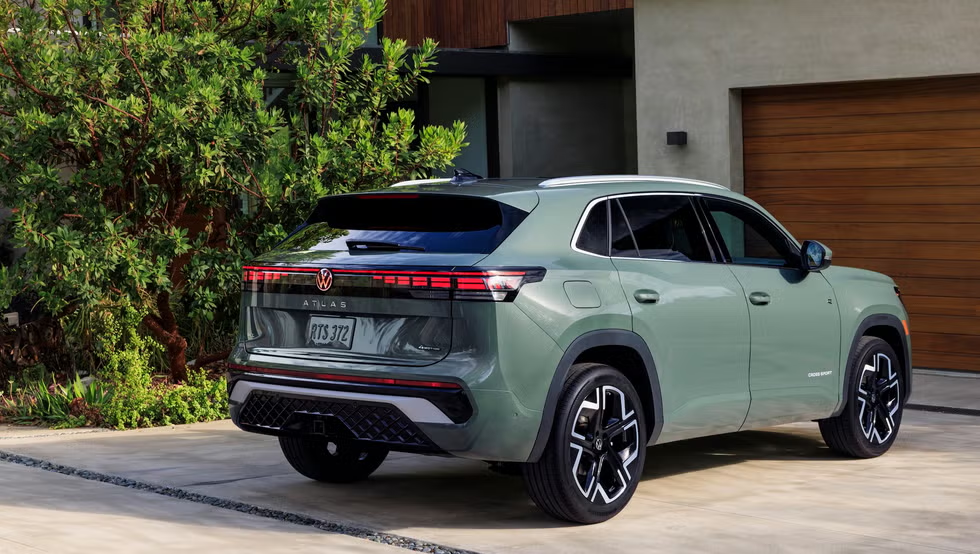
The Cross Sport’s front and rear ends are largely shared with the standard three-row Atlas — identical headlight and taillight designs, matching grille and front intake shapes, and the same bumper detailing — but the two vehicles diverge sharply in profile. The Cross Sport retains its distinctively lower, shorter roofline, with a dramatically raked rear pillar structure that gives the five-seat model a noticeably more athletic stance than its boxier three-row sibling. According to exterior designer William Lee, the low cabin and short rear overhang were engineered specifically to give the vehicle a sportier presence, with the proportions and body-color trim intended to push its perceived positioning further upmarket. At the rear, full-width taillights with three-dimensional detailing carry the front’s lighting language through to the back, and the tailgate now sits flush with the bumper rather than protruding, a small but visible refinement over the previous generation.
In terms of size, the new Cross Sport comes in at roughly 196 inches nose to tail — about five and a half inches shorter than its three-row sibling — and stands a couple of inches lower overall. Wheel sizes range from 18 to 21 inches depending on trim, and three new exterior shades join the palette: a dark sage green, a deep blackberry tone, and a lighter grey option.
Interior: the biggest leap for this generation
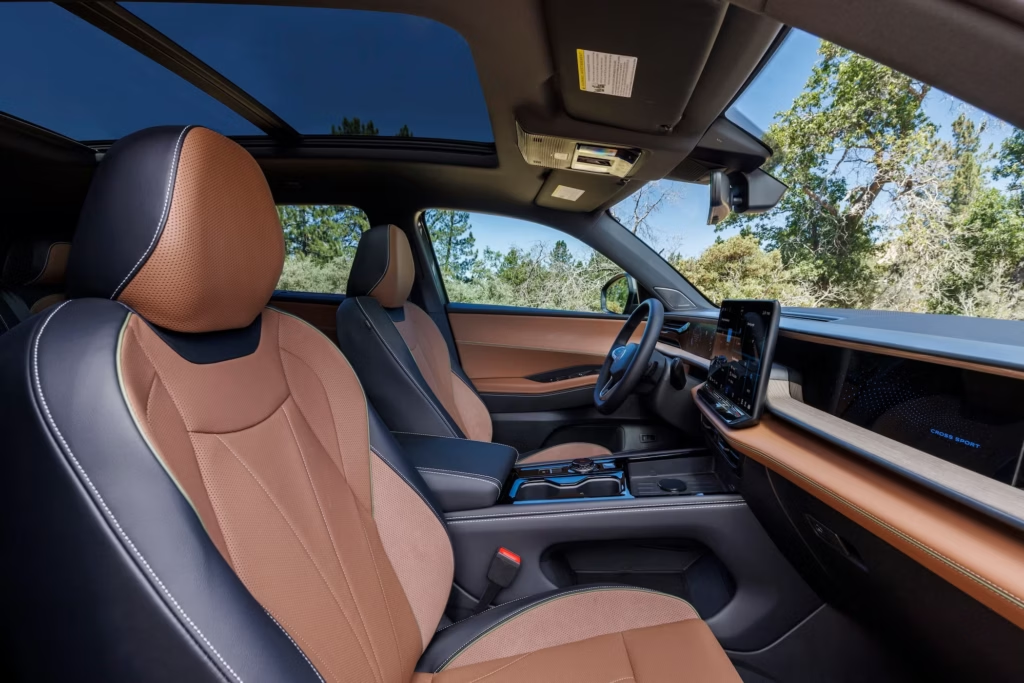
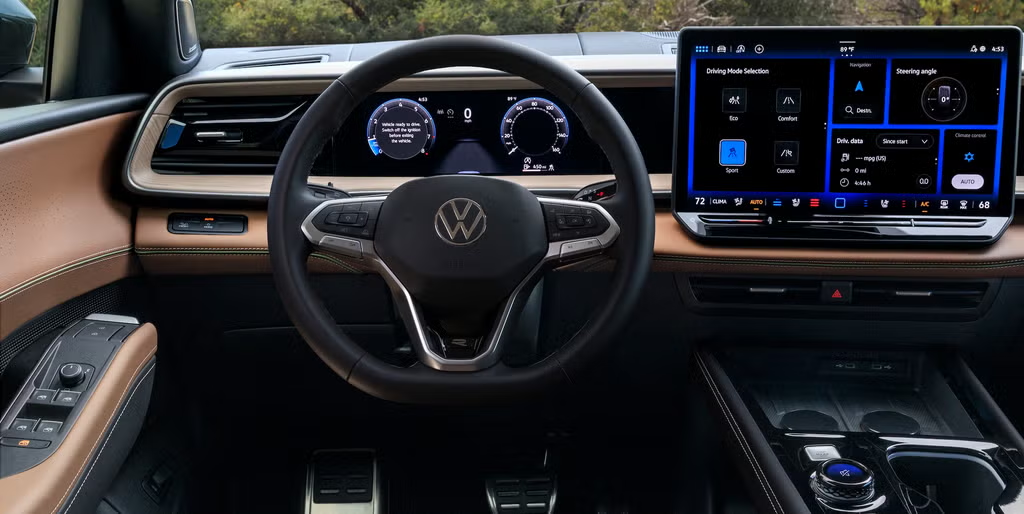
If the exterior is an evolution, the cabin is where Volkswagen has clearly spent the bulk of its redesign effort. The dashboard now centers on a wide, illuminated loop element that spans the width of the cockpit, paired with soft-touch materials, real wood trim, contrasting stitching, and ambient lighting woven throughout — a notably more premium execution than the outgoing model’s more utilitarian layout. Buyers can choose from three interior color schemes: Pebble Grey, Black, and Medium Brown, with leatherette standard on entry-level trims and either Varenna or Nappa leather available further up the range.
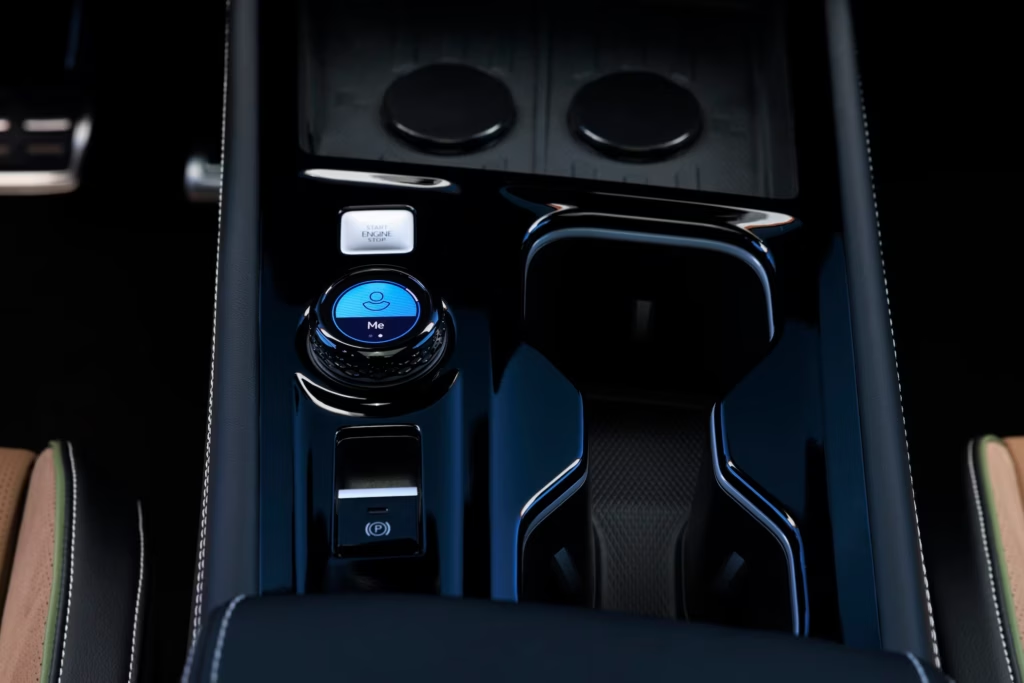
The ambient lighting system is genuinely elaborate for the segment. A 10-color setup comes standard, expanding to 30 colors on the top two trim levels, and a built-in “Atmospheres” feature coordinates lighting and audio settings together for a more curated cabin mood — controlled via a new multifunction dial on the center console that also handles audio volume and drive-mode selection. On most trims, the ambient lighting runs through the dashboard loop and down into the front footwells; on the top two trims specifically, an organic spiral pattern extends into backlit, perforated door panels front and rear, along with an illuminated passenger-side dashboard panel.
Seating has been substantially upgraded as well. Every 2027 Atlas Cross Sport comes standard with a revised 12-way power-adjustable driver’s seat featuring improved four-way lumbar support, and upper trims add adjustable thigh support along with full-back massage functionality for both the driver and front passenger — genuinely upscale features that weren’t part of the outgoing Cross Sport’s equipment list. Buyers can also option heated and ventilated rear seats, a 14-speaker Harman Kardon sound system (up from a smaller standard speaker count), and a large panoramic sunroof, while new standard equipment across the range includes a power liftgate with hands-free Easy Open operation, manual rear sunshades, an auto-dimming driver’s-side mirror, dual lights inside the hatch area, and front-and-rear Park Distance Control sensors.
One small but well-liked detail carrying over from the standard Atlas: physical, pull-lever door handles and honest window switches rather than the capacitive-touch controls that have frustrated owners of several rival SUVs in recent years.
Technology and safety
Infotainment scales by trim: a 12.9-inch free-standing touchscreen comes standard on the base model, while the majority of Cross Sport trims — reportedly around 90 percent of the range — step up to a 15-inch display. Every trim level gets Volkswagen’s 10.25-inch Digital Cockpit Pro configurable digital instrument cluster as standard equipment, replacing analog gauges entirely across the lineup.
On the safety and driver-assistance front, the Cross Sport gains a genuinely more capable Travel Assist system, Volkswagen’s hands-on adaptive cruise control setup, which now operates across a 0 to 95 mph range and can execute automated lane changes. A new Emergency Assist Plus feature is designed to automatically bring the vehicle to a stop if it detects signs the driver may be experiencing a medical emergency — a feature increasingly common among premium brands but still relatively rare at this price point. Parking assist systems have also been refined, and the vehicle now carries seven airbags total, up from the previous generation, following the addition of a front center airbag positioned between the driver and front passenger to reduce injury risk in side-impact collisions.
The engine: more power, hybrid coming later
Under the hood, according to Volkswagen’s own announcement, the redesigned Cross Sport gets a reworked turbocharged 2.0-liter four-cylinder now good for 282 horsepower — a meaningful jump over the outgoing engine’s output. Volkswagen has not yet detailed torque figures or confirmed transmission specifics for this generation, though the outgoing Cross Sport paired its 2.0-liter turbo with an 8-speed automatic transmission and offered both front- and all-wheel-drive configurations — a formula the new generation is expected to broadly continue, pending Volkswagen’s full specifications release closer to launch.
Notably, Volkswagen has confirmed that a hybrid version of both the Cross Sport and the standard three-row Atlas will arrive as part of a mid-cycle refresh a few years into this generation’s production run — meaning buyers who specifically want electrified power will need to wait, while the initial 2027 launch models remain gasoline-only.
Pricing, availability, and manufacturing
Volkswagen has kept pricing for the 2027 Atlas Cross Sport under wraps for now. The company says full specifications and dollar figures will follow closer to the SUV’s on-sale window, targeted for early 2027 in the US; a separate announcement confirms Canadian dealership arrivals are also expected early next year, with local pricing to follow nearer that launch. Production continues at Volkswagen’s Chattanooga, Tennessee, assembly plant, where the Cross Sport is built alongside its three-row Atlas sibling — reinforcing the model’s role as a genuinely domestic-assembled product within Volkswagen’s North American manufacturing footprint.
What this redesign signals about VW’s US strategy
The Atlas and Atlas Cross Sport aren’t peripheral models for Volkswagen in North America — they’re core to roughly a third of everything the brand sells in the US. Investing this heavily in both cabin quality and feature content, rather than simply refreshing sheet metal and calling it a generation change, suggests Volkswagen is treating the segment as a genuine battleground against three-row and two-row rivals from Honda, Toyota, Hyundai, and Kia, several of which have themselves recently pushed further upmarket on interior materials and technology. The addition of massage seats, a 30-color ambient lighting system, and Harman Kardon audio at this price point are features that, until recently, were largely reserved for luxury-badge competitors — and their appearance here suggests Volkswagen sees interior experience, not just powertrain output or safety scores, as the next real battleground in the mainstream midsize SUV segment.
FAQs
When will the 2027 Volkswagen Atlas Cross Sport go on sale? Volkswagen has confirmed a US and Canadian launch in early 2027, with full pricing and specifications to be announced closer to that date.
How much horsepower does the 2027 Atlas Cross Sport have? The redesigned Cross Sport uses an updated turbocharged 2.0-liter four-cylinder engine producing 282 horsepower, an increase over the outgoing model. Volkswagen has not yet released torque figures.
Will there be a hybrid Volkswagen Atlas Cross Sport? Yes, but not at launch. Volkswagen has confirmed a hybrid version of both the Atlas Cross Sport and the three-row Atlas will arrive as part of a mid-cycle refresh a few years into the current generation.
What’s different about the 2027 Atlas Cross Sport’s interior? Highlights include a redesigned dashboard with an architectural light-up loop, up to 30-color ambient lighting with a coordinated “Atmospheres” mode, massaging front seats on upper trims, real wood trim, and either a 12.9-inch or 15-inch infotainment touchscreen depending on trim level.
Where is the 2027 Volkswagen Atlas Cross Sport built? The Atlas Cross Sport continues to be manufactured at Volkswagen’s assembly plant in Chattanooga, Tennessee, alongside the three-row Atlas.