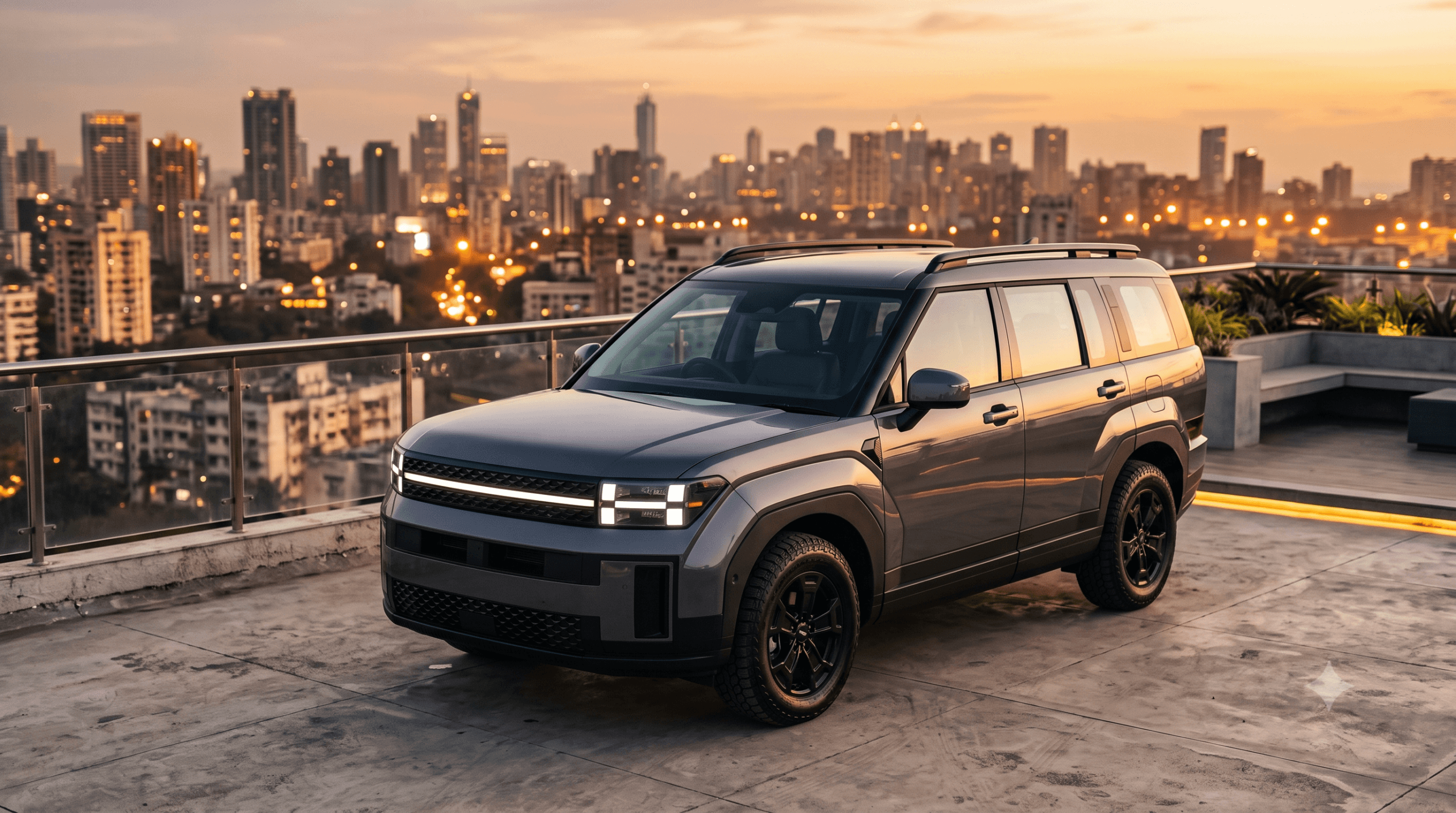
Nissan Tekton Launched at Rs 10.49 Lakh: Should You Buy It Over the Duster, Creta or Grand Vitara?
Nissan’s new Tekton midsize SUV went on sale in India on July 9, 2026, priced from Rs 10.49 lakh to Rs 18.59 lakh (ex-showroom), and it arrives with more baggage — in a good way — than most new nameplates. It’s built on the same platform as the newly launched Renault Duster, made at the same Chennai plant, and aimed squarely at the country’s most contested SUV segment. The core question for anyone cross-shopping right now isn’t “is the Tekton good” — on paper, it clearly is — it’s “which of my five or six realistic options actually fits how I drive and how long I plan to keep the car.” Here’s a buyer-first breakdown using the now-confirmed official specs, not pre-launch speculation.
What the Tekton actually is
Strip away the badge and the Tekton is a Nissan-flavored Renault Duster: same 4.3-metre body, same 2.6-metre wheelbase, same two turbo-petrol engines, same underlying suspension and platform engineering. Where Nissan has worked to differentiate it is styling and equipment. The front end borrows visual language from the Nissan Patrol — a full-width chrome-accented grille, C-shaped connected LED headlamps, and a chunky skid-plate bumper — while the cabin gets a twin-screen layout (10.1-inch Google Built-in infotainment plus a 10.25-inch digital instrument cluster), ventilated and powered front seats, a two-pane panoramic sunroof, and an Arkamys 3D sound system. Nissan is positioning it as the more premium-feeling, tech-forward option relative to the more rugged, adventure-styled Duster.
According to Nissan’s official launch statements, the Tekton is being described internally as the flagship product of the company’s India “product offensive” — a deliberate signal that this isn’t a quick badge-engineering exercise but a car the brand expects to carry meaningful volume. Guillaume Cartier, Nissan’s Chief Performance Officer, said at the World Premiere that the launch reflects the company’s ambition to “combine global product strength with deep local relevance,” while the Chennai plant producing it is also positioned to export the Tekton to markets across the Middle East and Africa region.
Engines, variants, and pricing broken down
The Tekton comes with exactly two engine choices, both turbo-petrol, and — this is the detail worth internalizing before you walk into a showroom — no hybrid option, at least at launch.
- 1.0-litre, 3-cylinder turbo-petrol: 99 bhp / 166 Nm, 6-speed manual only. ARAI-claimed efficiency of roughly 19.4 kmpl.
- 1.3-litre, 4-cylinder turbo-petrol: 160 bhp / 280 Nm — a segment-leading torque figure — available with either a 6-speed manual or a 6-speed wet-clutch DCT automatic.
According to official pricing data released at launch, across six trim levels — Visia, Visia+, Acenta, N-Connecta, Tekna, and Tekna+ — the Tekton spans twelve variant combinations. The base Visia 1.0 MT starts at Rs 10.49 lakh, while the range-topping Tekna+ 1.3 DCT tops out at Rs 18.59 lakh. Bookings are open with a deposit (reported between Rs 11,000-21,000 depending on the source), and deliveries begin from July 20, 2026 — a notably fast turnaround from launch to showroom for the Indian market. Safety-wise, Bharat NCAP crash-test data shows the Tekton earning a 5-star rating, with six airbags standard and more than 17 ADAS functions including adaptive cruise control with stop-and-go, autonomous emergency braking, and a 360-degree camera — a genuinely strong showing for this price band.
The hybrid gap — and why Nissan left it there deliberately
The one question every prospective buyer is asking: will the Tekton get the Duster’s 1.8-litre strong-hybrid engine, arriving with the Duster around Diwali 2026? Nissan has not announced it for the Tekton, and multiple industry reports suggest Renault intends to keep that hybrid system exclusive to the Duster for now. That combined output — roughly 158-160 bhp with a 1.4 kWh battery pack and strong electric-mode running in city driving — is the single biggest differentiator between the platform-siblings today. This isn’t an oversight; it’s brand strategy. The Duster is central to Renault’s India comeback, and a hybrid-only advantage over its own Nissan-badged twin protects that positioning. If your buying decision leans heavily on fuel efficiency and low running costs, that gap matters more than any interior trim difference between the two cars.
How the Tekton stacks up against the segment
The midsize SUV segment the Tekton enters is arguably the single most competitive space in the Indian market, so context matters more here than in most launches.
Vs. the Renault Duster (platform sibling): Same mechanicals, same footprint. The Duster leans into rugged styling and will get the hybrid engine first; the Tekton leans into tech and premium cabin feel with the Patrol-inspired design language. If efficiency is your priority, wait for the Duster hybrid. If you prefer the Tekton’s styling and features and are fine with turbo-petrol-only, the price difference between the two is likely to be marginal.
Vs. Hyundai Creta / Kia Seltos: Both remain the benchmark for outright polish, resale value, and dealer network depth. The Tekton’s 280 Nm torque figure from the 1.3-litre engine actually beats what either rival offers at a comparable price point, and its ADAS suite is competitive. What the Creta and Seltos still win on is long-term reliability perception and service-network reach — Nissan’s India dealer footprint is considerably thinner.
Vs. Maruti Grand Vitara / Toyota Hyryder (hybrid): This is the comparison that matters most if fuel economy is your primary concern. The Grand Vitara/Hyryder’s strong-hybrid setup delivers meaningfully better real-world city mileage than any turbo-petrol option, including the Tekton’s. The Tekton wins on raw performance and features; the Hyryder/Grand Vitara wins on running costs and Maruti-Toyota’s unmatched service network.
Vs. Tata Sierra / Curvv: Tata’s siblings compete more on distinctive design and India-first engineering than outright spec-sheet numbers. If you want a car that doesn’t look like everything else on the road, the Sierra remains the more individual choice; the Tekton is the more conventionally “premium SUV” execution.
What the numbers say about total cost of ownership
Industry data on turbo-petrol versus strong-hybrid running costs in this segment consistently shows a 25-35% real-world city mileage gap in favor of hybrids, based on owner-reported figures for the Grand Vitara and Hyryder compared with turbo-petrol rivals. On a typical 15,000 km annual usage pattern with mixed city-highway driving, that gap translates to a meaningful multi-year fuel-cost difference — one large enough that it should factor into the decision alongside the Tekton’s stronger straight-line performance and lower on-road price. Buyers who do the bulk of their driving in dense city traffic will feel this gap far more than highway-heavy drivers, for whom the Tekton’s torque advantage becomes more relevant than any hybrid efficiency gain.
Resale value is the other cost-of-ownership variable worth flagging honestly. Nissan’s dealer network in India, while expanding, remains considerably thinner than Maruti’s, Hyundai’s, or Tata’s — a factor that has historically weighed on resale realizations for Nissan-badged cars here, including the outgoing Terrano that the Tekton effectively replaces. Buyers planning to keep the car five-plus years should weigh this against the Tekton’s stronger day-one value proposition.
Who should actually buy the Tekton
The Tekton makes the most sense for a buyer who wants strong straight-line performance (that 280 Nm figure is genuinely segment-leading), a loaded feature set at a competitive price, and a design that stands out from the now-common Creta/Seltos silhouette — and who is not prioritizing outright fuel efficiency or long-term resale certainty above all else. It’s a weaker pick if you’re commuting heavily in stop-start city traffic and want the lowest possible running cost (go look at the Grand Vitara/Hyryder hybrid), or if brand trust and dealer-network depth are non-negotiable for you (Creta/Seltos still lead there).
Nissan is explicitly calling this its flagship “product offensive” model for India, manufactured at Chennai for both domestic sale and export — which suggests the company has real long-term commitment behind it, not a one-off badge-engineering exercise. That’s a reasonable signal of parts and service continuity, even if the network itself needs to catch up.
FAQs
Does the Nissan Tekton get a hybrid engine?
Not at launch. Nissan has not confirmed a hybrid variant for the Tekton, and current reports indicate Renault intends to keep the Duster’s 1.8-litre strong-hybrid powertrain exclusive to the Duster for now.
What is the on-road price of the Nissan Tekton?
The ex-showroom range is Rs 10.49 lakh to Rs 18.59 lakh; on-road pricing (including RTO and insurance) starts at roughly Rs 12.17 lakh for the base variant, though this varies by state.
Is the Nissan Tekton the same car as the Renault Duster?
It shares the same platform, 4.3-metre body dimensions, 2.6-metre wheelbase, and both turbo-petrol engines with the Duster, but has distinct exterior styling inspired by the Nissan Patrol and its own interior trim and feature set.
How many airbags and what safety rating does the Tekton have?
Six airbags standard across the range, a 5-star Bharat NCAP crash-safety rating, and more than 17 ADAS functions including adaptive cruise control, autonomous emergency braking, and a 360-degree camera.
When will Tekton deliveries begin?
Deliveries are scheduled to start July 20, 2026, roughly two weeks after the official launch — a fast turnaround by Indian market standards.
Does the Tekton offer four-wheel drive?
No. Like the Indian-spec Duster, the Tekton is offered only with front-wheel drive at launch, though the platform does support AWD in international markets.