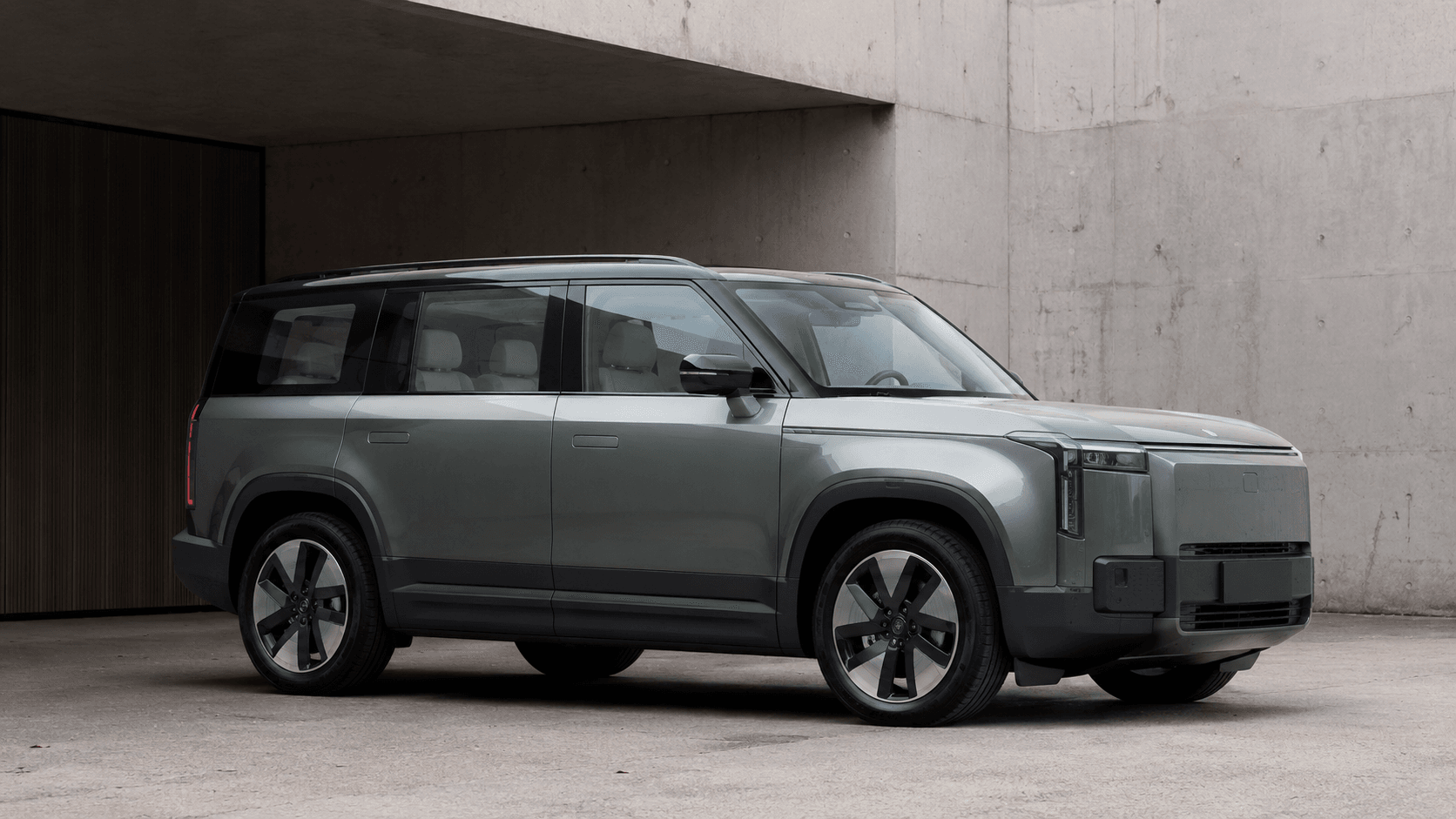
The Tata Sierra EV has launched in India at Rs 18.79 lakh to Rs 25.99 lakh (ex-showroom), reviving a nameplate that last sold new cars in 2000, and the most important thing for prospective buyers to understand isn’t its price — it’s exactly where it sits relative to the two other Tata EVs it now competes with internally: the Curvv EV below it and the Harrier EV above it. Getting that positioning right will save shoppers from comparing the wrong cars.
The Launch, in Numbers
Tata Motors unveiled the production Sierra EV in Mumbai on June 30, 2026, pricing it across five variants between Rs 18.79 lakh and Rs 25.99 lakh ex-showroom. Two battery pack sizes are on offer: a 63kWh pack with an ARAI-claimed range of roughly 565 km, and a larger 75kWh pack claiming up to 665 km. Standard variants pair the smaller battery with a single rear-mounted motor, while the top-spec 75kWh configuration adds Tata’s Quad Wheel Drive (QWD) system — front and rear motors working together for all-wheel drive.
Bookings opened on launch day, and deliveries are scheduled to begin July 15, 2026 — meaning the first customer units will be on Indian roads within days of this article’s publication. Seven exterior colour options are available, including the launch-colour “Rishikesh Rapids,” alongside “Nainital Nocturne,” “Andaman Adventure,” and “Coorg Cloud” — names that lean into the nameplate’s original rugged, exploratory positioning from the 1990s.
Sharing DNA, Not Just a Badge
The Sierra EV borrows its exterior design language directly from the recently launched Sierra ICE (petrol/diesel) model, including its distinctive silhouette and 19-inch alloy wheel design, but differentiates itself with a closed-off front grille — a common EV design cue signalling there’s no combustion engine to cool — along with aerodynamic wheel inserts for efficiency and Tata.ev badging on the front doors.
Mechanically, the more relevant relationship is with the Harrier EV: the Sierra EV shares its battery pack and electric motor hardware with Tata’s existing three-row electric SUV. This is a meaningful practical detail for buyers, because it means the Sierra EV inherits a powertrain that’s already been through a real-world ownership cycle via the Harrier EV, rather than launching with completely unproven hardware. According to RushLane’s launch-day coverage, notable feature highlights include a 540-degree camera system with a “Transparent Mode” for viewing underneath the vehicle — useful off-road or in tight parking — and flush door handles for aerodynamic efficiency.
Why This Matters: Tata Now Has Three EVs in Overlapping Price Bands
The Sierra EV’s most distinctive characteristic isn’t a spec — it’s where Tata has chosen to price it. At Rs 18.79-25.99 lakh, it sits squarely between the Curvv EV (Tata’s coupe-SUV EV, priced lower) and the Harrier EV (Tata’s larger three-row-capable EV, priced higher). For a company that already sells the Nexon EV, Punch EV, Curvv EV, and Harrier EV, adding the Sierra EV into this specific band raises a genuine question for shoppers: what does the Sierra EV offer that the Curvv EV or Harrier EV don’t?
Based on the confirmed specs, the answer appears to be range and family-oriented space at a price point below the Harrier EV, combined with styling built around the Sierra’s boxy, glass-heavy silhouette rather than the Curvv’s coupe-like roofline or the Harrier’s larger three-row footprint. In practice, this means:
- Buyers who want maximum single-charge range without stepping up to Harrier EV pricing get it here — the 75kWh Sierra EV’s claimed 665km beats what Tata currently quotes for comparable Curvv EV configurations.
- Buyers who specifically want three-row seating or the largest cabin in Tata’s EV range should still look at the Harrier EV, since the Sierra EV is not being positioned as a 7-seater.
- Buyers who prioritise price-to-range efficiency over badge nostalgia should cross-shop all three Tata EVs on a rupee-per-kilometre-of-range basis before assuming the newest launch is automatically the best fit.
How It Stacks Up Against the Competition
Outside Tata’s own lineup, the Sierra EV enters a segment now crowded with the Hyundai Creta Electric, Mahindra BE 6, Maruti e Vitara, and the imported VinFast VF 7. Against this set, the Sierra EV’s key selling points are its claimed range (665 km at the top end is competitive with or ahead of most rivals’ claimed figures) and the QWD all-wheel-drive option, which not every rival offers at a comparable price. Tata is also reportedly evaluating extending its Battery-as-a-Service (BaaS) model — where customers can rent the battery separately to lower the upfront purchase price — to the Sierra EV, though this hasn’t been confirmed as available at launch.
The Claimed-vs-Real-World Range Gap Buyers Should Budget For
Data consistently shows that, as with virtually every EV sold in India, the ARAI-certified range figures (565 km and 665 km) are lab-tested numbers achieved under controlled conditions, not a guarantee of real-world performance. Research shows that factors like air conditioning use, highway speeds versus city driving, passenger and cargo load, and driving style typically bring real-world range down meaningfully from the certified figure — a pattern well-documented across the EV segment generally, not specific to Tata. Prospective buyers should treat the claimed range as a ceiling for planning purposes, not a floor, and budget charging stops accordingly for longer trips rather than assuming full ARAI-rated range on the highway.
Should You Buy the Sierra EV?
For buyers specifically drawn to the Sierra nameplate’s design and history, who want strong single-charge range without committing to the larger and pricier Harrier EV, and who value the reassurance of a powertrain already proven in another Tata model, the Sierra EV is a genuinely strong option in the segment. Buyers who need three-row seating should still default to the Harrier EV, and value-focused buyers should run the numbers against the Curvv EV before assuming the newer, more talked-about launch is automatically the better fit for their budget.
A Six-Year Wait, and What the Nameplate Revival Signals
The Sierra EV’s launch closes a gap that’s been open since Auto Expo 2020, when Tata first showed a Sierra EV concept and let the nameplate’s cult following speculate for years about a production version. According to Tata’s own launch messaging, the production Sierra EV also arrives on the back of a publicity stunt — a pre-launch record climb of the Tal Moreeb sand dune in the UAE, one of the tallest in the world — a deliberate signal that Tata wants the Sierra EV perceived as capable, not just efficient. That’s a notably different marketing angle from the more utilitarian, spec-sheet-driven launches of the Nexon EV and Punch EV earlier in Tata’s EV push.
This matters strategically because Tata is no longer just building EVs to hit emission targets or capture early-adopter interest — it’s now using nameplate nostalgia (Sierra) the same way it’s expected to lean on Safari and Harrier equity elsewhere in its lineup, a sign the company sees its EV range as mature enough to compete on brand storytelling, not just on range and price.
Financing and the Battery-as-a-Service Question
One detail worth tracking for cost-conscious buyers is Tata’s reported evaluation of extending its Battery-as-a-Service (BaaS) model to the Sierra EV. Under BaaS, buyers pay a lower upfront price for the vehicle while renting the battery separately — a model already used to make some of Tata’s other EVs more accessible. If Tata does extend BaaS to the Sierra EV, it could meaningfully undercut the Rs 18.79 lakh starting price for buyers willing to take on a monthly battery rental instead, though as of launch this option hasn’t been confirmed as available.
FAQs
What is the price of the Tata Sierra EV in India?
The Tata Sierra EV is priced from Rs 18.79 lakh to Rs 25.99 lakh (ex-showroom) across five variants.
What is the range of the Tata Sierra EV?
The 63kWh battery variant has an ARAI-claimed range of approximately 565 km, while the larger 75kWh battery variant claims up to 665 km. Real-world range will typically be lower depending on driving conditions.
Does the Tata Sierra EV have all-wheel drive?
Yes, the top-spec variant with the 75kWh battery gets Tata’s Quad Wheel Drive (QWD) system, using front and rear motors for all-wheel drive.
When will Tata Sierra EV deliveries begin?
Deliveries are scheduled to begin on July 15, 2026, shortly after bookings opened on the June 30, 2026 launch date.
How is the Tata Sierra EV different from the Tata Harrier EV?
The Sierra EV shares its battery pack and motor hardware with the Harrier EV but is positioned below it in Tata’s lineup, with different styling based on the Sierra ICE model and without three-row seating.
What are the Tata Sierra EV’s main rivals?
It competes with the Hyundai Creta Electric, Mahindra BE 6, Maruti e Vitara, and the VinFast VF 7 in the mid-size electric SUV segment.