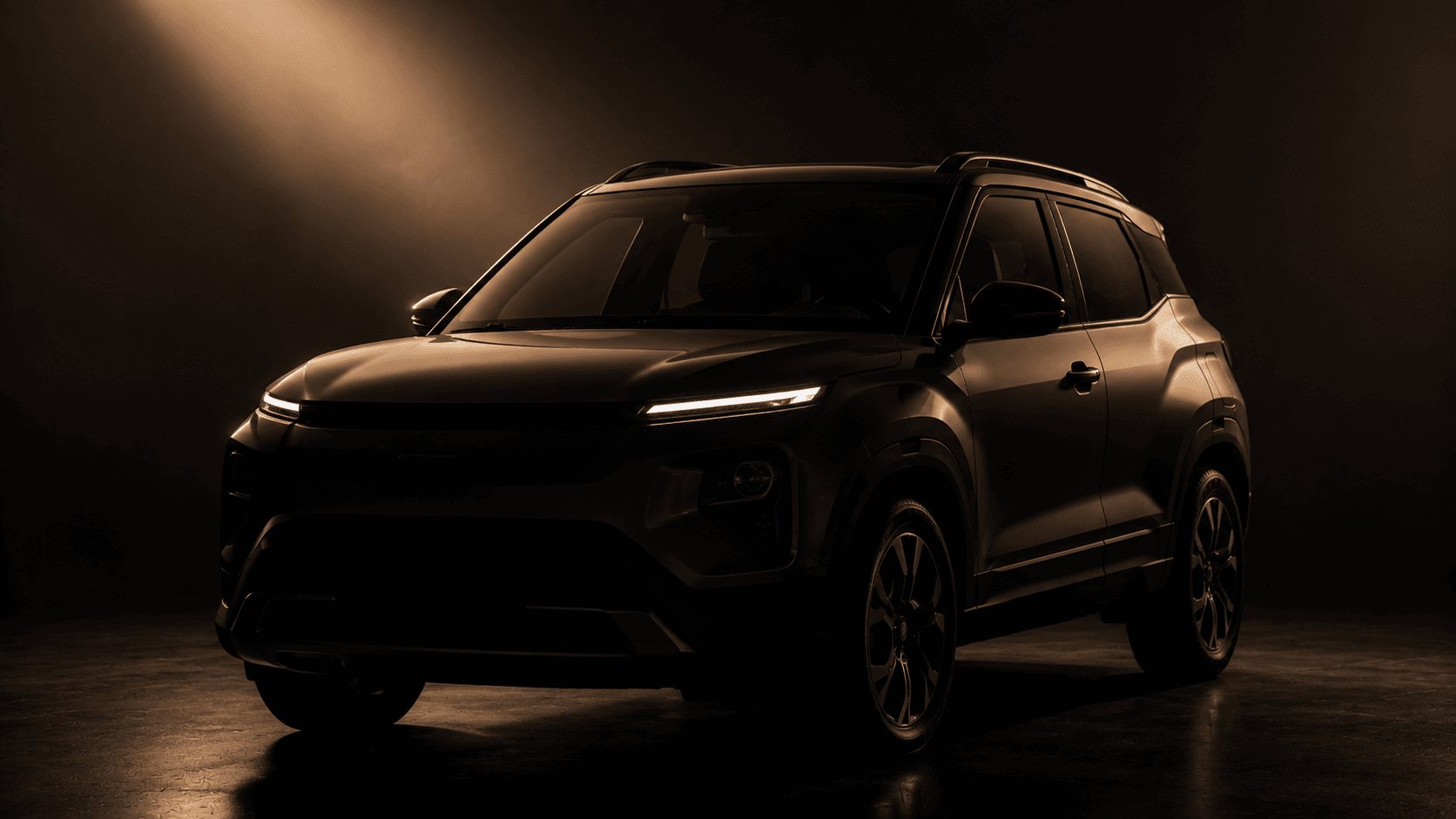
Maruti Suzuki has teased the 2026 Brezza and opened bookings at ₹11,000 ahead of a July 24 launch, marking the first major update for India’s highest-selling compact SUV since the second generation arrived in 2022. The central question isn’t whether the Brezza will sell — it will — but whether a mid-cycle facelift is enough to defend its number-one position against rivals like the Tata Nexon, Hyundai Venue, and Mahindra XUV 3XO that have pulled meaningfully ahead on features and technology over the past few years.
What’s Confirmed vs. What’s Still Expected
Maruti has officially confirmed three things: the launch date (July 24, 2026), that bookings are open at a ₹11,000 token through Arena and Nexa dealerships and online, and — via the teaser — that this is a styling refresh rather than a ground-up redesign, retaining the Brezza’s familiar upright silhouette. Everything else remains, to varying degrees, expectation rather than confirmation, and it’s worth being precise about that distinction since Maruti itself hasn’t detailed the specification.
The most talked-about expected change is the addition of Maruti’s 1.0-litre Boosterjet turbo-petrol engine — the same 100 PS/148 Nm unit from the Fronx — likely paired with a new 6-speed manual gearbox. Notably, coverage is split on how firm this is: some outlets report it confidently based on test-mule sightings, while others (including the competitor signal that surfaced this topic) explicitly flag it as speculative until launch. The existing 1.5-litre K15C Smart Hybrid petrol engine is widely expected to continue, and the CNG variant may get a genuinely useful upgrade — an underbody-mounted CNG cylinder replacing the current boot-mounted tank, which would free up the boot space that CNG buyers currently sacrifice.
On the cosmetic and feature side, expect revised front and rear bumpers, refreshed lighting, new alloy wheel designs, and possibly red accents seen in the teaser (unclear whether these are standard design or accessories). Inside, a larger 10.1-inch touchscreen (up from the current 9-inch), ambient lighting, a powered driver’s seat, ventilated front seats, and front parking sensors are anticipated. Whether the updated Brezza finally gets a Level 2 ADAS suite — increasingly a segment expectation — remains unconfirmed and is one of the more consequential open questions for July 24.
The Real Strategic Problem Maruti Is Solving
The Brezza’s dominance was never built on being the most feature-rich or most powerful option — it was built on Maruti’s unmatched service network, strong resale value, fuel efficiency, and rugged dependability at a budget-friendly ownership cost. That formula carried it to the top of the compact SUV charts and kept it there. But the segment has changed underneath it.
Rivals have raised the bar considerably: the Tata Nexon offers a bolder feature set and strong safety credentials, the Hyundai Venue and Kia Sonet compete hard on technology and premium touches, the Mahindra XUV 3XO brought genuinely aggressive feature packaging, and newer entrants like the Skoda Kylaq have added European-flavoured competition. Against this backdrop, the Brezza’s relatively conservative feature list had started to look dated — competent but no longer class-leading. The 2026 update is fundamentally a catch-up exercise on features and technology, designed to close that gap without abandoning the proven fundamentals that made the Brezza a best-seller in the first place.
Is the Turbo Engine the Real Story?
If the 1.0-litre Boosterjet turbo does arrive, it’s arguably more strategically significant than the feature updates — because it signals Maruti positioning the Brezza slightly upmarket. A turbo-petrol option with expected pricing that could stretch toward Rs 15 lakh at the top end (versus the current lineup’s Rs 8.26-12.86 lakh range) gives the Brezza a more premium, performance-oriented variant to compete with the turbocharged options rivals already offer. This would let Maruti capture buyers who currently cross-shop to a Nexon or Venue specifically for turbo performance, without those buyers leaving the Maruti fold.
That said, the naturally-aspirated and Smart Hybrid petrol variants — plus CNG — will almost certainly remain the volume sellers. The turbo is likely about widening the Brezza’s appeal at the top of its range rather than replacing its bread-and-butter powertrains. For the typical Brezza buyer prioritising efficiency and low running costs, the more relevant upgrades are the feature additions and the potential CNG boot-space fix, not the turbo.
Should You Book Now or Wait?
Booking at ₹11,000 is a low-commitment, typically refundable way to secure an early production slot, so there’s limited downside for buyers who are already confident they want the new Brezza. But with full variant, feature, and pricing details only arriving at the July 24 launch, buyers who are cross-shopping or specifically want to know whether the turbo engine and Level 2 ADAS make the cut are better served waiting the short remaining period for confirmed information before committing. There’s no meaningful advantage to booking blind when the launch is days away — the sensible move is to wait for the July 24 details, then decide with the full specification and price in hand.
What to Watch on July 24
Three things will determine whether this facelift genuinely defends the Brezza’s crown or merely maintains it: whether the turbo engine materialises (and at what price premium), whether Maruti includes Level 2 ADAS to match segment expectations, and how aggressively the SUV is priced against a Nexon and XUV 3XO that have set a high feature-per-rupee bar. If Maruti gets all three right, the Brezza’s best-seller position looks secure. If it plays too conservative on features or prices the updates too high, rivals have enough momentum to make the coming year genuinely competitive.
The Sales Numbers Behind the Stakes
To understand why this facelift matters so much to Maruti, it helps to look at the position it’s defending. According to sales data, the Brezza has consistently ranked among the country’s top-selling SUVs since its 2016 debut, regularly moving well over 10,000 units a month and frequently topping its sub-4-metre category. Industry data shows the sub-4-metre SUV segment is one of the largest and most fiercely contested in the Indian market, which means even a small shift in the Brezza’s share translates into meaningful volume — and revenue — swings for Maruti. That’s the context that makes a mid-cycle facelift a genuinely high-stakes exercise rather than a routine refresh: the Brezza isn’t just another model in the lineup, it’s a pillar of Maruti’s SUV strategy at a time when the company has been working to shed its small-hatchback-dependent image.
The Feature-Gap Reality Check
Research into what actually drives purchases in this segment shows that Indian compact-SUV buyers have grown markedly more feature-conscious over the past few years, with items like larger touchscreens, connected-car technology, ventilated seats, and increasingly ADAS moving from “nice to have” to genuine deal-breakers for a segment of buyers. According to analysts who track the category, this shift is precisely where the outgoing Brezza had begun to lag — not on the fundamentals of reliability and running cost, where it remains strong, but on the showroom-floor feature comparison that increasingly decides sales. The 2026 update’s success will hinge on whether Maruti has closed enough of that gap to keep feature-focused buyers from defecting, while retaining the value-focused buyers who choose the Brezza precisely because it doesn’t over-complicate the ownership experience.
FAQs
When is the 2026 Maruti Brezza launching?
The updated Maruti Brezza is scheduled to launch on July 24, 2026, with bookings already open at a ₹11,000 token amount.
Will the 2026 Maruti Brezza get a turbo engine?
A 1.0-litre Boosterjet turbo-petrol engine (100 PS/148 Nm, from the Fronx) is widely expected, though Maruti hasn’t officially confirmed it. Reports are split on how certain this addition is, so it remains to be confirmed at launch.
How much will the 2026 Maruti Brezza cost?
Maruti hasn’t announced prices. The current Brezza is priced between Rs 8.26 lakh and Rs 12.86 lakh (ex-showroom), and the facelift is expected to see a slight increase, with turbo variants potentially reaching around Rs 15 lakh.
What features will the new Brezza add?
Expected additions include a larger 10.1-inch touchscreen, ambient lighting, a powered driver’s seat, ventilated front seats, front parking sensors, and possibly a Level 2 ADAS suite, though the full feature list will be confirmed at launch.
What does the 2026 Brezza compete against?
It rivals the Tata Nexon, Hyundai Venue, Kia Sonet, Mahindra XUV 3XO, Skoda Kylaq, Toyota Taisor, and Kia Syros in India’s sub-4-metre compact SUV segment.
Should I book the Brezza now or wait for the launch?
Since full details and pricing arrive at the July 24 launch just days away, buyers who are cross-shopping or want confirmed specs are better off waiting, while those already set on the Brezza can book with limited downside given the low, typically refundable token amount.