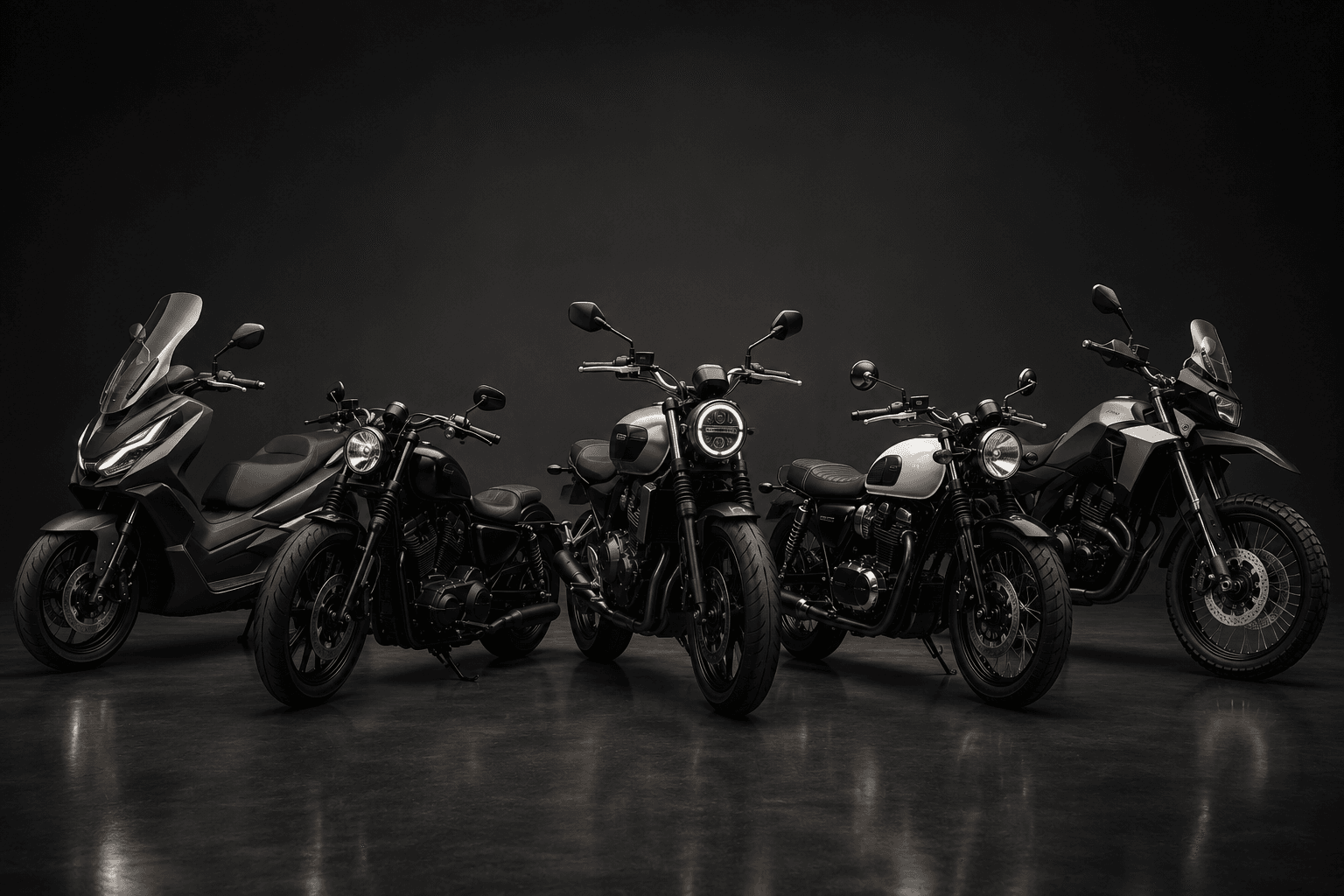
Honda Motorcycle & Scooter India has pulled the covers off one of its biggest-ever portfolio expansions, unveiling 10 two-wheelers spanning adventure scooters, cruisers, roadsters, dual-sport bikes and electric mobility. According to RushLane, seven are all-new products while three existing CB350 models get colour updates, and crucially, Honda is positioning the entire lineup as Made-in-India, with the country serving as a manufacturing and export base. Prices, individual launch dates and availability have not been announced; the products will arrive in phases.
This is less a launch than a statement of intent. Honda India has long leaned on commuter scooters and motorcycles, and this reveal signals a deliberate push up-market and into enthusiast segments. Here is what is coming and why it matters.
The headline act: ADV160, India’s first flex-fuel scooter
The most significant product is the Honda ADV160, a city adventure scooter. According to RushLane, it is powered by a 156.9cc water-cooled engine and, importantly, supports flex-fuel up to E85 via Honda’s FlexTech technology, making it India’s first flex-fuel scooter. That is a genuine industry first and lines up neatly with India’s push toward higher ethanol blending.
Equipment is premium: a TFT cluster with Honda RoadSync and turn-by-turn navigation, Honda Selectable Torque Control (HSTC), front and rear disc brakes with single-channel ABS, a 27-litre under-seat storage compartment and an 8.1-litre fuel tank. With its upright stance, windscreen and block-pattern tyres, the ADV160 offers an adventure-styled alternative to conventional premium scooters. Honda’s “Made in India, Made for the World” framing underlines its export ambitions.
The motorcycles: cruisers, a roadster and dual-sports
The Honda CB500 is one of the most interesting reveals. According to RushLane, this is not the parallel-twin CB500 sold globally, but an India-specific “Heritage Roadster” using a newly listed 501cc single-cylinder air-cooled engine with an oil cooler, styled with inspiration from the legendary CB750. It gets all-LED lighting, an analogue-digital console, HSTC and dual-channel ABS, in three variants (Alloy, Spoke Tubeless, and Spoke Tubeless with Graphics), and it will be built in India.
The Rebel nameplate expands with two models. The Rebel 300 is a new entry-level bobber-style cruiser using a 286cc water-cooled engine, offered in Standard and E-Clutch variants, with an LED projector headlamp, TFT cluster, RoadSync navigation and dual-channel ABS. Above it sits the Rebel 500, keeping the bobber silhouette but stepping up to a 471cc water-cooled inline-twin, again in Standard and E-Clutch guises. Both introduce Honda’s E-Clutch technology to India, which automatically manages clutch operation during starts, stops and gear changes, reducing rider effort.
For off-road riders, Honda showed two machines sharing a 293.5cc air-cooled, oil-cooled engine. The XR300L is a proper dual-sport built to handle mud, gravel and sand while remaining commute-friendly, with HSTC, gas-charged Pro-Link rear suspension and switchable dual-channel ABS. The XR300 Rally takes a touring-focused approach with taller bodywork and better wind protection for longer, mixed-terrain journeys. Using one engine platform for two distinctly positioned bikes is an efficient way to cover both the dual-sport and adventure-touring niches.
The EV: Honda QC3 electric scooter
Honda’s only new electric product among the 10 is the QC3, a family-oriented electric scooter. According to RushLane, it uses a 3.0kWh battery with an IDC-certified range of 145km per its product brochure, charges 0-80 percent in 2 hours 40 minutes and fully in around four hours, and offers 32 litres of under-seat storage, a Smart Key, and a TFT cluster with RoadSync and navigation. There is a small discrepancy worth flagging: Honda’s main press release cites a 151km IDC range while the QC3 brochure states 145km, so the final homologated figure should firm up closer to launch.
The CB350 trio: colour refreshes
Rounding out the 10 are three familiar bikes, the CB350, CB350C and CB350RS, all continuing with the 348.6cc air-cooled engine and receiving new colour options rather than mechanical changes. Common equipment includes all-LED lighting, RoadSync, HSTC and dual-channel ABS. The three cover distinct characters: CB350 as the modern classic, CB350C as the heritage-focused variant, and CB350RS as the sportier roadster.
Reading the strategy: Honda is done being just a commuter brand
Step back and the intent is unmistakable. My analysis: this reveal is Honda deliberately broadening its Indian identity beyond commuter scooters and 350cc classics into cruisers, adventure bikes, flex-fuel scooters and EVs, all at once. It is a portfolio play designed to give Honda a presence in nearly every enthusiast and lifestyle niche that has been growing in India, segments where rivals like Royal Enfield, TVS, Bajaj and the KTM-Triumph axis have been active.
Three elements make it more than a spec parade. The E-Clutch technology on the Rebels lowers the barrier to riding a manual motorcycle, potentially widening the buyer pool. The ADV160’s E85 flex-fuel capability positions Honda ahead of ethanol regulations while addressing running costs. And the Made-in-India, export-oriented framing signals that Honda sees India not just as a market but as a global production hub, which tends to bring scale efficiencies and, eventually, competitive pricing.
The caveat is the one Honda itself flagged: this is an unveiling, not a simultaneous launch. Prices, dates and availability are all pending, and they will decide everything. A CB500 Heritage Roadster or a Rebel 500 that is priced keenly could be a genuine disruptor; priced high, they become niche curiosities. Until Honda reveals numbers, the excitement should be measured. But as a signal of ambition, this is the most aggressive expansion Honda India has shown in years.
Which of the 10 matter most for Indian buyers
Not every product here targets a large audience, so it helps to rank them by likely relevance. The ADV160 and QC3 are the volume prospects: an adventure-styled scooter and a family EV scooter both address large, growing segments, and the ADV160’s flex-fuel first-mover status gives it a genuine talking point. The CB350 colour refreshes will keep Honda’s most successful modern-classic line fresh and are safe volume plays.
The CB500, Rebel 300, Rebel 500 and XR300 pair, by contrast, are enthusiast and lifestyle products. According to how Honda has positioned them, these target the growing but still niche cruiser, roadster and adventure-motorcycle segments, where buyers pay for character and capability rather than pure practicality. My read: these are margin and image products that broaden Honda’s appeal and showroom traffic, even if they will not match commuter-scooter volumes. Together, the lineup is smartly balanced between volume drivers and aspirational halo products.
The Made-in-India, export angle
One theme runs through the entire announcement and deserves emphasis: localisation. Honda has repeatedly stressed that these are Made-in-India products, with the country serving as a manufacturing and export base, captured in its “Made in India, Made for the World” framing for the ADV160.
The strategic logic is sound. Building these bikes in India rather than importing them lets Honda price them more competitively, avoid heavy import duties, and use India’s scale to serve export markets. For Indian buyers, that localisation is quietly the most consumer-friendly part of the announcement, because it is the difference between these products arriving at accessible prices versus being expensive, low-volume imports. If Honda delivers on that promise when prices are revealed, this expansion could reshape its competitiveness across multiple segments at once.
The bottom line
Honda’s unveiling of 10 new made-in-India two-wheelers, seven of them all-new, marks a decisive push beyond its commuter roots into cruisers, adventure bikes, a flex-fuel scooter and an EV. Highlights include India’s first E85 flex-fuel scooter (ADV160), an India-only single-cylinder CB500 Heritage Roadster, E-Clutch-equipped Rebel cruisers, XR300 dual-sports and the QC3 electric scooter. It is an ambitious, export-minded portfolio, but with prices and launch dates still unannounced and rollouts phased, the real verdict waits on the numbers.
FAQs
How many new Honda two-wheelers were unveiled?
Honda Motorcycle & Scooter India unveiled 10 two-wheelers, of which seven are all-new and three are colour-updated CB350 models. They will be launched in India in phases, with prices and dates announced separately.
What is special about the Honda ADV160?
The ADV160 is an adventure-styled city scooter powered by a 156.9cc water-cooled engine, and it is India’s first flex-fuel scooter, supporting up to E85 ethanol blends via Honda’s FlexTech technology.
Is the India-spec Honda CB500 the same as the global one?
No. According to RushLane, the India-spec CB500 is a “Heritage Roadster” using a new 501cc single-cylinder air-cooled engine with an oil cooler, not the parallel-twin CB500 sold internationally. It is inspired by the CB750 and will be made in India.
What is Honda’s E-Clutch technology?
E-Clutch, introduced on the Rebel 300 and Rebel 500, automatically manages clutch operation during starts, stops and gear changes, reducing the need for the rider to use the clutch lever manually while retaining a conventional gearbox.
What is the range of the Honda QC3 electric scooter?
The QC3 uses a 3.0kWh battery. Honda’s product brochure states a 145km IDC range, while its press release cites 151km, so the final homologated figure will be confirmed closer to launch. It charges 0-80 percent in 2 hours 40 minutes.