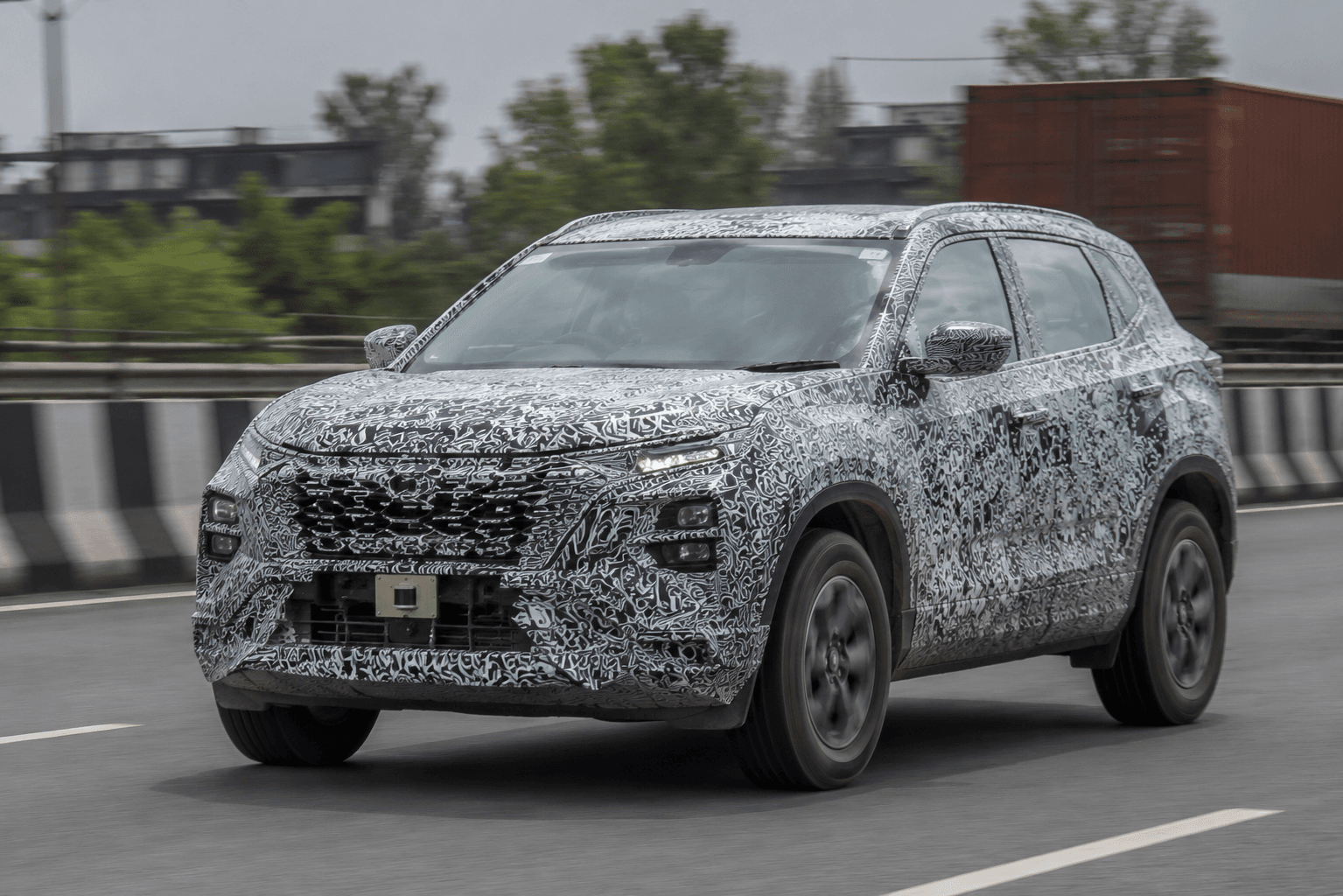
Fresh spy images of the 2026 Maruti Fronx facelift surfaced on 25 July 2026, a day after Maruti launched the updated Brezza — and the timing is not a coincidence. According to spy images shared via social channels and reported by outlets including Motoroids and Cartoq, the latest test mule reveals a new grille, a reworked bumper and, most importantly, a radar sensor sitting just below the Suzuki badge. That radar is the real headline. A styling refresh on India’s best-selling NEXA crossover is routine; Maruti Suzuki putting Level 2 ADAS on a sub-4-metre volume-seller is a strategic shift for a brand that has spent years being criticised for lagging on advanced safety tech.
Here is what the spy shots actually confirm versus what remains speculation, and why the facelift’s most-hyped feature — an in-house series hybrid — may not arrive with this update at all.
What the latest spy shots confirm
The freshest images focus on the front end and reveal a genuinely reworked fascia rather than a colour-and-trim job. The grille pattern has changed to chunkier, U-shaped elements, and on the Boosterjet turbo-petrol variant seen in the images, some grille elements carry red detailing — a small visual cue Maruti increasingly uses to flag its turbo cars. Below that is a redesigned front bumper with a more aggressive silver skid plate, while the lower air dam looks broadly unchanged from the current Fronx.
The most consequential hardware is the radar unit visible beneath the Suzuki emblem. Its presence points clearly to a Level 2 ADAS suite, and it is corroborated by earlier test mules that were spotted carrying ADAS calibration equipment and, in some sightings, a LIDAR unit integrated into the rear bumper. Taken together, the sensor hardware across multiple sightings makes ADAS one of the more confidently predictable additions on this facelift, even ahead of any official word.
At the rear, the changes are lighter. The spy images show the same connected LED tail lamps as the current car, with the main update being a redesigned rear bumper. And two badges on the mule settle the powertrain question: a Turbo Boosterjet badge and a Smart Hybrid badge, confirming that the 1.0-litre turbo-petrol engine carries over, paired with Maruti’s mild-hybrid Smart Hybrid system that handles idle start-stop, mild torque assist and brake-energy recovery.
What ADAS features to realistically expect
Based on the radar-and-camera hardware seen on the mules, a Level 2 ADAS package on the Fronx would typically bundle adaptive cruise control, lane-keep and lane-departure assist, autonomous emergency braking, blind-spot monitoring and high-beam assist. It is worth being precise here, as any honest expert assessment should be: the hardware confirms the capability, but the exact feature list and which variants get it are not yet official. Maruti has historically reserved its most advanced kit for higher trims, so ADAS is likely to appear on upper variants rather than across the range.
If it does reach production in this form, the Fronx would become one of the very few Maruti Suzuki models to offer ADAS — and, more importantly, one of the few sub-4-metre offerings from the brand to do so. That is the detail with strategic weight, which we will come back to.
The series-hybrid question: expectation versus evidence
This is where a lot of the online excitement gets ahead of the evidence, and it is worth separating clearly.
According to reports over the past several months, expectation has built up that the Fronx facelift will debut Maruti Suzuki’s in-house series hybrid technology — a system where a petrol engine acts primarily as a generator to charge a battery that drives electric motors, promising a step-change in fuel efficiency, with some speculative figures floating around the 35kmpl mark. That system is real and is part of Maruti’s roadmap, likely built around an electrified version of its smaller-capacity petrol engine.
But the fresh spy mule tells a more grounded story: the Smart Hybrid badge indicates this facelift is carrying over the existing mild-hybrid setup, not launching a full series hybrid. The most reasonable reading of the current evidence is that the series hybrid is a later, likely 2027, development that may debut on this or other Maruti models down the line, and that the immediate 2026 facelift is primarily a styling, features and ADAS update on the current 1.2-litre naturally aspirated petrol, 1.0-litre turbo-petrol and CNG powertrains. Treat any 35kmpl series-hybrid claim as a future possibility, not a confirmed feature of the car spied this week.
On the inside, spy images have not given a clear look, but reasonable expectations — unconfirmed — include a larger touchscreen (potentially around 10.25 inches, up from the current 9-inch unit) and a fully digital instrument cluster on higher trims, with existing kit like the 360-degree camera, head-up display, wireless charging and cruise control carrying over. Some reports suggest the design could borrow minor cues from Maruti’s Victoris midsize SUV.
Why this matters: Maruti’s coordinated sub-4-metre counterattack
Step back from the individual spy shots and a clear pattern emerges, and this is the synthesis worth taking away. Within a single week, Maruti launched the turbo-powered Brezza and had a heavily updated, ADAS-equipped Fronx caught testing. These are not isolated events — they are two halves of a coordinated defence of the sub-4-metre SUV space, which is the most fiercely contested and highest-volume battleground in the Indian market.
The competitive pressure is specific. The Tata Nexon, Hyundai Venue, Kia Sonet and Mahindra XUV 3XO have progressively raised the bar on features, turbo powertrains and, increasingly, ADAS. Maruti’s long-standing vulnerability in this fight has been the perception that its cars trail on safety tech and cutting-edge features even while leading on reliability, service reach and running costs. Putting Level 2 ADAS on the Fronx directly neutralises the single most-cited criticism, while the Brezza’s new turbo answers the performance complaint. Read together, the two cars represent Maruti systematically closing the gaps rivals have been exploiting, rather than launching one flashy product in isolation.
There is also a portfolio-management angle. The Fronx (a NEXA-channel crossover) and the Brezza (an Arena-channel SUV) share a segment but sell through different dealer networks to different buyer mindsets. Updating both in close succession lets Maruti defend the sub-4-metre space across both of its retail channels simultaneously — a breadth advantage no single rival can match on distribution alone.
Launch timeline and what buyers should do
Maruti has not officially confirmed a launch date. The most-cited expectation is a debut in late 2026 or early 2027, with standard petrol versions possibly arriving around the festive season, given how advanced and frequent the test-mule sightings have become. For buyers, that creates a real decision: the current Fronx remains an excellent, proven crossover, but if ADAS and a features bump matter to you, the facelift is close enough that waiting a few months to compare is defensible. If you need a car now, there is no reason to delay a purchase for an unconfirmed launch, particularly since the marquee series-hybrid technology looks like a later-generation story rather than an imminent one.
Related reading and sources
- Maruti Suzuki Fronx official page — for confirmed features and specs once the facelift launches
- TechJugaad: 2026 Maruti Brezza launch coverage — internal link placeholder for the sibling-model context above
FAQs
When will the 2026 Maruti Fronx facelift launch in India?
Maruti Suzuki has not officially confirmed a date. Based on the frequency and advanced state of test-mule sightings, industry expectation points to a launch in late 2026 or early 2027, with standard petrol variants possibly arriving around the festive season. Treat any specific date as unconfirmed until Maruti announces it.
Will the Maruti Fronx facelift get ADAS?
The spy shots strongly indicate yes. A radar sensor was seen below the front badge, and earlier test mules carried ADAS calibration equipment and a LIDAR unit, pointing to a Level 2 ADAS suite. Likely features include adaptive cruise control, lane-keep assist, autonomous emergency braking and blind-spot monitoring, though the exact list and which variants get it are not yet official.
Does the 2026 Fronx facelift get a strong hybrid or series hybrid?
Not based on the latest evidence. The spied mule wears a Smart Hybrid badge, indicating the existing mild-hybrid system carries over rather than a new series hybrid. Maruti’s in-house series hybrid is expected as a later, likely 2027, development. Claims of around 35kmpl tied to a series hybrid should be treated as future speculation, not a confirmed feature of this facelift.
What engines will the new Maruti Fronx have?
The facelift is expected to carry over the current engine line-up: the 1.2-litre naturally aspirated petrol, the 1.0-litre Boosterjet turbo-petrol (confirmed by the Turbo Boosterjet badge on the mule) and a CNG option. The turbo-petrol continues to be paired with the Smart Hybrid mild-hybrid system.
How is the Fronx facelift different from the new Brezza?
Both are Maruti sub-4-metre models updated in the same window, but they sit in different dealer channels — the Fronx is a NEXA crossover, the Brezza an Arena SUV. The Brezza has already launched with a new turbo engine and updated features, while the Fronx facelift is still testing and is expected to add Level 2 ADAS along with styling and feature updates when it arrives.