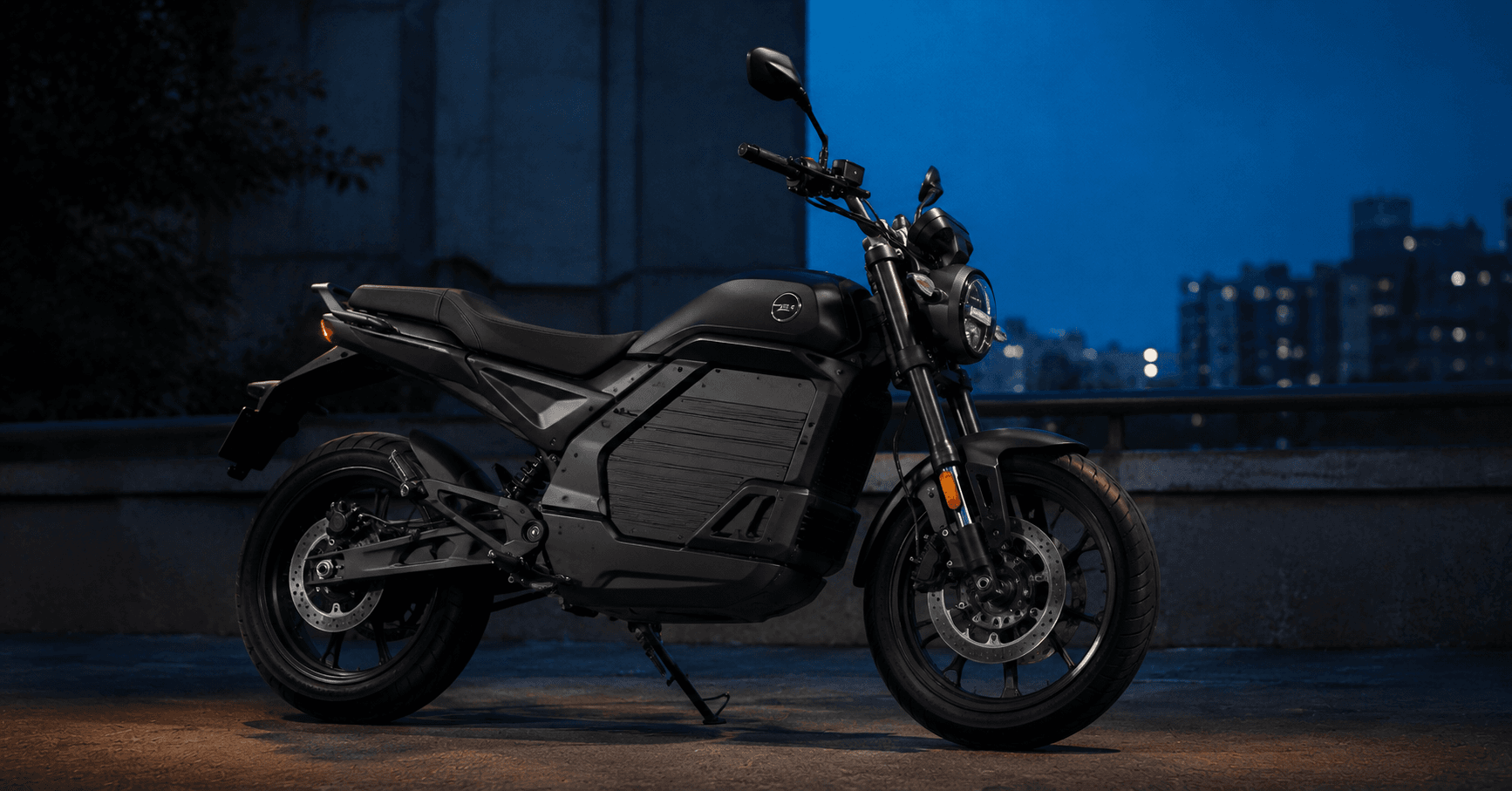
Revolt’s new RVX electric motorcycle launches at an introductory Rs 1.24-1.30 lakh (ex-showroom, price varies by state incentive), and it answers a question the electric two-wheeler market has largely ignored until now: what happens when you build an EV that looks and rides like a proper motorcycle instead of a scooter, at a price close to a 125cc petrol commuter. The short answer is that the RVX is a genuinely interesting alternative for buyers who want motorcycle ergonomics and a swappable battery, but its 160km claimed range and 90kmph top speed still trail behind what a comparable petrol motorcycle offers for daily long-distance use.
Why the RVX is a different bet than most electric two-wheelers
Almost every electric two-wheeler under Rs 1.5 lakh sold in India today is a scooter — the Ola S1, TVS iQube, Bajaj Chetak, and Ather 450 series all use a step-through scooter format. Revolt itself built its reputation on the RV400, an electric motorcycle, but the RVX pushes further downmarket to compete on price with scooters while keeping motorcycle styling, an upright riding position, and a proper tank-shaped housing for the battery.
That housing matters: the RVX’s 3.24kWh NMC battery is removable, meaning owners without dedicated home charging — a large share of India’s two-wheeler buyers, especially in dense urban housing — can pull the battery out and charge it at a wall socket indoors, rather than needing a dedicated charging point near where the bike is parked. This single feature is arguably a bigger real-world advantage than the horsepower or torque figures Revolt is promoting.
The performance numbers, in context
Revolt’s 4kW mid-drive motor (5.3kW peak) generates up to 230Nm of torque at the wheel and gets the RVX from 0-40kmph in a claimed 3.9 seconds — genuinely quick off the line for city traffic, since that torque is instant, unlike a petrol motorcycle that needs to build revs. Top speed in Boost mode is 90kmph, which is adequate for city and short highway stretches but noticeably short of what a 125-150cc petrol motorcycle can sustain on an open highway.
The claimed IDC range of 160km is the number to treat with the most caution. IDC (Indian Driving Cycle) figures are measured under controlled conditions and typically run 20-30% higher than what riders see in mixed city-and-highway use with pillion riders, air conditioning-adjacent electrical loads, and Boost mode usage. A realistic real-world range for most owners is closer to 110-130km per charge — still enough for a multi-day commute of 20-30km each way without daily charging, but not a bike you’d casually take on a 150km weekend ride without planning a mid-route charge or battery swap.
Charging is a genuine strength: 0-80% in 80 minutes with the bundled 27-amp fast charger is quick for a home-charging scenario, and because the battery is removable, an owner can keep a charged spare indoors and swap it in under a minute — something fixed-battery scooters cannot offer at any price.
How the RVX compares to its direct rivals
At its Rs 1.24-1.30 lakh price point, the RVX’s most direct competitors are the Ola Roadster X and the Oben Rorr Evo — both electric motorcycles rather than scooters, targeting the same buyer who wants motorcycle styling on an EV budget. This is a meaningfully different comparison than Revolt’s own RV400, which competes against scooters like the Ather 450X, TVS iQube, Ola S1 Pro, and Bajaj Chetak — vehicles with different ergonomics, different urban-commuter buyer profiles, and in most cases, larger fixed (non-removable) battery packs offering longer real-world range.
The removable battery is the RVX’s clearest differentiator against the Ola Roadster X and Oben Rorr Evo, both of which use fixed battery packs charged in place. For a buyer deciding between the three, the removable pack tips the scale decisively if home or workplace charging access is uncertain; if guaranteed charging access exists, the decision comes down to ride quality, connected-feature depth, and after-sales network comparisons that will only become clear once independent long-term reviews of all three bikes are published.
What the on-road cost and ownership economics look like
The introductory Rs 1.24-1.30 lakh ex-showroom price doesn’t include registration and insurance, which typically add another 8-12% for a two-wheeler in this price bracket, putting a realistic on-road price closer to Rs 1.35-1.45 lakh outside states with additional EV purchase incentives. Running-cost data shows electric motorcycles like the RVX cost roughly Rs 0.30-0.40 per km to charge at typical residential electricity rates, compared to Rs 1.50-2 per km for a petrol commuter motorcycle at current fuel prices — meaning a rider covering 40km a day would recover the price premium over a comparable petrol motorcycle within 18-24 months purely through fuel savings, before even factoring in the lower service costs typical of electric drivetrains with fewer moving parts.
Who should actually buy the Revolt RVX
The RVX makes the most sense for a rider who: commutes primarily within a 50-60km daily round trip, lives in an apartment or area without dedicated EV charging infrastructure, and wants the upright, motorcycle riding posture rather than a scooter’s step-through layout. The connected features — OTA updates, geo-fencing, vehicle locator, and an immobiliser — also make it a reasonable choice for riders concerned about theft, since the bike can be remotely tracked and disabled through Revolt’s app, a feature set that has become table stakes for connected EVs but is still absent on most petrol motorcycles in this price bracket.
According to two-wheeler expert reviews published around similar-format EVs, riders who need consistent 150km+ range, frequent highway travel, or fast refuelling comparable to a 60-second petrol stop should stick with a petrol commuter motorcycle for now — the RVX’s advantages are concentrated in dense urban use cases, not long-distance riding.
What segment data shows about motorcycle-format EVs
Industry sales data tracked by the Society of Manufacturers of Electric Vehicles (SMEV) and vehicle registration aggregators has consistently shown electric scooters outselling electric motorcycles by a wide margin in India, largely because scooter-format EVs launched earlier and at more accessible price points. Analysts covering the electric two-wheeler market note that motorcycle-format EVs have historically been priced Rs 30,000-50,000 above comparable scooters for similar range, a premium that buyers shopping on a fixed budget have generally been unwilling to pay. The RVX’s pricing directly targets that gap, and if registration data over the next two quarters shows meaningful volume, it would be the clearest evidence yet that price — not format preference — was the main barrier keeping motorcycle-format EV adoption behind scooters.
Connected features and after-sales: the less glamorous decision factors
Beyond the spec sheet, two practical factors tend to decide whether an electric two-wheeler purchase goes smoothly: app reliability and service network depth. Revolt’s OTA update and geo-fencing features depend on a stable connected-app experience, and the company’s earlier RV400 ownership feedback has included both praise for the feature set and complaints about app downtime in its first couple of years on sale — an area worth checking again with recent owners before committing, since software-dependent features are only as good as the update cadence behind them. On the service side, Revolt’s 200-plus dealership network is smaller than Ola’s or Bajaj’s pan-India footprint, which matters most for buyers outside major metros who may need to travel further for warranty service or spare parts.
The bigger picture: motorcycle-format EVs finally getting affordable
Revolt pricing a motorcycle-format EV close to scooter price points, inclusive of PM E-DRIVE incentives that bring the Delhi effective price down to roughly Rs 94,990, signals that the cost gap between electric scooters and electric motorcycles is closing faster than expected. If the RVX sells well, expect Ola, Bajaj, and TVS — all currently scooter-focused in the sub-Rs 1.5 lakh bracket — to respond with their own affordable motorcycle-format EVs within the next 12-18 months, which would be a meaningfully positive development for buyers who have wanted motorcycle ergonomics without an EV price premium.
FAQs
What is the price of the Revolt RVX in India?
The RVX launches at an introductory ex-showroom price between Rs 1.24 lakh and Rs 1.30 lakh depending on the source and applicable state incentives, inclusive of PM E-DRIVE benefits. In Delhi, the effective price drops to around Rs 94,990 after additional state EV policy incentives.
What is the real-world range of the Revolt RVX?
Revolt claims an IDC-certified range of 160km, but real-world range under mixed city and highway riding, with Boost mode use and pillion load, is typically 20-30% lower — realistically closer to 110-130km per charge.
Can the Revolt RVX’s battery be removed and charged separately?
Yes, the RVX uses a removable 3.24kWh NMC battery pack that can be taken out and charged at a standard wall socket, which is useful for owners without dedicated EV charging access near their parking spot.
How long does the Revolt RVX take to charge?
Using the bundled 27-amp fast charger, the battery charges from 0-80% in approximately 80 minutes.
What are the main rivals to the Revolt RVX?
The RVX’s closest rivals are other electric motorcycles in a similar price bracket, namely the Ola Roadster X and the Oben Rorr Evo, both of which currently use fixed rather than removable battery packs.
Is the Revolt RVX faster than a petrol commuter motorcycle?
It accelerates from 0-40kmph in a claimed 3.9 seconds thanks to instant electric torque, which is quick off the line, but its 90kmph top speed in Boost mode is lower than what most 125-150cc petrol motorcycles can sustain on open roads.