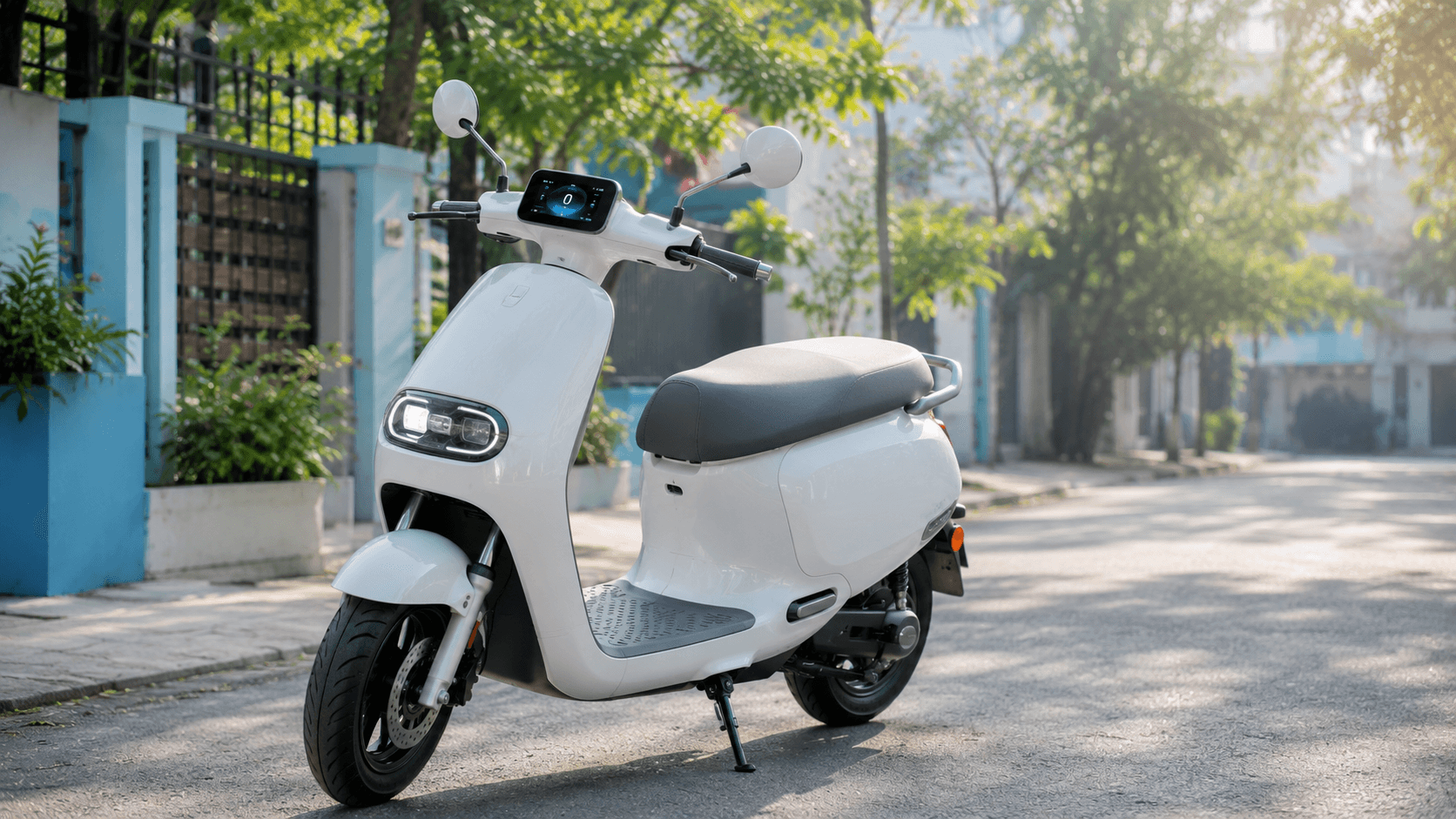
Simple Energy will unveil its first family-focused electric scooter, expected to be called the Simple Arrive, on September 2, 2026. It is the Bengaluru company’s clearest strategic pivot yet: away from the sharp, performance-led Simple One and Ultra, and toward the largest and most competitive slice of India’s electric two-wheeler market, the everyday family commuter. The company confirmed the unveil date but has not yet revealed specifications, pricing or full features.
That gap between a confirmed date and unconfirmed specs is exactly why this is worth writing about now. The Arrive tells you where Simple Energy is heading, and it lands the brand squarely against the segment’s established heavyweights.
What Simple Energy has confirmed
The concrete facts are limited but meaningful. According to Simple Energy’s own announcement, reported across outlets including Autocar India and RushLane, the company will unveil its first family electric scooter on September 2, 2026, and says it was developed in-house through its own research and engineering. The company frames the product around practicality, comfort and everyday usability rather than the outright performance that has defined its lineup so far.
A statement from the company, as reported by Outlook Business, described the scooter as engineered for everyday riders and families, combining practicality, technology and design, and framed the launch as the next phase of its product strategy. Corporate launch language is always polished, but the repeated emphasis on “everyday” and “families” is consistent and deliberate: Simple is signalling a clean break from its performance positioning.
The name is not officially confirmed, but earlier trademark filings revealed both “Arrive” and “Arrive Plus,” suggesting the scooter could launch in more than one variant. The model has already been spotted testing on public roads, and design details have surfaced through patent filings, so the industry has a reasonably clear picture of the shape even before the reveal.
Everything below the confirmed date, including battery capacity, motor output, range and price, remains under wraps until September 2. Any figures circulating now are estimates, and I will flag them as such.
A deliberate design departure
What the spy shots and patent images show is a scooter built to a completely different brief from Simple’s existing products. The One, OneS and Ultra wear sharp, angular, aggressive styling aimed at performance-minded riders. The Arrive reportedly adopts a rounded, conventional silhouette, the visual language of a mainstream family scooter.
According to DriveSpark, which detailed the spied test mule, reported design details include a flat single-piece seat, a centre stand, twin rear shock absorbers, an apron-mounted headlight with a short wind deflector above it, and a TFT display hinting at connected features. On braking, the test mule reportedly uses a front disc and a rear drum, a more cost-effective setup than the disc-at-both-ends configuration on the Simple One range. That single detail is telling: it signals Simple is engineering the Arrive to a price, not to a spec sheet.
Each of these choices reads like a cost-and-comfort decision rather than a performance one. A flat single-piece seat maximises usable space for a rider plus pillion plus the occasional child, the defining use case for an Indian family scooter. A centre stand aids everyday parking and at-home charging. Twin rear shocks over a monoshock trade a little sportiness for load-bearing comfort. Taken together, the hardware choices describe a scooter designed around how families actually use a two-wheeler, not around a spec-sheet duel.
The segment it is walking into
The family scooter space is where the volume is, and it is crowded. According to segment positioning noted by autoX and DriveSpark, the Arrive is set to take on the Ather Rizta, TVS iQube and Bajaj Chetak, three products from well-funded rivals with large dealer networks, established service infrastructure and strong brand recognition among mainstream buyers.
This is a materially harder fight than the performance niche Simple has occupied so far. Performance buyers tolerate quirks and forgive a thin service network in exchange for standout specs. Family buyers do not. They prioritise reliability, running cost, ride comfort, ease of use and, above all, confidence that the scooter can be serviced quickly and affordably for years. Winning here is less about a headline range figure and more about the boring fundamentals of ownership.
For context on the range Simple can engineer, the company recently launched the Simple Ultra with a claimed IDC range of up to 400 km, and its portfolio is anchored by the Simple One. The Arrive is expected to use a battery configuration similar to or smaller than the Simple One S’s 3.7 kWh unit, which would be sensible for a family scooter where cost and weight matter more than maximum range. Again, that is an expectation, not a confirmed figure.
The technology angle worth watching
One detail could genuinely differentiate the Arrive. Simple Energy has claimed to be the first Indian two-wheeler manufacturer to commercially produce heavy rare-earth-free electric motors, and industry expectations suggest the Arrive could be among the first products to use this technology, though the company has not confirmed it.
Here is why that matters beyond a spec-sheet bragging right. Heavy rare-earth materials are largely imported and subject to supply and pricing volatility tied to geopolitics. A motor that avoids them reduces exposure to that supply chain and can improve long-term manufacturing cost stability. In a segment where every few hundred rupees of cost feeds directly into a price-sensitive buyer’s decision, structurally lower and more predictable component costs are a real competitive lever, not just a marketing line. Simple also offers a lifetime warranty on the motor and battery across its range, which plays well with the reliability-focused family buyer.
Can Simple actually scale into the mainstream?
The strategic question is whether a brand known for niche performance products can execute in a volume segment that punishes weak service and supply. Two data points suggest Simple is at least preparing for it. The company reportedly raised Rs 250 crore through a mix of debt and equity in 2026 and has outlined plans to expand both manufacturing and retail. Entering the family segment is precisely how a company moves from niche player to volume manufacturer, because this is where the units are.
My read: the Arrive is the right move but the hardest one. Simple’s engineering credibility is not in doubt, the Ultra’s range figure proves that. The open questions are all about go-to-market: can it price the Arrive competitively against the Rizta and iQube, can it build out service reach fast enough to reassure family buyers, and can it manufacture at the volumes this segment demands? The rare-earth-free motor and the fresh capital are encouraging signals. But this segment has humbled well-resourced players before, and the September 2 reveal is only the starting line, not the finish.
The bottom line
The Simple Arrive marks Simple Energy’s transition from a performance-focused challenger to a company chasing India’s mainstream electric-scooter volumes. A rounded family design, a cost-conscious brake setup, a potentially rare-earth-free motor and fresh capital all point to a serious attempt. But the Rizta, iQube and Chetak are formidable, and family buyers judge on ownership fundamentals, not headline specs. September 2 will reveal the price and the numbers. Whether Simple can service and scale is the story that plays out afterward.
FAQs
When is the Simple Arrive launching?
Simple Energy has confirmed it will unveil its first family electric scooter, expected to be called the Simple Arrive, on September 2, 2026. Full specifications and pricing are expected to be revealed at that unveiling.
What is the Simple Arrive’s range and battery?
Simple Energy has not officially confirmed the battery capacity or range. Based on earlier indications, the scooter is expected to use a battery similar to or smaller than the Simple One S’s 3.7 kWh pack, but this is not confirmed and official figures will come on September 2.
Which scooters will the Simple Arrive compete against?
The Arrive is positioned to rival the Ather Rizta, TVS iQube and Bajaj Chetak, the leading products in India’s family electric-scooter segment.
How is the Arrive different from the Simple One?
The Simple One and Ultra are performance-focused with sharp, angular styling. The Arrive reportedly adopts a rounded, conventional family-scooter design and a more cost-effective front-disc, rear-drum brake setup, prioritising everyday practicality over outright performance.
Does the Simple Arrive use a rare-earth-free motor?
Simple Energy has claimed to be the first Indian two-wheeler maker to commercially produce heavy rare-earth-free electric motors, and the Arrive is widely expected to use this technology, though the company has not officially confirmed it for this model.