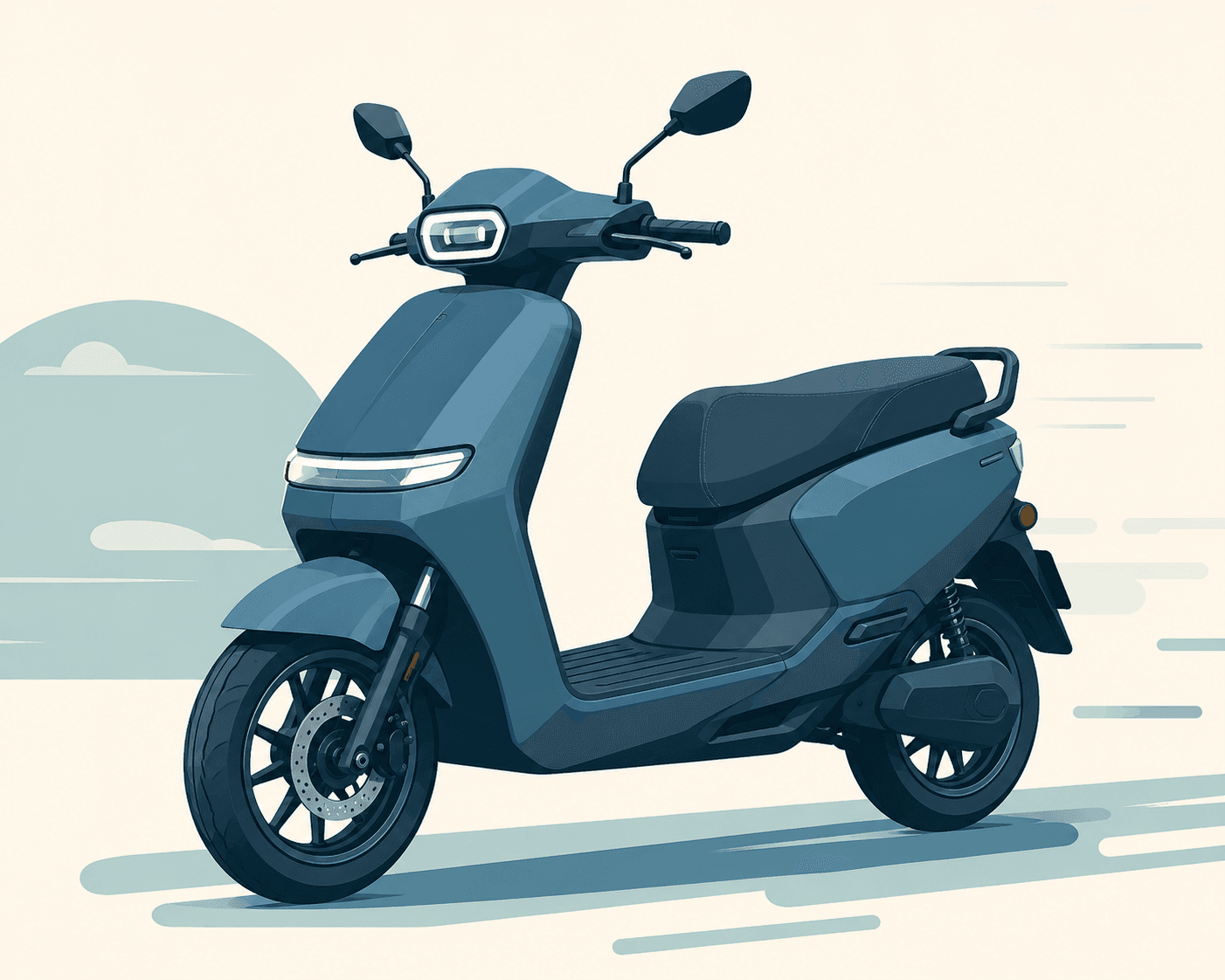
Ather Energy will unveil its first mass-market electric scooter on 29 August 2026 in Bengaluru, at the fourth edition of Ather Community Day. The scooter — built on Ather’s all-new EL platform — will target the Rs 1 lakh to Rs 1.25 lakh price band, a segment where the company has never competed before. If Ather executes, this is the biggest strategic shift in the Indian electric two-wheeler market since Ola’s disruption in 2021. If it doesn’t, the company’s path to profitability gets significantly harder.
Here is why this launch matters beyond the usual product-reveal excitement, what buyers can realistically expect, and where the risks lie.
What Ather is launching on August 29
Ather Community Day 2026, themed “A New Dawn of Magic”, will host the debut of Ather’s first production scooter based on the EL platform — an all-new vehicle architecture the company revealed in concept form (as the EL01) at Community Day 2025. Alongside the scooter, Ather has confirmed it will announce new technology across charging, software and the ownership ecosystem.
According to the stock exchange filing, Ather formally announced the date and product context on 14 July 2026, which gives this launch a level of concreteness that is unusual for Indian EV reveals. The scooter has already been spotted on public road tests, and a design patent filed earlier in 2026 closely matches the styling of the EL01 concept.
Key confirmed details, based on the Ather announcement and independent trade coverage:
- Debut event: Ather Community Day 2026, 29 August 2026, Bengaluru
- Target price band: Rs 1 lakh to Rs 1.25 lakh (ex-showroom)
- Positioning: First mass-market Ather, priced below the Rizta family scooter
- Platform: EL, all-new, designed for scale
- Ecosystem announcements: New charging tech, software updates, ownership services
Design elements visible from spy shots and the earlier concept include a handlebar-mounted headlight, a wide LED daytime running lamp integrated into the front apron, a 14-inch front and 12-inch rear alloy wheel setup, and disc brake at the front paired with a drum at the rear. A 7-inch TFT console with smartphone connectivity, consistent with Ather’s software-first identity, is expected.
Why the EL platform is the story, not just the scooter
For anyone who has followed Ather for a decade, this is the biggest architectural pivot in the company’s history. Every scooter Ather has ever sold — the original 450, the 450X, the 450 Apex, the entire nine-variant Rizta lineup — sits on the 450 platform. That platform has an aluminum-heavy structure, was engineered for performance and premium finish, and carries a cost base that has forced Ather to sell above Rs 1.3 lakh even at entry level.
The EL platform is a clean-sheet redesign for cost. According to Ather’s own July 14 announcement, echoed by Autocar India and CarToq, the platform is “engineered from the ground up for greater versatility, scalability, and manufacturing efficiency.” Independent research shows that mass-market EV two-wheelers priced under Rs 1 lakh currently account for the largest slice of India’s electric scooter volumes, which is exactly where Ather has been absent. Independent reporting suggests the platform uses more steel and simpler manufacturing processes, which is the standard playbook for hitting a lower price point without collapsing margins.
Three products are expected to eventually come off the EL platform: a family scooter, a maxi-scooter and a sporty scooter. The August 29 debut is the family variant — the volume model.
For the buyer, this matters because it changes what Ather actually competes with. The 450 Apex and Rizta compete against the Bajaj Chetak, TVS iQube ST and Ola S1 Pro at Rs 1.3-1.7 lakh. The new EL scooter will compete against the TVS iQube base, Bajaj Chetak 2903, Ola S1 X and — for the first time seriously — the Honda Activa e: and the internal-combustion Activa 125.
The mass-market EV segment: what Ather is walking into
The sub-Rs 1.25 lakh electric scooter segment is not empty. It is, in fact, the most competitive corner of Indian electric two-wheelers.
At this price band, the immediate rivals are:
- TVS iQube (base variant): Widely regarded as the segment volume leader after subsidy cuts hit Ola. Distribution reach through TVS’s national dealer network is a moat Ather does not have.
- Bajaj Chetak: Bajaj’s most successful comeback product of the last decade. The Chetak’s steel-body construction and Bajaj’s service depth make it the default for buyers who want an EV but don’t want to bet on a startup.
- Ola S1 X: The lowest-priced serious option, but Ola’s brand equity has been dented by after-sales controversies.
- Honda Activa e:: Honda’s first mass-market EV in India, launched with the biggest 2W distribution network in the country.
- The internal-combustion Activa 125: Still the true competitor for the mass buyer choosing between petrol and electric.
Ather brings three things this segment has largely lacked: a modern software-first ownership experience, an industry-leading fast-charging network (Ather Grid, which Ather claims is India’s widest 2W fast-charging network), and a track record of over-the-air updates that actually add features post-purchase. Whether that stack is enough to command a Rs 20,000-30,000 premium over the Ola S1 X or match the pricing of the iQube base — while running a P&L that already prints losses — is the central financial question of this launch.
The business logic: why Ather is doing this now
Ather is a public company. Since listing on Indian stock exchanges, the company has faced pressure to demonstrate a path to profitability. That path runs through volume, not premium. According to SIAM data, India’s two-wheeler market ships roughly 2 crore units a year. Even at 7% EV penetration, the addressable EV two-wheeler market is 14 lakh units annually. Of that, roughly 70% sit below Rs 1.25 lakh — a segment Ather has been locked out of by cost structure.
An Rs 1 lakh Ather scooter, priced competitively against the iQube and Chetak, does three things simultaneously:
- Multiplies the total addressable market by roughly 4x compared to Ather’s current lineup.
- Absorbs manufacturing fixed costs across higher volumes, improving unit economics on the premium 450 platform as well.
- Feeds the software and services flywheel — every additional Ather on the road increases the value of Ather Grid, expands the OTA install base and grows the data pool for future feature development.
The risk is not demand. The risk is margin. If Ather has to sell the EL scooter at Rs 99,999 to match Ola on price, and cost per unit is Rs 90,000-95,000, the business gets healthier as volumes grow. If cost is Rs 1.05-1.10 lakh and Ather sells at Rs 99,999, every unit sold deepens losses. The August 29 launch will be judged by investors on exactly this maths, so watch the price announcement carefully — anything above Rs 1.10 lakh signals margin protection; anything below Rs 1 lakh signals aggressive volume grab.
What buyers should watch for on August 29
For the person actually thinking about buying this scooter, three things will matter more than the launch-day styling reveal.
Real-world range on a single charge, not IDC-cycle numbers. The mass-market EV segment lives or dies on honest range. If Ather claims an IDC range of 130 km, expect 90-100 km in real conditions. The iQube base delivers around 75 km real range; a claim in the 85-95 km real-world zone would give the EL scooter a genuine advantage.
Access to Ather Grid. Ather has historically restricted its fast-charging network’s best speeds to its premium scooters. If the EL scooter gets full Ather Grid access without downgrade, that is a substantive buyer benefit. If it is restricted to slower charging, the value proposition weakens.
Service and warranty terms. Ather’s service network has expanded but still concentrates in metros and Tier-1 cities. A buyer in a Tier-2 city taking on an Rs 1 lakh EV needs a clear answer on nearest service center, warranty coverage on battery, and average service turnaround. This is where Bajaj and TVS have a structural advantage that Ather has to close case by case.
The upside case, and the risk
If Ather executes — meaning credible real-world range, a genuinely mass-market price, service backup in at least 100 cities and Rizta-level build quality on the EL platform — the company earns a legitimate shot at becoming India’s third-largest electric two-wheeler brand within 18 months, alongside TVS and Bajaj. That is a meaningful strategic outcome for a business that today is boxed into the premium segment.
The risk is that mass-market EV buyers are extremely price-sensitive and brand-conservative. Ola’s early lead in this segment collapsed because service and quality issues turned into national news. Ather has better fundamentals — genuinely more mature software, deeper engineering — but has never had to serve a Rs 1 lakh buyer in a Tier-3 city. The next 18 months, not the launch day, will decide whether the EL platform delivers on its promise.
FAQs
When is Ather launching its new mass-market scooter? Ather will unveil its first mass-market scooter, built on the new EL platform, on 29 August 2026 at Ather Community Day 2026 in Bengaluru. This is the fourth edition of the annual Community Day event.
What will the Ather EL scooter cost? Ather has officially indicated a price band of Rs 1 lakh to Rs 1.25 lakh (ex-showroom) for the mass-market segment the EL scooter is targeting. Final pricing will be announced on 29 August 2026.
How is the EL platform different from the Ather 450? The EL platform is Ather’s first all-new architecture since the original 450, engineered specifically for lower manufacturing cost, higher scalability and multiple body styles. The 450 platform, which underpins the current 450 series and Rizta, was designed for premium performance. The EL platform is expected to use more steel construction and simpler processes to hit the mass-market price point.
Will the new Ather scooter get access to Ather Grid fast charging? This has not been officially confirmed. Ather Grid is the company’s fast-charging network — reportedly India’s widest for two-wheelers — and full access would be a significant differentiator. Details are expected at the August 29 event.
Who are the main rivals for the upcoming Ather EL scooter? Primary rivals in the Rs 1-1.25 lakh electric scooter segment include the TVS iQube base variant, Bajaj Chetak, Ola S1 X and Honda Activa e:. Cross-shoppers may also consider petrol scooters like the Honda Activa 125 and TVS Jupiter 110.
What else will Ather announce at Community Day 2026? Alongside the new scooter, Ather has confirmed it will unveil developments across charging technology, vehicle software and the broader ownership ecosystem. Community Day 2025 introduced the EL platform in concept form, the Redux concept vehicle, next-generation fast charging and AtherStack 7.0 — the 2026 edition is expected to build on all of these.