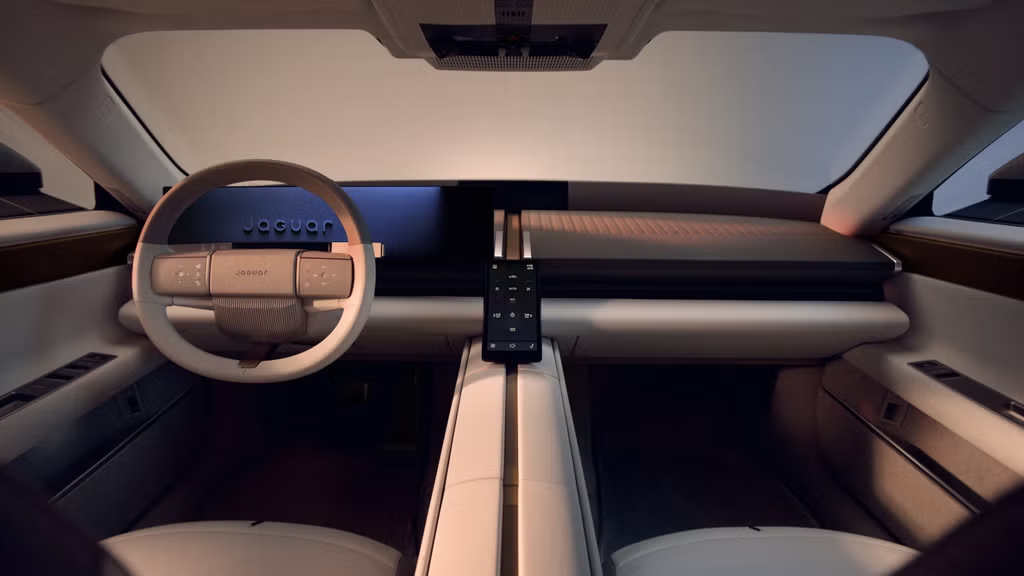
Jaguar Type 01 Interior Revealed: Jaguar has pulled the cover off the interior of the Type 01, its first production model under the brand’s radical all-electric reinvention, ahead of the car’s full public reveal in New York on October 6, 2026. If the exterior design already split opinion when the Type 00 concept debuted at Miami Art Week in December 2024, the cabin isn’t going to calm anyone down. There’s a 3.2-metre brass-toned spine running the length of the car, a floor and seat base finished in travertine stone, and a dashboard that has quietly dropped almost every large screen that’s become standard furniture in modern luxury cars. This is not a car built to reassure anyone that Jaguar is still, underneath it all, the company that made the E-Type.
Why this reveal matters more than a normal interior teaser
Most interior-teaser stories are minor news — a manufacturer drip-feeding detail ahead of a launch to keep a model in the conversation. This one is different because of what’s riding on it. Jaguar stopped selling its entire previous line-up in 2024 — the F-Type, the XE, the XF, all of it — and committed publicly to relaunching as a fully electric, ultra-luxury-only brand. The Type 01 is the first car to prove whether that bet pays off. It isn’t a halo model sitting above a normal Jaguar range anymore; for now, it effectively is the range.
That’s why Jaguar’s own leadership has been unusually blunt about what the car needs to deliver emotionally rather than mechanically. According to statements reported by the trade press, Rawdon Glover, Jaguar’s managing director, has said plainly that “Jaguar Type 01 is the first production car to follow our new creative philosophy” — and in earlier comments, company executives have stressed that buyers at this price point choose a car because of how it makes them feel getting in and out of it, not because of any powertrain specification sheet. That’s a deliberate positioning statement: Jaguar knows it’s not going to out-spec a Porsche Taycan or a Lucid Air on paper alone, so the interior has to do a disproportionate amount of the persuading.
What’s actually inside the cabin
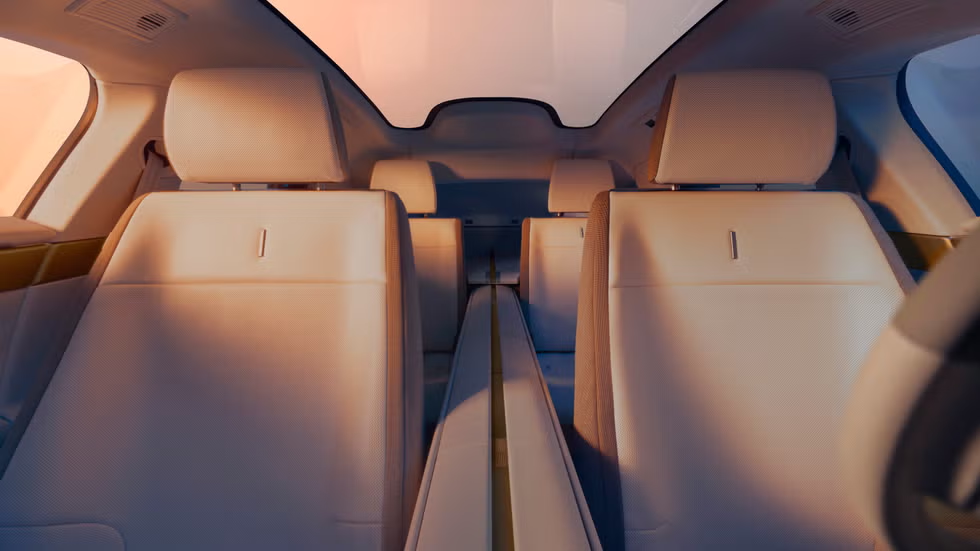
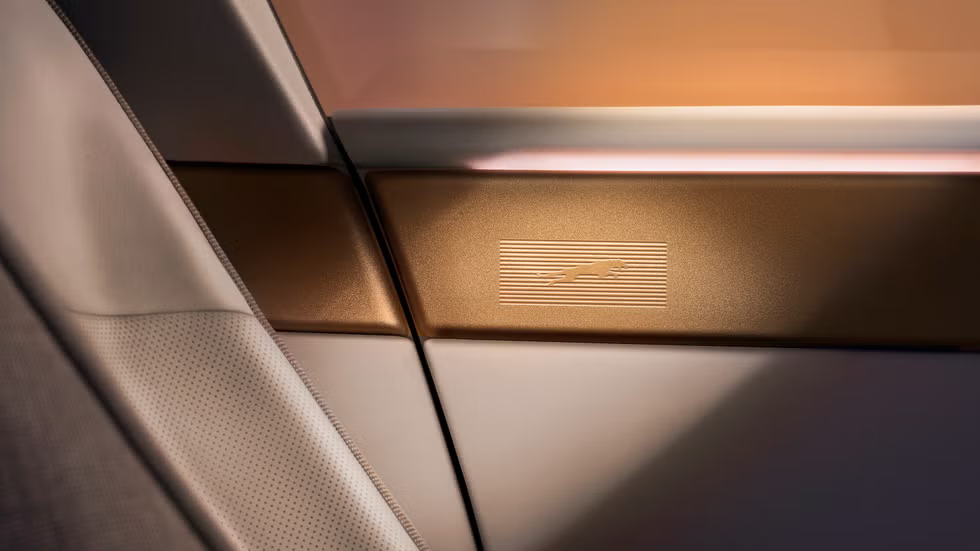
The headline element is the central spine — a 3.2-metre run of brass-finished material that travels the entire length of the cabin, from the dashboard through to the rear. According to Jaguar’s chief interior designer, Thomas Holden, this isn’t a decorative flourish; it’s structural to the whole design philosophy. “In contrast to the horizontal interior design norm, we emphasise its dramatic longitudinal nature through the central spine — an architectural statement that creates four individual spaces,” Holden has said. The spine physically divides the cabin into four distinct seating zones rather than the usual front-row/back-row split most four-door cars settle for.
Materials lean hard into the concept car’s original language. Travertine stone — the same pale, textured limestone used in high-end architecture and hospitality interiors — functions as what Jaguar calls a “structural plinth” beneath the seats, supporting them visually and physically rather than sitting there as trim. Around it, artisan wool-blend textiles cover the seating and flooring, a deliberate move away from the wood-and-leather vocabulary that defined the brand’s previous generation of luxury saloons.
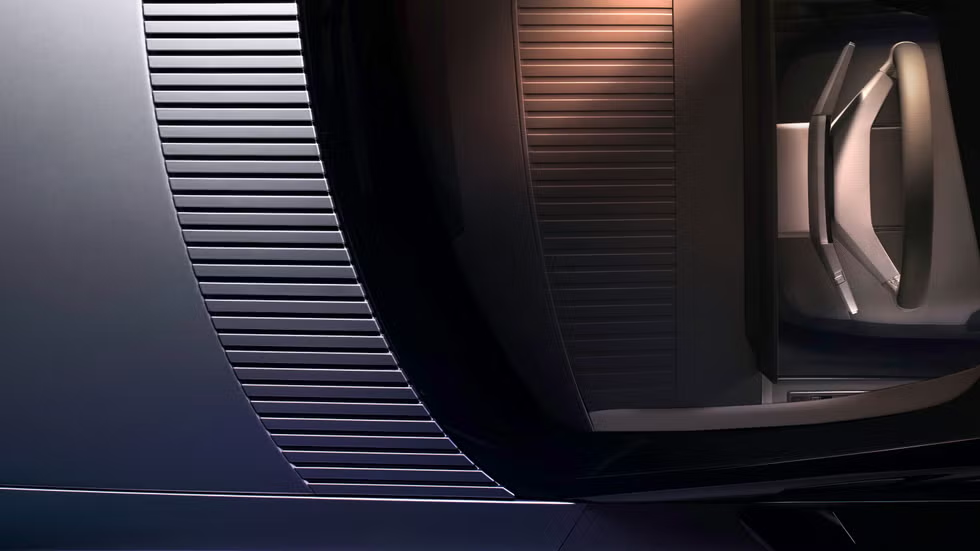
The dashboard itself is unusually slim, and it incorporates the same linear “strikethrough” graphic elements that appear on the car’s exterior, visually stitching the cabin to the bonnet outside the windscreen. Screens are present but deliberately restrained — Holden’s team has built the Type 01 around what Jaguar calls a “control on demand” strategy, where digital interfaces and even storage compartments stay hidden within the dashboard and door panels until a driver or passenger actually needs them. It’s a philosophy borrowed loosely from high-end furniture design: nothing on display unless it’s doing something.
That extends to what’s missing. Early photography of prototype interiors shows a driving environment with very little conventional switchgear — a smaller, phone-sized display sits on the central spine, giving both driver and front passenger shortcut access to core functions, most notably climate control. Perhaps the most contentious single decision is the placement of the digital rear-view mirror, which sits at the base of the windscreen rather than in the usual position above the driver’s sightline. Jaguar says this improves driver focus. Whether that holds up in real-world use, rather than in a design brief, is something only extended road testing will settle — and it’s a fair point of scepticism for anyone used to instinctively glancing upward for a mirror check.
The seating layout and low driving position
Jaguar has confirmed the Type 01 seats four in a strict four-individual-zone layout rather than a bench-style rear row, a decision consistent with the car’s grand-tourer ambitions rather than family-hauler practicality. The driving position itself is notably low, which Jaguar describes as creating a “focused environment” for the person behind the wheel — language that suggests the brand wants this car to feel more like a driver-oriented sports GT than a chauffeur-driven limousine, despite its size and price bracket.
The numbers behind the design statement
Underneath the design language sits genuinely serious hardware. According to specifications reported around the car’s development, the production Type 01 is expected to use a tri-motor setup delivering more than 745 kW (roughly 986 bhp) and around 1,300 Nm (959 lb-ft) of torque, built on Jaguar’s dedicated Jaguar Electric Architecture (JEA) platform — engineered from the ground up as an EV-only platform rather than adapted from a combustion car. Reports circulating earlier this year that Jaguar might quietly reintroduce a hybrid powertrain option have been firmly dismissed by people close to the programme; the car is described as too far along in its electric-only engineering to be redeveloped around an internal combustion engine at this stage.
Pricing is expected to start from at least £120,000, with Jaguar’s own executives previously indicating a “centre of gravity” — the price most cars will actually transact at once options are added — closer to £130,000 to £140,000, putting it deliberately in Range Rover flagship territory rather than mainstream luxury-EV pricing. That positions the Type 01 squarely against the Bentley Continental GT, the entry-level Rolls-Royce range, and battery-electric rivals like the Porsche Taycan Turbo and Mercedes-AMG EQS.
Where this leaves Jaguar
The honest read here is that Jaguar has made a genuinely bold, borderline reckless bet on interior design as brand strategy. Nearly every rival in this price bracket — Bentley, Rolls-Royce, even Porsche’s Taycan flagship trims — still leans on a recognisable design vocabulary: wood, hide leather, chrome, big glass touchscreens. Jaguar has deliberately walked away from almost all of it. Stone, brass, wool, and hidden technology are not the materials palette of a brand playing it safe.
That’s either the correct read of where ultra-luxury taste is heading — toward something closer to high-end architecture and hospitality design than traditional automotive luxury — or it’s a brand talking itself into a corner that alienates the very buyers with £130,000 to spend on a British four-door GT. Early reactions to the concept car in 2024 were sharply divided, and nothing about this interior reveal suggests Jaguar has softened its stance in response. If anything, the production cabin appears to double down on the concept’s most divisive ideas rather than sand off the edges, which is either admirable conviction or a serious commercial gamble, depending on how the market responds when the car reaches showrooms in 2027.
What’s genuinely notable, regardless of where you land on the aesthetics, is the confidence of the engineering claim underneath it: a tri-motor EV pushing toward 1,000 bhp on a bespoke platform is not a company hedging its bets. Jaguar has committed fully — to the powertrain, to the platform, and now, visibly, to an interior that owes nothing to the brand’s own back catalogue. October 6 in New York will be the moment the world finds out whether that commitment translates into orders.
FAQs
When will the Jaguar Type 01 be fully revealed? The Jaguar Type 01’s full public reveal is scheduled for October 6, 2026, in New York, with first customer deliveries expected to begin in early 2027.
What materials are used inside the Jaguar Type 01? The cabin uses travertine stone as a structural plinth beneath the seats, artisan wool-blend textiles for seating and flooring, and a brass-finished 3.2-metre central spine that divides the interior into four individual seating zones.
How much horsepower does the Jaguar Type 01 have? The production Type 01 is expected to use a tri-motor electric powertrain producing more than 745 kW (roughly 986 bhp) and approximately 1,300 Nm (959 lb-ft) of torque, built on the dedicated Jaguar Electric Architecture (JEA) platform.
How much will the Jaguar Type 01 cost? Jaguar has indicated a starting price of at least £120,000, with the brand’s own executives suggesting a typical transaction price closer to £130,000–£140,000 once options are included.
Will the Jaguar Type 01 be available as a hybrid? No. Reports of a hybrid variant have been dismissed by people close to the programme, who say the Type 01 is too far along in its electric-only engineering to be redeveloped to accommodate an internal combustion engine.