Battery Aadhaar — officially the Battery Pack Aadhaar Number (BPAN) system — is a government proposal to give every EV battery sold in India a unique, permanent 21-character digital identity, similar to how the citizen Aadhaar system works for people. India’s automakers broadly support the idea, but the Society of Indian Automobile Manufacturers (SIAM) has asked the Ministry of Road Transport & Highways to delay mandatory implementation all the way to 2034, a request that, if granted, would push full rollout roughly seven years past the European Union’s comparable Battery Passport deadline of February 2027.
What Battery Aadhaar Actually Does
The Ministry of Road Transport and Highways (MoRTH) released draft guidelines for the system through a committee constituted in September 2025, outlining a framework that assigns every battery pack a permanent, physically-marked 21-character Battery Pack Aadhaar Number the moment it’s manufactured. That number stays with the battery for its entire lifecycle — from raw material sourcing and manufacturing, through years of use in a vehicle, to eventual recycling, repurposing, or disposal.
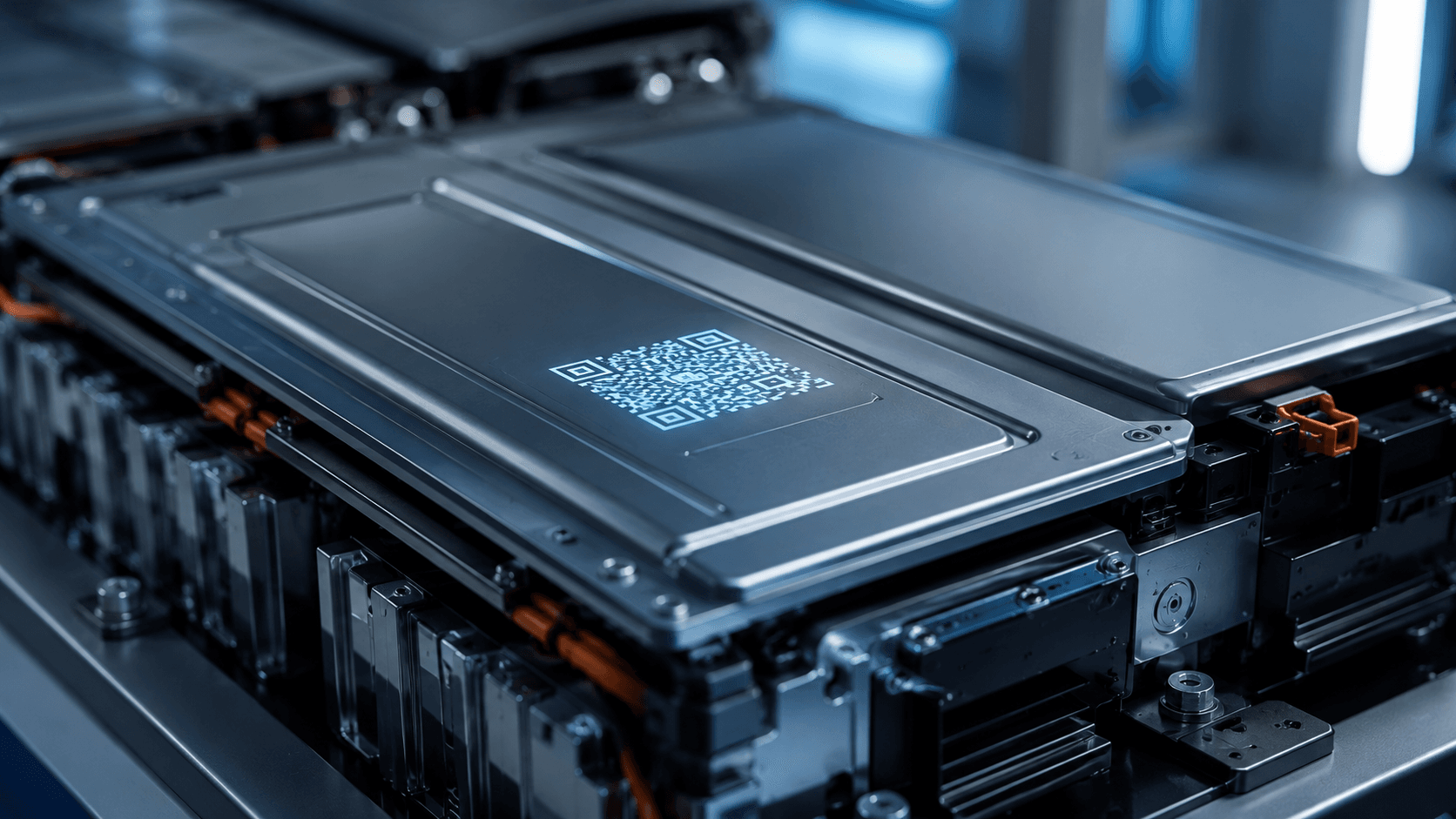
The system works across three layers of data access. The physical BPAN code itself is publicly readable — offline, no internet required — and shows basic information like country of origin and manufacturer ID. A QR code links to a more detailed technical dataset covering material composition, disassembly instructions, and carbon footprint, accessible to authorized stakeholders like recyclers and service centres. A third, dynamic layer tracks “State of Health” (SoH) data over time — cumulative metrics like temperature exposure and charge cycles that reveal how much life a battery genuinely has left, regardless of its age on paper.
Any major change to the battery — a recycling event, a refurbishment, repurposing for second-life energy storage — triggers a new BPAN, keeping the record current rather than letting it go stale. The rollout is prioritising EV batteries first, since electric vehicles account for 80-90% of India’s total lithium-ion battery demand, with industrial batteries above 2kWh capacity following in later phases.
Why This Actually Matters to EV Owners
For a policy that sounds purely bureaucratic, Battery Aadhaar has a genuinely practical upside for the people who already own or are considering an EV. India’s used-EV market has been held back partly by a trust problem: unlike a used petrol car, where mileage and service history offer rough proxies for condition, a used EV’s most important component — the battery — has historically been close to a black box for a second buyer. A verified, tamper-resistant State of Health record attached to a permanent digital ID directly addresses that gap, giving buyers and financiers actual data instead of a seller’s word on how much range and life is genuinely left. According to industry observers in India’s used-vehicle finance sector, battery uncertainty is one of the largest single barriers to used-EV loan approval rates today.
It also has consequences for warranty claims, insurance valuations, and recycling compliance. Under India’s existing Battery Waste Management Rules, 2022, producers already carry Extended Producer Responsibility (EPR) obligations for recovering battery materials — Battery Aadhaar would automate much of the tracking that currently makes those obligations hard to enforce and easy to sidestep.
Why Automakers Are Pushing Back on Timing
None of this explains why SIAM is asking for a 2034 deadline rather than the faster, phased implementation the draft guidelines originally envisioned. The industry’s stated reasoning centres on three practical constraints: building the digital infrastructure to generate, upload, and maintain BPAN records at scale; aligning an entire supplier ecosystem — including smaller battery makers who may lack the systems to comply quickly — around a common data standard; and, notably, wanting to watch how the European Union’s near-identical Battery Passport system performs after its February 2027 mandatory date before committing India to a similar path.
That last point is a meaningful signal. The EU’s Battery Passport, mandated under Regulation (EU) 2023/1542, is essentially the same concept — a digital record covering composition, carbon footprint, and lifecycle data for batteries above 2kWh. India’s industry body is effectively asking to let the EU serve as the real-world pilot and absorb the early implementation problems first, rather than India running its own rollout in parallel on a similarly aggressive timeline. Whether that’s prudent risk management or simple delay-seeking depends heavily on how genuinely under-built India’s compliance infrastructure currently is — a fair question, given the framework itself is barely months old as a formal draft.
The Scale of the Ask
A 2034 target isn’t a minor scheduling adjustment — it’s close to a decade beyond what a “next few years” phased rollout, as originally framed in the draft guidelines, would have implied. For context, India hit its own separate 20% ethanol-blending fuel target five years ahead of its original 2030 schedule this year, showing the country’s regulatory apparatus is capable of moving faster than initial timelines when the political will exists. Whether Battery Aadhaar receives that same acceleration or settles into SIAM’s requested slower timeline will likely depend on how loudly consumer and recycling-sector stakeholders — who benefit most directly from faster implementation — make their case in the public consultation process the government has signalled is coming.
What Happens Next
The framework is still in draft-guideline stage, moving through the Automotive Industry Standard (AIS) route under the Automotive Industry Standards Committee (AISC), a process that involves technical validation and structured stakeholder consultation before anything becomes binding. That committee is expected to include battery manufacturers, EV makers, recyclers, and testing agencies — meaning SIAM’s 2034 request is an opening position in a negotiation, not a finalised outcome. For EV buyers and industry watchers, the practical takeaway is that Battery Aadhaar is coming in some form, but the exact timeline — and whether India ends up closer to the EU’s 2027 or SIAM’s 2034 — remains genuinely unresolved.
How This Compares to Other Indian Digital-ID Rollouts
According to the framework’s own design language, Battery Aadhaar is explicitly modelled on two prior Indian digital-infrastructure successes: FASTag, which digitised toll collection nationwide, and VAHAN, the existing vehicle registration database that Battery Aadhaar is expected to integrate with. Both of those systems took several years to reach near-universal adoption after their initial mandates, and both faced early friction — patchy device availability for FASTag, inconsistent state-level data quality for VAHAN — before becoming reliable. That track record cuts both ways for Battery Aadhaar: it suggests India’s regulatory apparatus can eventually deliver working large-scale digital-ID infrastructure, but also that the “next few years” language in the original draft guidelines was probably always optimistic once real-world integration challenges surfaced. Data shows that both FASTag and VAHAN took several years past their initial mandates to reach reliable, near-universal adoption.
The Smaller-Manufacturer Problem
One part of SIAM’s argument deserves closer scrutiny: compliance cost for smaller battery makers. India’s EV battery supply chain includes a long tail of smaller domestic manufacturers, particularly serving the two- and three-wheeler segment, who may lack the digital infrastructure — dedicated IT systems, integration with the BPAN portal, staff trained on the new data protocols — that larger, better-capitalised players can stand up quickly. A rushed mandatory timeline risks either pushing these smaller manufacturers out of the market or creating a two-tier compliance reality where larger players comply on schedule while smaller ones lag, undermining the very traceability the system is meant to guarantee. This is likely the strongest part of SIAM’s case, separate from the broader question of whether 2034 is a genuinely necessary timeline or a maximalist opening ask.
FAQs
What is Battery Aadhaar (BPAN)?
Battery Aadhaar, officially the Battery Pack Aadhaar Number system, is a proposed Indian government framework that assigns every EV battery a unique, permanent 21-character digital identity to track it from manufacturing through recycling or disposal.
When will Battery Aadhaar become mandatory in India?
The exact timeline is unresolved. Draft guidelines originally implied a phased rollout over the next few years, but SIAM has requested the government delay mandatory implementation until 2034.
Why do automakers want to delay Battery Aadhaar?
Automakers cite the time needed to build digital infrastructure, align suppliers (especially smaller battery makers), and observe how the European Union’s similar Battery Passport system performs after its February 2027 deadline before committing to a comparable Indian timeline.
How is Battery Aadhaar different from the EU’s Battery Passport?
Both systems serve a similar purpose — lifecycle traceability for batteries — but India’s BPAN is designed as an offline-accessible, cost-effective system tailored to a market dominated by two- and three-wheelers, while the EU’s Battery Passport (mandatory from February 2027) is built around its own regulatory and infrastructure context.
Will Battery Aadhaar affect used EV prices?
Potentially in a positive way for sellers of well-maintained EVs — a verified State of Health record could increase buyer and financier confidence in used EVs, addressing one of the biggest current barriers to a healthy used-EV resale market in India.
Which batteries does Battery Aadhaar cover first?
The initial phase prioritises EV batteries in the L, M, and N vehicle categories, since they account for 80-90% of India’s total lithium-ion battery demand, with industrial batteries above 2kWh following in later phases.