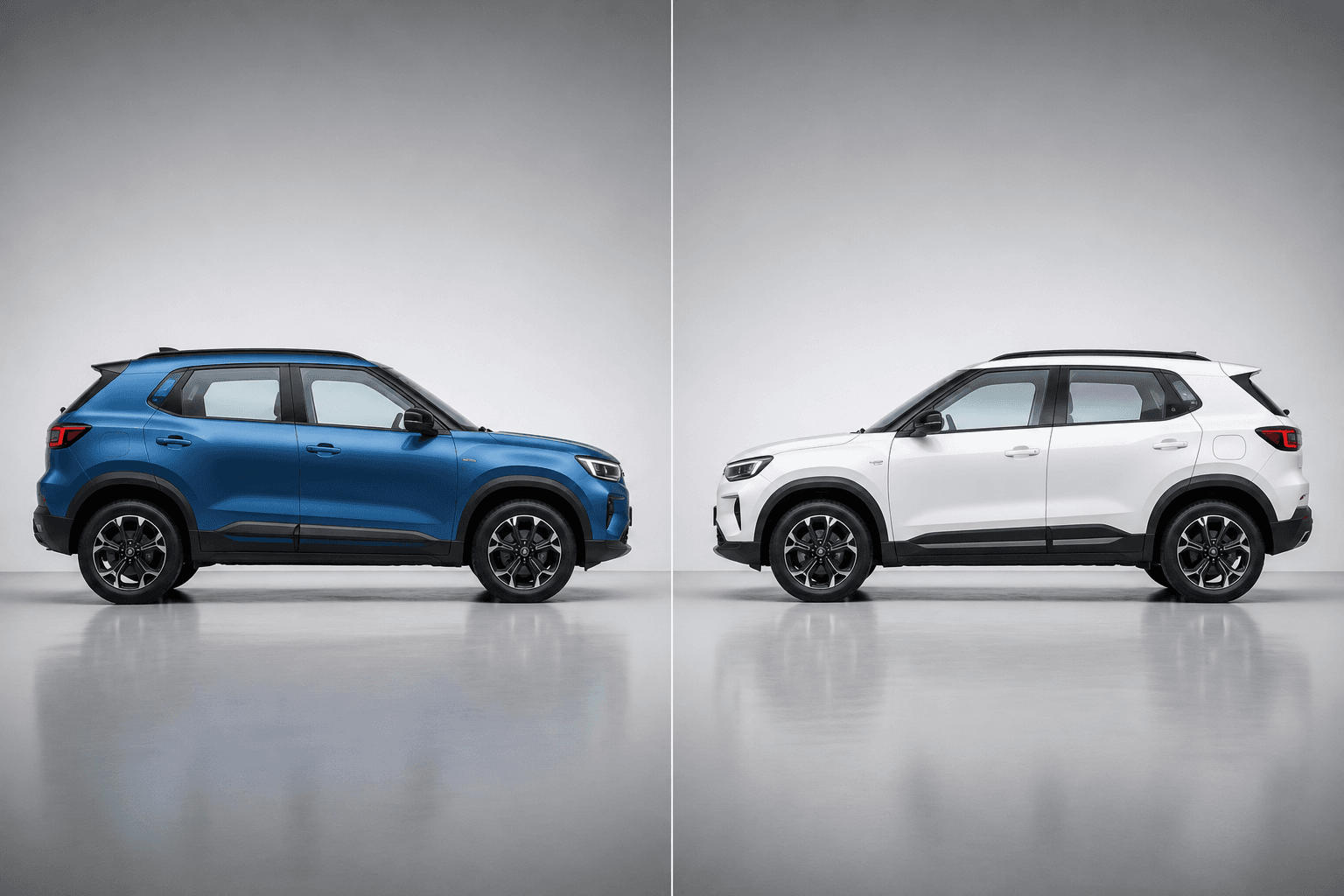
The Tata Nexon EV has been the default choice in India’s sub-compact electric SUV segment for years. Now the Kia Syros EV arrives to challenge it directly, with a class-leading 526km claimed range, a more powerful motor and a premium cabin, but a higher starting price. The Nexon EV counters with a lower entry cost, a proven track record and India’s most established EV service backbone. So which one actually offers more value? The answer is less obvious than the spec sheet suggests.
Price: the Nexon EV’s opening advantage
Value starts with price, and here the Nexon EV leads. According to launch data, the Kia Syros EV is priced from Rs 13.49 lakh to Rs 20 lakh (ex-showroom), with a Battery-as-a-Service option from Rs 7.99 lakh plus Rs 3.3 per km. The Tata Nexon EV, according to comparison data from Autocar India and CarDekho, spans roughly Rs 12.49 lakh to Rs 17.49 lakh.
So the Nexon EV both starts lower and tops out lower. For a strictly budget-driven buyer, that entry-price gap is the Nexon EV’s first and strongest argument. The Syros EV’s BaaS route can narrow the upfront difference, but on straight ex-showroom pricing, Tata is the more affordable way in.
Battery, range and performance
This is where the Syros EV pulls ahead decisively. It offers 42kWh (443km claimed) and 51.4kWh (526km claimed) batteries, with the larger pack producing about 171hp and 255Nm and a 0-100kph time of 8.1 seconds.
The Nexon EV, according to the specifications reported in the comparisons, uses a 30.2kWh Medium Range pack (about 325km claimed) and a 40.5kWh Long Range pack (about 465km claimed), with power ranging from 127hp to 143hp and 215Nm, and a 0-100kph time of about 8.6 seconds for the quicker version. DC fast charging takes it 10-100 percent in roughly 56 minutes; the Syros EV does 10-80 percent in about 39 minutes on a 100kW charger.
My analysis: on the core EV metrics, the Syros EV is simply the stronger car. It has more range (526km vs 465km at the top), more power (171hp vs 143hp), quicker acceleration and faster charging. If you define value as capability per rupee rather than lowest sticker price, the Syros EV closes much of the price gap by delivering meaningfully more.
Features: two different philosophies
Both are generously equipped, but they express it differently. The Syros EV leads with a 30-inch Trinity display, Harman Kardon eight-speaker audio, ventilated front and rear seats, a panoramic sunroof, a 465-litre boot, a 16-litre frunk, Level 2 ADAS with 16 functions and six airbags.
The Nexon EV’s trump cards are practical EV-specific features. According to the comparison data, it offers a 12.3-inch touchscreen, a digital cockpit, a JBL sound system, ventilated seats, and crucially vehicle-to-load (V2L) and vehicle-to-vehicle (V2V) charging, which let the car power appliances or even charge another EV. That last capability is genuinely useful and something the Syros EV’s spec sheet does not emphasise.
The value question, reframed
Here is the heart of it. “Value” splits into two definitions, and each car wins one.
If value means lowest cost of entry and proven dependability, the Nexon EV wins. It is cheaper to buy, backed by Tata’s position as India’s long-standing EV market leader, and supported by the widest EV service and charging familiarity in the country. For a first-time EV buyer who wants the safest, most affordable, most road-tested option, the Nexon EV remains hard to beat, and its V2L/V2V features add practical everyday utility.
If value means the most capability and premium experience for the money, the Syros EV wins. My read: the Syros EV asks a modest premium and returns a large jump in range, power, charging speed and cabin richness, plus a lifetime battery warranty, Assured Buyback and access to Kia’s 20,300-plus-point K-Charge network. For a buyer who will keep the car for years and wants range anxiety off the table, that premium is easily justified.
Charging speed and ownership backing
Charging is a real-world differentiator that spec sheets sometimes underplay. The Syros EV supports 100kW DC fast charging, taking 10-80 percent in about 39 minutes, while the Nexon EV, according to the comparison data, does a 10-100 percent charge in around 56 minutes on DC. For a buyer who occasionally relies on public fast chargers, the Syros EV’s quicker top-up is a genuine convenience over time.
On ownership backing, both are strong but in different ways. The Nexon EV leans on Tata’s position as India’s long-standing EV market leader, with the deepest real-world reliability record and the widest EV service familiarity in the country. The Syros EV counters with a lifetime high-voltage battery warranty, an Assured Buyback programme and the K-Charge network’s 20,300-plus points. My read: Tata’s track record is reassuring for the cautious first-timer, while Kia’s warranty and buyback structure appeal to buyers thinking about long-term ownership costs and eventual resale.
Design and everyday usability
The two also differ in character. The Nexon EV wears Tata’s now-familiar, well-resolved coupe-influenced SUV design and has been refined over multiple updates since its 2020 debut, making it a known, dependable quantity. The Syros EV brings a taller, boxier, more upright silhouette that maximises cabin space and visibility, with a fresher, more tech-forward interior led by that 30-inch display. For buyers who want the reassurance of a proven, road-tested design, the Nexon EV delivers; for those who want the newest, most spacious-feeling and most premium cabin, the Syros EV pulls ahead.
The verdict: who should buy which
Buy the Tata Nexon EV if your priority is the lowest price, maximum proven reliability, and useful extras like V2L charging, and if a 465km range comfortably covers your needs. It is the value champion in the literal, cost-first sense, and a genuinely good EV.
Buy the Kia Syros EV if you want the longest range in the class, the most power, faster charging and a more premium cabin, and you see the modest price premium as money well spent for a car you will not outgrow. For range-focused, feature-focused buyers, it offers more car for the extra spend.
One final consideration ties it together: how long you intend to keep the car. A buyer planning to hold the vehicle for five to seven years arguably benefits more from the Syros EV’s longer range, faster charging and lifetime battery warranty, since those advantages compound over years of ownership and support resale. A buyer who upgrades frequently or wants the lowest possible outlay today is better served by the Nexon EV’s keener price and proven dependability. Framed this way, the choice is less about which car is objectively better and more about which one fits your ownership horizon and budget discipline.
The bottom line
The Tata Nexon EV wins on price and proven dependability; the Kia Syros EV wins on range, power, charging speed and cabin quality. Which offers “more value” genuinely depends on your definition: cheapest and most road-tested points to the Nexon EV, most capability per rupee points to the Syros EV. Budget-first buyers should shortlist the Nexon EV; buyers who want the strongest all-round package and long-term range confidence should stretch to the Syros EV.
FAQs
Is the Kia Syros EV or Tata Nexon EV cheaper?
The Tata Nexon EV is cheaper, starting at around Rs 12.49 lakh (ex-showroom) versus the Kia Syros EV’s Rs 13.49 lakh. The Nexon EV also has a lower top-end price. The Syros EV’s BaaS option starts at Rs 7.99 lakh but adds a per-km battery charge.
Which has more range, the Syros EV or the Nexon EV?
The Kia Syros EV has more range, up to 526km claimed from its 51.4kWh battery, versus the Tata Nexon EV’s roughly 465km claimed from its 40.5kWh Long Range pack.
Which is more powerful, the Syros EV or the Nexon EV?
The Kia Syros EV is more powerful, making about 171hp at the top versus the Nexon EV’s 143hp. The Syros EV is also slightly quicker to 100kph and charges faster.
Does the Tata Nexon EV have any features the Syros EV lacks?
Yes. The Nexon EV offers vehicle-to-load (V2L) and vehicle-to-vehicle (V2V) charging, letting it power external appliances or charge another EV, a practical feature the Syros EV’s spec sheet does not emphasise.
Which electric SUV offers better value?
It depends on your definition. For lowest price and proven reliability, the Tata Nexon EV offers better value. For the most range, power and premium features per rupee, the Kia Syros EV offers better value despite its higher price.