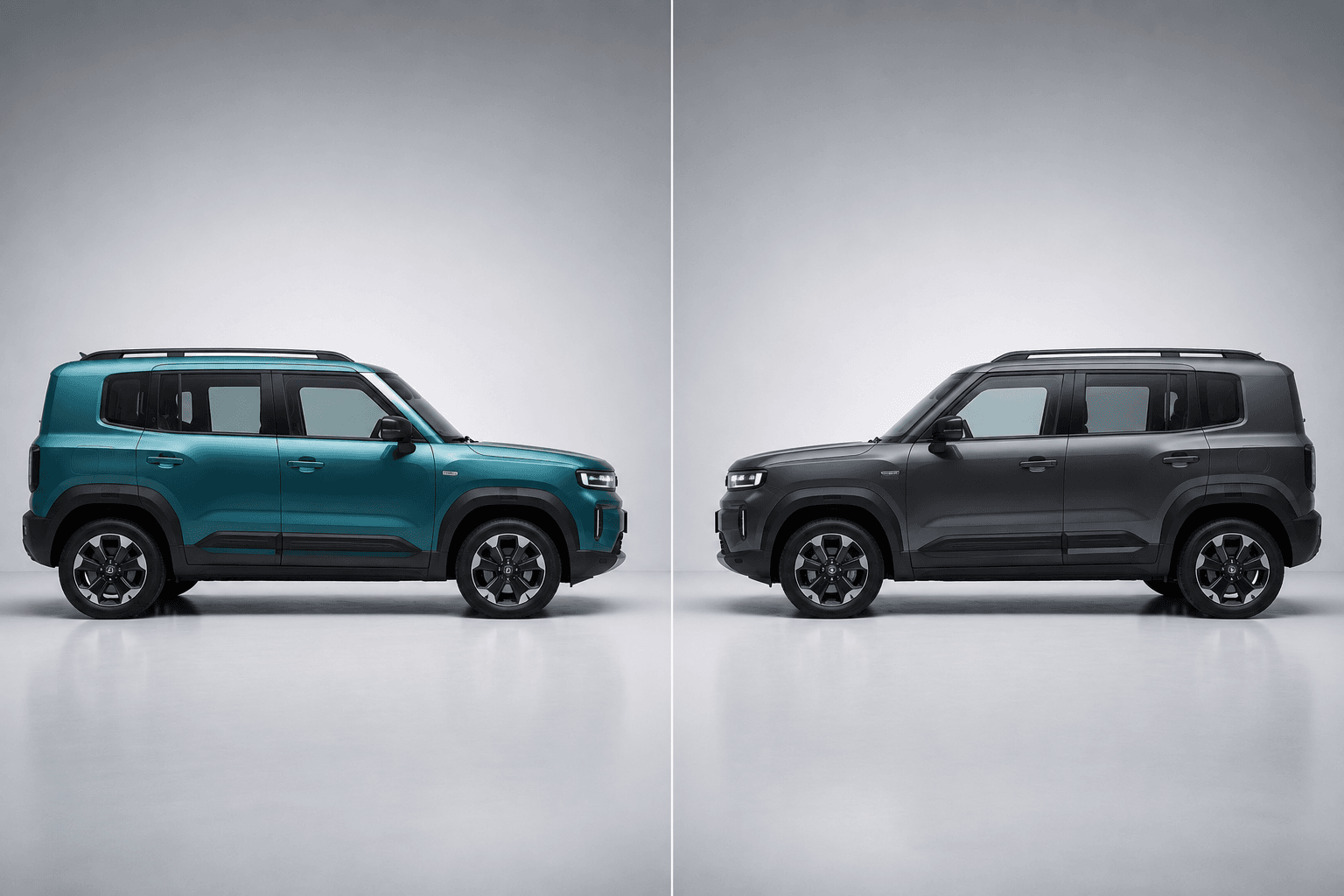
The Mahindra XUV 3XO EV and the newly launched Kia Syros EV are two of the most compelling sub-compact electric SUVs in India, and they attack the segment from different angles. The XUV 3XO EV leads on torque and value, undercutting rivals while delivering strong performance figures. The Syros EV leads on range and premium tech, offering a class-first 526km claimed figure and a loaded cabin at a higher price. If you are choosing between them, the decision hinges on whether you prioritise range and refinement or torque and price. Here is the full comparison.
Price: Mahindra’s value pitch vs Kia’s premium play
According to launch data, the Kia Syros EV is priced from Rs 13.49 lakh to Rs 20 lakh (ex-showroom), with a Battery-as-a-Service option from Rs 7.99 lakh plus Rs 3.3 per km. The Mahindra XUV 3XO EV, according to comparison data, launched from around Rs 13.89 lakh, with variants such as the AX5 and AX7 in the Rs 13.89-14.96 lakh region.
The entry prices are closer than you might expect, but Mahindra’s positioning is squarely value-led, and one detail matters: according to Autocar India’s comparison, Mahindra charges extra (around Rs 50,000) for the AC fast charger on the XUV 3XO EV, a cost worth factoring into the true on-road comparison. The Syros EV starts marginally higher but climbs well above the XUV 3XO EV in its top trims, reflecting its more premium ambitions.
Battery, range and performance
This is the clearest point of difference. The Syros EV offers 42kWh (443km claimed) and 51.4kWh (526km claimed) batteries, with the larger pack making about 171hp and 255Nm and a 0-100kph time of 8.1 seconds.
The Mahindra XUV 3XO EV, according to the comparison specifications, uses a single 39.4kWh battery (sourced from the XUV400 EV), producing about 148-150hp and a segment-leading 310Nm of torque, with a 0-100kph time of 8.3 seconds and a claimed real-world range of around 285km. On charging, Mahindra cites a 0-80 percent top-up in 50 minutes on a 50kW DC charger, while the Syros EV does 10-80 percent in about 39 minutes on a faster 100kW charger.
My analysis: the two cars genuinely trade blows here. The XUV 3XO EV’s 310Nm gives it the strongest torque figure, which means punchy, satisfying low-speed acceleration, ideal for city driving. But the Syros EV’s range advantage is substantial: even accounting for the XUV 3XO EV’s real-world 285km figure being conservative against ARAI claims, the Syros EV’s 526km claimed range is in a different league. For torque and city zip, the Mahindra impresses; for range and highway confidence, the Kia is far ahead.
Features and cabin
Both are well-appointed, but the Syros EV pushes further up-market. It leads with a 30-inch Trinity display, Harman Kardon eight-speaker audio, ventilated front and rear seats, a panoramic sunroof, a 465-litre boot and a 16-litre frunk, plus Level 2 ADAS with 16 functions and six airbags.
The XUV 3XO EV, according to the comparison data, counters with dual 10.25-inch screens, Harman Kardon audio, dual-zone climate control, a cooled glovebox, an electronic parking brake with auto-hold, a 360-degree camera and Level 2 ADAS. It is a genuinely feature-rich cabin, but the Syros EV’s larger display, ventilated rear seats and overall material ambition give it the more premium feel.
Charging and ownership
Ownership factors can decide a close call. The Syros EV supports faster 100kW DC charging (10-80 percent in about 39 minutes) versus the XUV 3XO EV’s 50kW support (0-80 percent in about 50 minutes), and Kia backs it with a lifetime high-voltage battery warranty, an Assured Buyback programme and access to the 20,300-plus-point K-Charge network.
Mahindra’s counter is brand strength in the SUV space and aggressive value, but the paid AC charger and slower peak DC charging are practical demerits. My read: for a buyer who does occasional longer trips, the Syros EV’s faster charging and much longer range make real-world EV ownership less stressful. For a buyer who stays almost entirely within the city, the XUV 3XO EV’s 285km range and strong torque are perfectly adequate, and the lower price is attractive.
Design and everyday practicality
The two SUVs feel different to live with day to day. The XUV 3XO EV, according to the comparison data, is effectively the electric version of the popular ICE-powered XUV 3XO, so it carries over that model’s familiar, well-received design and cabin with minimal EV-specific changes. That means a known, road-proven package, though some reviews note cabin ergonomics quirks such as a cramped footwell and limited small-item storage.
The Syros EV brings a taller, boxier silhouette built to maximise interior space and visibility, paired with a 465-litre boot and a 16-litre frunk. My analysis: for a buyer who wants a spacious, airy cabin and the newest design, the Syros EV feels more modern and roomy. For a buyer who values a familiar, proven product from a brand with deep SUV credibility, the XUV 3XO EV’s known quantity is reassuring. Both are practical; the Syros EV simply feels newer and more premium inside.
Brand and resale considerations
Brand strength cuts both ways here. Mahindra has powerful SUV brand equity in India and has been aggressive in the EV space, which supports the XUV 3XO EV’s desirability and likely resale. Kia, meanwhile, has built a strong, premium-leaning reputation in India in a relatively short time, and backs the Syros EV with a lifetime battery warranty and Assured Buyback that directly address long-term ownership and resale concerns. My read: neither buyer is taking a brand risk, both are established, well-regarded names, so the decision can rest on the product attributes rather than brand anxiety, which is not always the case in this segment.
The verdict: who should buy which
Buy the Mahindra XUV 3XO EV if you want the strongest torque, punchy city performance, a feature-rich cabin and the lowest effective price, and if your driving stays mostly within the city where 285km of range is plenty. It is the value-and-torque choice, and a strong one for urban buyers.
Buy the Kia Syros EV if you want by far the longest range in the class, faster charging, a more premium cabin and the reassurance of a lifetime battery warranty, and you are willing to pay a premium for a car that erases range anxiety. For range-focused buyers and those who venture beyond the city, it is the clear pick.
The bottom line
The Mahindra XUV 3XO EV wins on torque, city performance and value, especially for buyers who stay within urban limits. The Kia Syros EV wins decisively on range (526km vs about 285km real-world), charging speed and cabin premiumness. If your budget is tight and your driving is city-bound, the XUV 3XO EV makes excellent sense. If you want the longest-range, most future-proof sub-compact EV and will pay for it, the Syros EV is the stronger all-rounder.
FAQs
Which is cheaper, the Kia Syros EV or Mahindra XUV 3XO EV?
The Mahindra XUV 3XO EV is marginally cheaper at entry, from around Rs 13.89 lakh versus the Syros EV’s Rs 13.49 lakh start, but note the XUV 3XO EV charges extra (around Rs 50,000) for its AC fast charger. The Syros EV climbs higher in its top trims.
Which has more range, the Syros EV or the XUV 3XO EV?
The Kia Syros EV has far more range, up to 526km claimed from its 51.4kWh battery, versus the Mahindra XUV 3XO EV’s roughly 285km claimed real-world range from a 39.4kWh battery.
Which has more torque, the Syros EV or the XUV 3XO EV?
The Mahindra XUV 3XO EV has more torque, with a segment-leading 310Nm versus the Syros EV’s 255Nm, giving it strong low-speed city acceleration.
Which charges faster, the Syros EV or the XUV 3XO EV?
The Kia Syros EV charges faster, supporting 100kW DC charging (10-80 percent in about 39 minutes) versus the XUV 3XO EV’s 50kW support (0-80 percent in about 50 minutes).
Which electric SUV should I buy?
Choose the Mahindra XUV 3XO EV for the best torque, city performance and value if you drive mostly in the city. Choose the Kia Syros EV for the longest range, faster charging and a more premium cabin if you want a future-proof EV and will pay a premium.