Electric vehicles have crossed the tipping point from curiosity to genuine mainstream choice in India. According to industry data, EV sales in FY2025-26 reached roughly 25 lakh units, up about 24 percent year-on-year, and overall EV penetration hit around 8.5 percent of total vehicle registrations, up from 7.7 percent the year before. More strikingly, in June 2026, monthly EV penetration crossed 12 percent for the first time. The direction is unmistakable. But the more useful question for a buyer is not “is this happening?” It is “why, and does it make sense for me?” Here is an honest look at what is actually driving the shift, and where the caveats lie.
The single biggest reason: running costs
Strip away the environmental messaging and the number-one practical driver of EV adoption is money saved per kilometre. According to industry estimates, running an electric two-wheeler or car costs a fraction of a petrol equivalent, on the order of around Rs 0.25 per km on electricity versus roughly Rs 2 per km on petrol for comparable two-wheelers. Over the tens of thousands of kilometres a vehicle covers in its life, that difference compounds into a substantial saving that can offset a higher purchase price.
My analysis: this is the quiet force behind adoption, especially for high-usage buyers, delivery riders, cab operators and long-commute drivers. For someone covering big daily distances, the fuel-cost gap alone can justify the switch within a couple of years, well before any environmental consideration enters the picture. Data supports this: electric two-wheelers, where the running-cost logic is sharpest, account for roughly 58 percent of India’s EV sales.
Range has finally caught up
The classic objection to EVs, range anxiety, is fading fast because the products have improved. The recently launched Kia Syros EV, for example, offers a class-first 526km claimed range in the sub-compact segment, and it is no longer alone in offering figures that comfortably cover both daily commutes and occasional intercity trips.
This matters more than any single spec. According to market data, electric cars were the fastest-growing vehicle segment in India through the past year, registering around 86 percent year-on-year growth, and notably that growth happened largely independent of government purchase incentives, since e-cars are excluded from the PM E-Drive scheme. That detail is important: it signals genuine, organic demand rather than subsidy-driven buying. When people buy without being paid to, the product is winning on merit, and improved range is a big part of why.
Charging and infrastructure are expanding
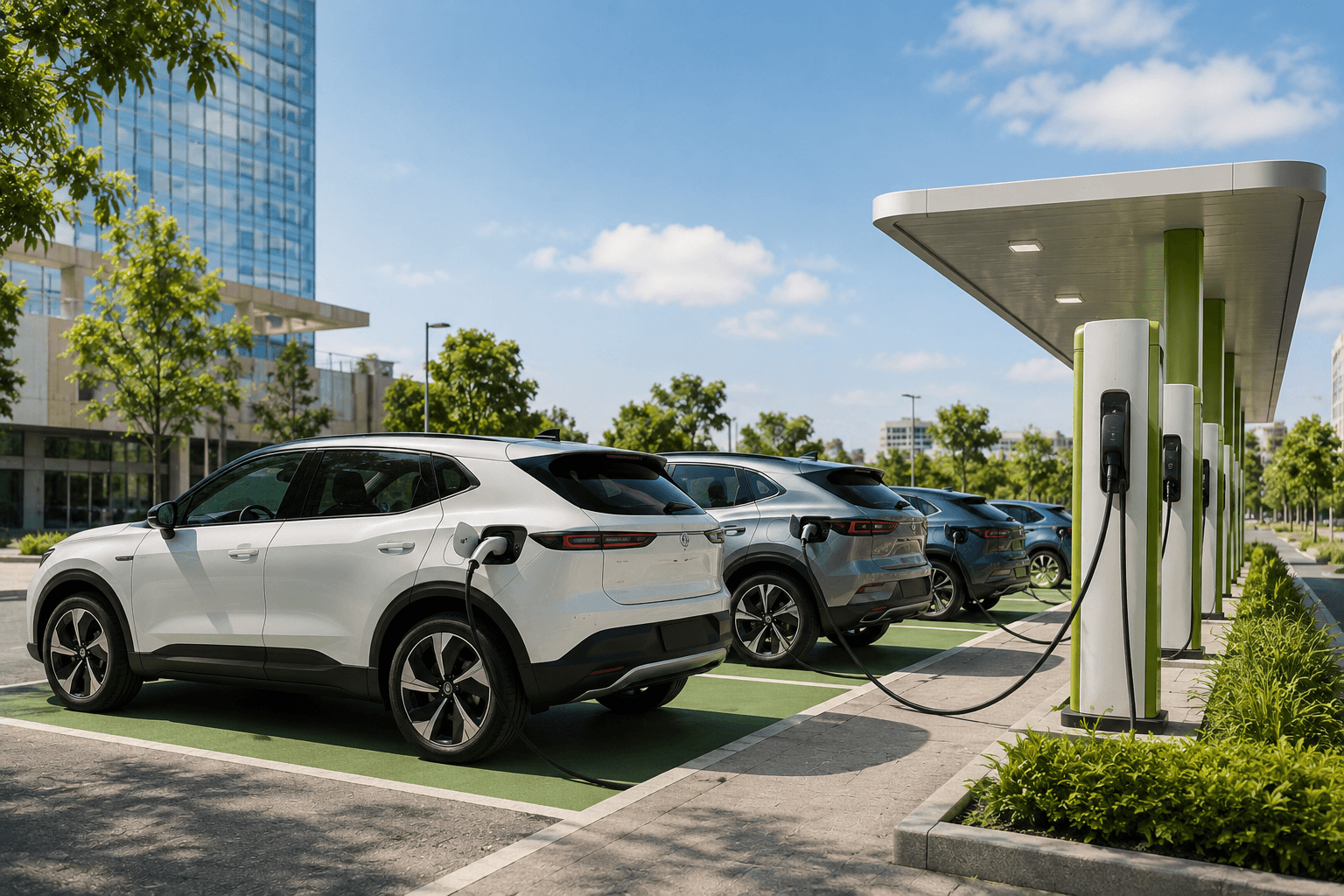
An EV is only as usable as the network that supports it. Here too, the picture has improved materially. According to the Ministry of Heavy Industries data, India had over 27,000 public charging stations by early 2026, growing at a rapid pace, and government backing through the PM E-Drive scheme (a Rs 10,900 crore programme) continues to fund expansion.
Manufacturers are layering their own networks on top. Kia’s K-Charge, for instance, unifies more than 20,300 charging points across multiple operators into a single app. Battery-swapping models, like Honda’s approach with the Activa e, offer another path around charging downtime in dense cities. The infrastructure is still uneven, better in metros than in smaller towns, but the trajectory is firmly upward.
Policy and cost support
Government policy has tilted the economics toward EVs. According to industry data, GST on electric vehicles has been cut from 12 percent to 5 percent, and GST on chargers reduced from 18 percent to 5 percent, directly lowering both purchase and running costs. State policies add further incentives in many regions.
Manufacturers have also innovated on affordability. Battery-as-a-Service (BaaS) models, offered on cars like the Kia Syros EV, let buyers purchase the vehicle without the battery upfront (dropping the entry price sharply) and pay a per-kilometre fee for battery use instead. Lifetime battery warranties, assured buyback programmes and longer standard warranties are becoming common, all aimed at dismantling the specific fears that used to keep buyers away.
The honest caveats
Balance matters, so here is the other side. My read: EVs are not the right answer for everyone yet, and a good buyer weighs these carefully.
First, upfront price. Despite lower running costs, many EVs still cost more to buy than petrol equivalents, so the payback depends on how much you drive. Low-usage buyers may never fully recover the premium. Second, charging access. If you cannot charge at home or reliably near your routes, EV ownership becomes stressful, and this remains a real barrier for apartment dwellers and small-town buyers. Third, real-world range always trails the claimed figure, so buyers should mentally discount headline numbers. Fourth, service networks for newer EV brands are still maturing, which is why established brands with wide service footprints carry a genuine advantage. And fifth, resale values for EVs are still stabilising as the technology and battery-health expectations settle.
None of these are reasons not to consider an EV. They are reasons to match the car to your specific usage honestly rather than buying on hype.
The competitive market is working in buyers’ favour
One under-appreciated driver of adoption is simply that competition has exploded. According to industry data, Tata Motors, long the dominant EV maker, saw its share fall from around 57 percent to about 39 percent over the past year as rivals like JSW MG, Mahindra and Hyundai expanded with new launches. That shift is good news for buyers: more competing manufacturers means more model choice, sharper pricing, faster feature improvements and better warranties, all of which lower the barrier to switching. The Kia Syros EV crossing 500km of range in a sub-compact SUV is a direct product of this competitive pressure, and buyers are the beneficiaries.
So, should you switch?
The clearest way to decide is to be honest about your own numbers. If you drive substantial daily distances, can charge at home or along your routes, and plan to keep the vehicle several years, an EV very likely makes strong financial and practical sense today, and the running-cost savings will be real. If you drive little, cannot charge conveniently, or need one vehicle for frequent long, unpredictable journeys, a petrol or hybrid option may still suit you better for now.
The broader trend, though, is not in doubt. With penetration rising past 12 percent in a single month, ranges crossing 500km, charging networks expanding and policy pushing hard, India’s shift to electric is a structural change, not a fad. The question for most buyers is increasingly “when,” not “whether.”
The bottom line
Indians are switching to EVs mainly because the economics now work: dramatically lower running costs, ranges that have caught up to real needs, expanding charging infrastructure, and policy plus manufacturer innovations that lower the barriers. EV penetration crossed 12 percent in June 2026, and electric cars grew about 86 percent year-on-year without purchase subsidies, signalling genuine demand. The caveats, higher upfront cost, charging access, real-world range and service maturity, are real and worth weighing against your own usage. For high-mileage buyers who can charge conveniently, the case is already strong; for everyone else, it is getting stronger every year.
FAQs
Why are EV sales growing so fast in India?
EV sales rose about 24 percent year-on-year in FY2025-26 to roughly 25 lakh units, driven mainly by much lower running costs, improved range, expanding charging infrastructure, and supportive policy such as GST cuts and the PM E-Drive scheme. Penetration reached about 8.5 percent for the year and crossed 12 percent in June 2026.
Are EVs cheaper to run than petrol vehicles in India?
Yes, significantly. Industry estimates put EV running costs at roughly Rs 0.25 per km versus about Rs 2 per km for comparable petrol two-wheelers. Over a vehicle’s life, these savings can offset a higher purchase price, especially for high-mileage users.
Is range still a problem for EVs in India?
Much less than before. New models such as the Kia Syros EV now offer over 500km of claimed range, and many EVs comfortably cover daily commutes and occasional long trips. Real-world range is lower than claimed figures, so buyers should plan accordingly.
What government support exists for EV buyers in India?
GST on EVs has been cut from 12 percent to 5 percent and on chargers from 18 percent to 5 percent. The PM E-Drive scheme (Rs 10,900 crore) funds charging infrastructure and two- and three-wheeler incentives, and many states offer additional benefits.
Should I buy an EV now?
If you drive substantial daily distances, can charge at home or along your routes, and plan to keep the vehicle for years, an EV likely makes strong financial and practical sense. If you drive little, lack convenient charging, or need one car for frequent long trips, a petrol or hybrid may still suit you better for now.